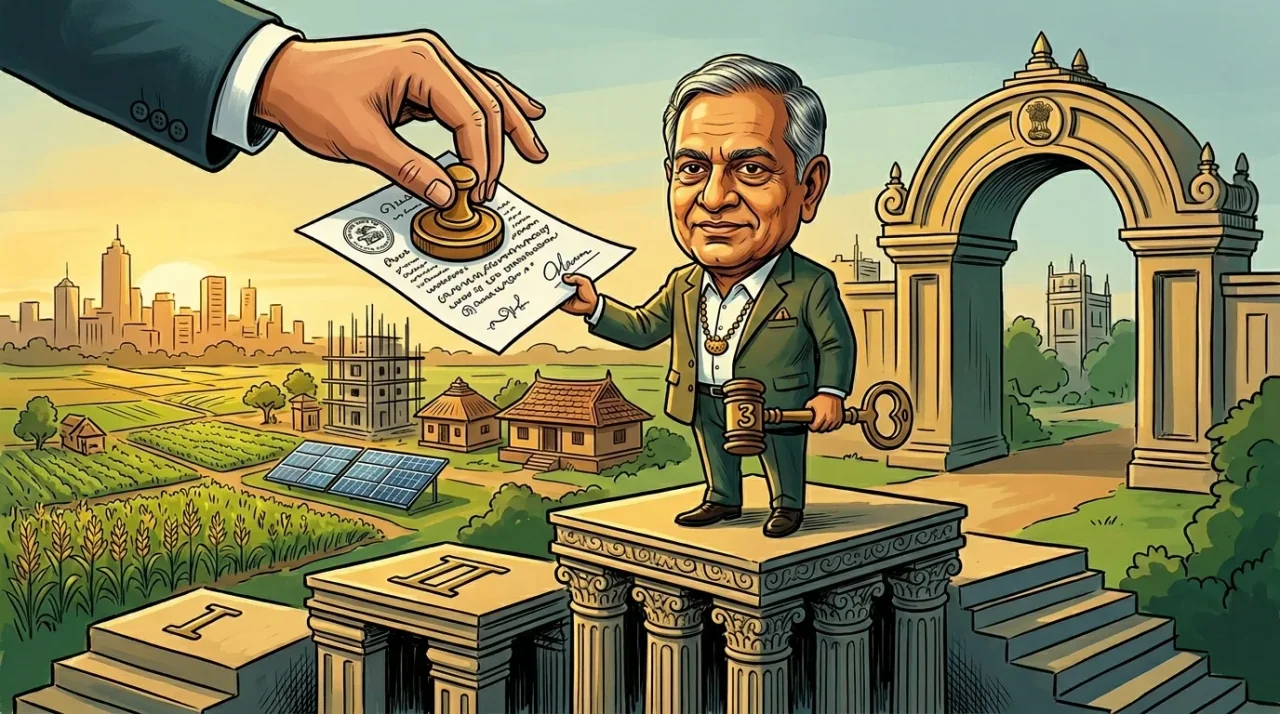
The Reserve Bank of India (RBI) has officially approved the re-appointment of B Ramesh Babu as the Managing Director and Chief Executive Officer of Karur Vysya Bank (KVB) for a third consecutive term. The two-year extension will be effective from July 29, 2026, allowing the veteran banker to continue leading the institution until July 2028. This decision follows the bank’s robust financial performance and significant business expansion under his leadership since 2020.
Details of the Re-appointment
The approval for Ramesh Babu’s continuation was communicated by the central bank on April 24, 2026. This re-appointment follows the recommendation made by the Board of Directors of Karur Vysya Bank earlier in January 2026. The new term marks his third successive stint at the helm of the private sector lender, ensuring continuity in the bank’s strategic direction. The appointment remains subject to the approval of shareholders at the upcoming Annual General Meeting, as per standard regulatory procedures.
A Career Spanning Four Decades
B Ramesh Babu is a highly experienced banker with over 40 years of service in the Indian banking industry. Before joining Karur Vysya Bank in July 2020, he had an illustrious career at the State Bank of India (SBI). At SBI, he rose to the position of Deputy Managing Director and Chief Operating Officer (COO), where he managed retail banking operations for more than 21,000 branches and over 1.2 lakh customer touchpoints across the country.
His extensive leadership profile includes serving as the Head of SBI’s Chennai Circle, where he oversaw operations for 1,300 branches. Additionally, he has held international responsibilities as the Vice President at SBI’s Chicago branch. His academic background is equally strong, being a postgraduate in Commerce from Andhra University and a Certified Associate of the Indian Institute of Bankers (CAIIB). He also holds a Diploma in International Factoring from the Netherlands-based Factors Chain International.
Transformation of Karur Vysya Bank
Under the leadership of B Ramesh Babu, Karur Vysya Bank has witnessed a period of unprecedented growth and financial stability. A key highlight of his tenure is the rapid expansion of the bank’s total business. While it took KVB 104 years to reach its first ₹1 trillion milestone, the bank added its second ₹1 trillion in just four years under Babu’s management.
The bank’s financial health indicators have also seen remarkable improvement. The Return on Assets (ROA) grew from 0.59% to 2.05%, and the Return on Equity (ROE) jumped from 6.29% to 20.48%. Furthermore, the bank’s asset quality has improved significantly, with the Net Non-Performing Assets (Net NPA) ratio falling from 3.44% to a mere 0.19%. These improvements reflect a successful transformation of the bank into a more efficient and profitable entity.
Profile: Karur Vysya Bank
Karur Vysya Bank is one of the oldest private sector banks in India, established in 1916. It was founded by M.A. Venkatarama Chettiar and Athi Krishna Chettiar to provide financial assistance to local traders and agriculturists in the Karur region of Tamil Nadu. Over the years, the bank has grown from a regional player to a pan-India institution, becoming a scheduled bank in 1952.
Headquartered in Karur, Tamil Nadu, the bank operates with the tagline ‘Smart Way to Bank’. It has consistently focused on blending traditional values with modern technology, which was evident when it achieved full core banking computerization in the early 2000s. As of early 2026, the bank’s total business stands at over ₹2.14 lakh crore, with a strong presence in the retail and commercial banking sectors.
Legal Framework for Bank Leadership
The appointment and re-appointment of top-level executives in Indian commercial banks are strictly regulated by the Reserve Bank of India. Under Section 35B of the Banking Regulation Act, 1949, prior approval from the RBI is mandatory for the appointment, re-appointment, or termination of the Chairman, Managing Director, and whole-time directors of any banking company.
This regulatory oversight ensures that the individuals leading financial institutions meet the ‘fit and proper’ criteria, maintaining the integrity and stability of the banking system. The RBI evaluates the performance, track record, and professional conduct of the proposed candidates before granting approval. In the case of private sector banks, the tenure of an MD & CEO is typically capped at 15 years to prevent excessive concentration of power and encourage fresh leadership perspectives.
Key Takeaways
- The Reserve Bank of India (RBI) has approved the re-appointment of B Ramesh Babu as the MD & CEO of Karur Vysya Bank for a two-year term until July 2028.
- B Ramesh Babu previously served as the Deputy Managing Director and Chief Operating Officer at the State Bank of India (SBI).
- Under Babu’s leadership, Karur Vysya Bank achieved its second ₹1 trillion in business in just four years, compared to 104 years for the first trillion.
- Karur Vysya Bank was established in 1916 by M.A. Venkatarama Chettiar and Athi Krishna Chettiar in Karur, Tamil Nadu.
- The bank operates with the tagline ‘Smart Way to Bank’ and became a scheduled bank in 1952.
- Re-appointments of bank executives in India require prior approval from the RBI under Section 35B of the Banking Regulation Act, 1949.