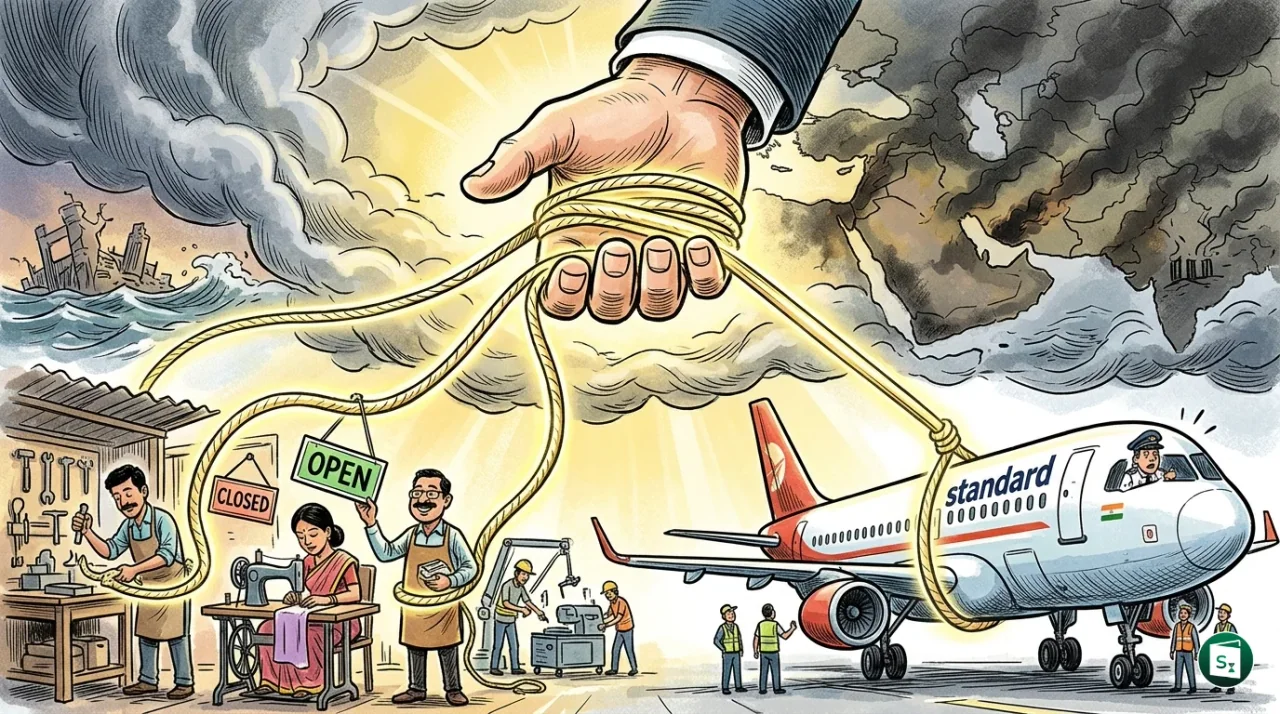
The Union Cabinet approved the Emergency Credit Line Guarantee Scheme (ECLGS) 5.0 on May 9, 2026, allocating ₹18,100 crore to support businesses facing liquidity challenges. This new phase specifically targets Micro, Small and Medium Enterprises (MSMEs) and the aviation sector, which are struggling with the economic fallout of the ongoing crisis in West Asia. By providing collateral-free credit guarantees, the government aims to ensure operational stability and protect jobs in these vital industries.
What is the Emergency Credit Line Guarantee Scheme 5.0?
The Emergency Credit Line Guarantee Scheme (ECLGS) was originally launched in May 2020 as a part of the Aatmanirbhar Bharat Abhiyan to provide immediate credit to businesses affected by the COVID-19 pandemic. It is a collateral-free loan scheme where the government provides a guarantee to lenders, including banks and Non-Banking Financial Companies (NBFCs), against defaults. The scheme is administered by the National Credit Guarantee Trustee Company Limited (NCGTC), which was incorporated in 2014 and is headquartered in Mumbai. NCGTC operates under the Department of Financial Services within the Ministry of Finance.
Over the years, the scheme has evolved through various phases to address different sectoral needs. ECLGS 5.0 is the latest iteration, designed to provide a financial cushion to industries impacted by external geopolitical shocks. Unlike previous versions that focused on pandemic recovery, this phase addresses the short-term liquidity stress caused by trade disruptions and rising input costs linked to the situation in West Asia.
Key Provisions and Eligibility Criteria
The ECLGS 5.0 framework introduces specific credit guarantee structures for different categories of borrowers. While MSMEs receive the highest level of protection, the scheme also extends significant support to larger enterprises and the aviation industry to prevent a credit crunch.
| Borrower Category | Guarantee Coverage | Key Eligibility Criteria |
|---|---|---|
| MSMEs | 100% | Existing working capital limits as of March 2026; accounts must be standard. |
| Non-MSMEs | 90% | Existing working capital limits as of March 2026; accounts must be standard. |
| Airlines | 90% | Scheduled passenger airlines with outstanding credit as of March 2026. |
Eligible borrowers can avail of additional credit to meet their working capital requirements. The scheme is restricted to those whose loan accounts were classified as ‘standard’ (not in default) by lenders at the end of the 2025-26 financial year. This ensures that the support is targeted toward viable businesses that are only facing temporary liquidity issues due to external circumstances.
Addressing the West Asia Crisis and Liquidity Stress
The escalation of the crisis in West Asia in early 2026 has created a ripple effect across global supply chains. For Indian businesses, this has manifested in two primary ways: logistical disruptions and surging operational costs. Crucial maritime routes, such as the Red Sea and the Strait of Hormuz, have faced severe traffic constraints, forcing shipping lines to reroute vessels via the Cape of Good Hope. This detour has added nearly 15 to 20 days to transit times, significantly delaying the arrival of raw materials and the export of finished goods.
The Micro, Small and Medium Enterprises (MSMEs) sector, which contributes approximately 31.1% to India’s GDP, is particularly sensitive to these delays. Many small units operate on tight working capital cycles, and any delay in payments or inventory arrivals can lead to a liquidity crunch. Additionally, the rise in Brent crude oil prices to over $105 per barrel has increased the cost of power, transportation, and industrial inputs, further squeezing the profit margins of these enterprises.
Support for the Aviation Sector
The Indian aviation industry has been hit hard by the geopolitical situation, prompting its inclusion in ECLGS 5.0. High oil prices have directly translated into elevated Aviation Turbine Fuel (ATF) costs, which typically account for 30 to 40 percent of an airline’s operating expenses. Furthermore, the rerouting of international flights to avoid conflict zones has increased flight durations and fuel consumption, placing immense pressure on the industry’s financial metrics.
To address this, the government has provided a 90% guarantee on fresh credit for eligible scheduled passenger airlines. The loan limit is capped at ₹1,500 crore per borrower, though companies can access higher limits if their promoters infuse matching equity. The scheme offers a tenure of up to seven years, including a two-year moratorium on the repayment of the principal amount. This structured support is aimed at improving the interest coverage ratio of airlines and ensuring that they maintain operational continuity despite the projected industry losses of over ₹17,000 crore for the 2025-26 fiscal year.
Strategic Importance for the MSME Ecosystem
The MSME sector is the backbone of the Indian economy, providing employment to over 32 crore people. By offering a 100% credit guarantee, ECLGS 5.0 reduces the risk for lenders, encouraging them to extend credit to small businesses that might otherwise be deemed high-risk during a global crisis. This ensures that the momentum of industrial growth is not stalled by temporary external factors.
The scheme also plays a vital role in formalizing the sector. Only businesses with standard accounts and existing credit limits can apply, which incentivizes units to maintain financial discipline and register on official platforms like the Udyam portal. As India aims to strengthen its domestic supply chains and reduce vulnerability to volatile regions, such targeted liquidity support serves as a critical buffer for the country’s manufacturing and export engines.
Key Takeaways
- The Union Cabinet approved ECLGS 5.0 on May 9, 2026, with a total outlay of ₹18,100 crore to address liquidity stress from the West Asia crisis.
- The scheme provides a 100% credit guarantee for MSMEs and a 90% guarantee for non-MSMEs and scheduled passenger airlines.
- Eligible borrowers include those with existing working capital limits as of March 2026 and accounts classified as standard.
- Airlines can avail of fresh credit up to ₹1,500 crore with a tenure of seven years, including a two-year moratorium.
- The National Credit Guarantee Trustee Company Limited (NCGTC), incorporated on March 28, 2014, and headquartered in Mumbai, administers the scheme.
- The ECLGS was originally launched in May 2020 under the Aatmanirbhar Bharat Abhiyan by the Ministry of Finance.