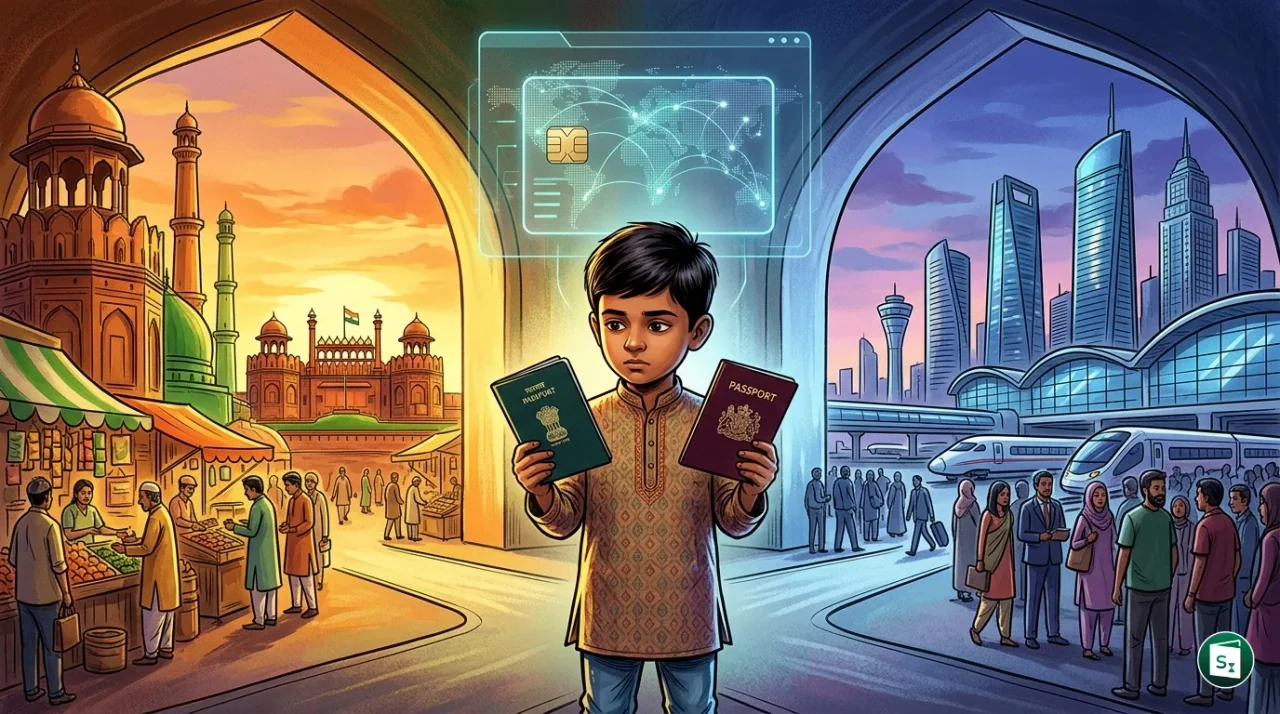
The Ministry of Home Affairs (MHA) has notified the Citizenship (Amendment) Rules, 2026, introducing significant changes to the legal framework governing Indian citizenship and Overseas Citizen of India (OCI) status. Effective from April 2026, the new rules mandate a fully digital application process and prohibit minor children from holding both Indian and foreign passports simultaneously. This modernization effort aims to streamline administrative procedures through a centralized digital database and the new e-OCI system.
Stricter Norms for Minor Children and Dual Passports
The 2026 amendment introduces a critical proviso to Rule 3 of the Citizenship Rules, 2009. It explicitly mandates that a minor child cannot hold the passport of any other country while in possession of an Indian passport. This provision reinforces India’s long-standing constitutional stance against dual citizenship, as outlined in Article 9 of the Constitution of India. This article states that no person shall remain a citizen of India if they have voluntarily acquired the citizenship of a foreign state.
The Citizenship Act, 1955, which governs the acquisition and termination of Indian citizenship, remains the parent legislation for these rules. In the past, legal ambiguities occasionally surfaced regarding the simultaneous possession of foreign travel documents by minors. The new rules establish a clear legal obligation, ensuring that the child must surrender any foreign passport to maintain their Indian citizenship status. This move is designed to prevent administrative overlaps and ensure strict adherence to the principles of national identity.
Digitization of the OCI Framework: The e-OCI System
The central government has introduced the electronic Overseas Citizen of India (e-OCI) system, marking a shift toward a paperless administrative environment. Under this new framework, OCI cards can now be issued in both digital and physical formats, all managed through a central digital database. This transition eliminates the need for physical submissions of duplicate documents and streamlines the re-issuance of cards when a holder’s passport is renewed.
The entire lifecycle of OCI services, from initial registration to the updating of personal details, has been moved to a fully online format. This digital transformation is expected to benefit millions of members of the Indian diaspora by reducing processing times and increasing transparency. Applicants are now required to provide consent for the collection and use of biometric data. This integration will eventually facilitate faster clearance at Indian airports through the Fast Track Immigration (FTI) Trusted Traveller Programme.
Streamlined Renunciation and Centralized Records
The modernization effort also extends to the process of renouncing OCI status. Under Rule 34 of the amended rules, individuals wishing to surrender their OCI cards must file their applications electronically. Once the renunciation is processed, the system generates an official acknowledgment, and the individual’s name is automatically removed from the centralized electronic registry.
This centralized registry ensures that border control officials and Indian missions abroad have real-time access to the status of OCI holders. The integration of digital records helps in maintaining national security and prevents the potential misuse of travel documents. Furthermore, the rules introduce a structured appeals mechanism. This allows individuals to challenge administrative decisions before a higher authority, ensuring a fair and transparent oversight process for all citizenship-related matters.
Legal and Institutional Context of Indian Citizenship
Indian citizenship is governed by Articles 5 to 11 of the Constitution of India. While the Constitution identifies who became a citizen at its commencement, Article 11 empowers Parliament to regulate the right of citizenship by law. This led to the enactment of the Citizenship Act, 1955, which has since been amended several times to address evolving administrative and social needs.
The Ministry of Home Affairs (MHA), headquartered in New Delhi, serves as the nodal ministry for all matters related to citizenship and the OCI scheme. The OCI programme itself was introduced in 2005 to provide long-term visa-free travel and other privileges to people of Indian origin, except for those who are or were citizens of Pakistan or Bangladesh. By integrating these services into a digital framework, the government is aligning citizenship administration with the broader Digital India initiative, which aims to transform India into a digitally empowered society and knowledge economy.
Key Takeaways
- The Citizenship (Amendment) Rules, 2026 modify the existing Citizenship Rules, 2009 to streamline administrative procedures.
- A new proviso to Rule 3 mandates that a minor child cannot simultaneously hold both an Indian passport and a passport from any foreign country.
- The electronic Overseas Citizen of India (e-OCI) system has been launched to provide digital OCI cards through a centralized database.
- All OCI applications, updates, and renunciations must now be filed through a mandatory online format.
- Citizenship in India is governed by the Citizenship Act, 1955 and Articles 5 to 11 of the Constitution, with the MHA serving as the nodal ministry.
- Applicants for OCI services are now required to provide consent for the collection and use of biometric data.