The Union Government introduced The Constitution (One Hundred and Thirty-First Amendment) Bill, 2026 in the Lok Sabha on April 16, 2026, to significantly expand the strength of the lower house. The legislative proposal seeks to increase the maximum number of seats in the Lok Sabha from the current 543 to 850, marking the largest expansion in India’s parliamentary history. This move is primarily aimed at operationalizing the Nari Shakti Vandan Adhiniyam, which mandates one-third reservation for women in legislative bodies.
Transition to a Larger Lok Sabha: The 850-Seat Ceiling
The proposed amendment focuses on revising the ceiling for the total number of representatives in the House of the People, popularly known as the Lok Sabha. Under the new framework, the upper limit for seats will be raised to 850, providing the necessary flexibility to redraw electoral boundaries across the country. This expansion is designed to ensure that the introduction of reserved seats for women does not lead to a reduction in the number of seats available for general category candidates.
The distribution of these 850 seats is specifically structured to balance representation between states and federal territories. According to the provisions of the Bill, up to 815 seats will be allocated to the various States, while the Union Territories (UTs) will be represented by up to 35 seats. This represents a significant jump from the current allocation, where the effective strength has remained stable at 543 members for several decades.
| Feature | Current Allotment | Proposed Ceiling |
|---|---|---|
| Total Lok Sabha Seats | 543 | 850 |
| Seats for States | 530 | 815 |
| Seats for Union Territories | 13 | 35 |
| Reserved for Women (Planned) | 0 | 283 |
Implementing the Nari Shakti Vandan Adhiniyam
The central objective behind this massive seat expansion is the effective implementation of the Nari Shakti Vandan Adhiniyam, also known as the Constitution (One Hundred and Sixth Amendment) Act, 2023. This landmark law provides for 33% reservation for women in the Lok Sabha and State Legislative Assemblies. By increasing the total strength to 850, the government plans to reserve exactly 283 seats for women in the general elections scheduled for 2029.
The decision to expand the house instead of merely repurposing existing seats is a strategic one. It addresses concerns from various political stakeholders by maintaining the current space for non-reserved candidates while simultaneously fulfilling the constitutional mandate for increased female representation. The Bill essentially ensures that the path to women’s empowerment does not result in a net loss of traditional representation for any specific region or community.
Reforming the Delimitation Framework
The expansion of the Lok Sabha is intricately linked to Delimitation, which is the process of redrawing the boundaries of territorial constituencies to reflect population changes. To make this possible, the government also introduced the Delimitation Bill, 2026, which provides for the establishment of a new Delimitation Commission. This commission will be tasked with the actual reallocation of seats based on the most recent available data.
Crucially, the 131st Amendment Bill seeks to “delink” the implementation of women’s reservation from the requirement of waiting for the first census conducted after the year 2026. Under the previous conditions set in the 2023 Act, reservation could only be implemented after a fresh census and a subsequent delimitation exercise. The new legislative package allows the government to proceed with delimitation using current population figures, thereby accelerating the timeline for the 2029 general elections. This is achieved by amending Article 81, Article 82, and Article 334A of the Constitution of India.
Historical Context of Parliamentary Seat Allocation
The number of seats in the Lok Sabha has been largely frozen since the Constitution (Forty-second Amendment) Act, 1976. This freeze was based on the 1971 Census figures and was intended to encourage states to implement family planning measures without fearing a loss of political influence due to lower population growth. Originally set for 25 years, the freeze was later extended by the 84th Amendment Act, 2001, until the first census after 2026.
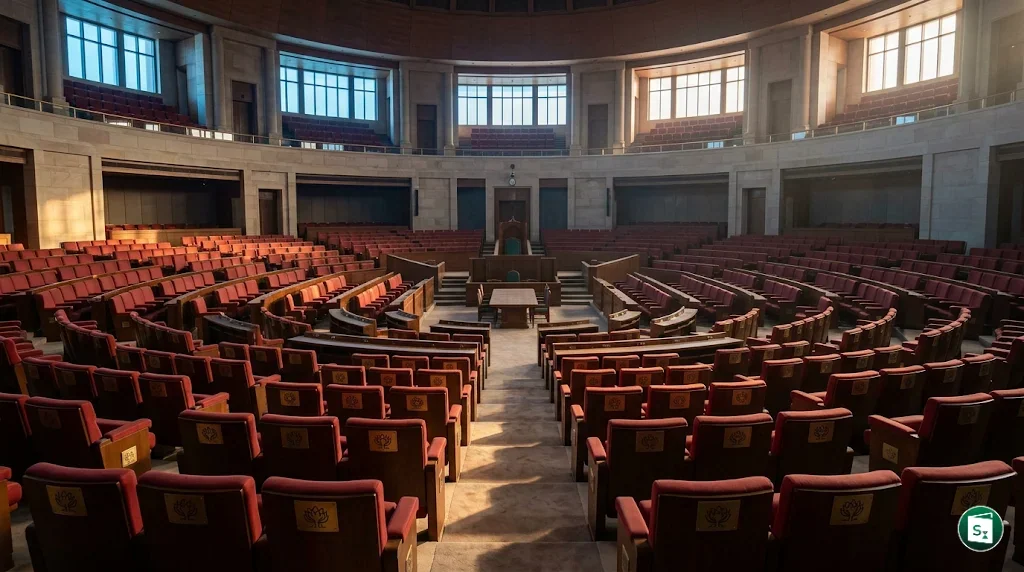
Modern logistical preparations have already factored in this inevitable expansion. The New Parliament Building, inaugurated in 2023, features a Lok Sabha chamber with a seating capacity for 888 members. This infrastructure was specifically designed to accommodate the expected increase in the number of representatives following a future delimitation exercise. The current Bill finally bridges the gap between this infrastructural readiness and the constitutional mandate for periodic readjustment of seats.
Key Takeaways
- The Constitution (131st Amendment) Bill, 2026 proposes to increase the maximum strength of the Lok Sabha to 850 seats.
- Under the new proposal, 815 seats are allocated for States and 35 seats are reserved for Union Territories.
- The Bill facilitates the reservation of one-third of the house, amounting to 283 seats, for women in the 2029 general elections.
- The legislative move effectively “delinks” the implementation of the Nari Shakti Vandan Adhiniyam from the first census conducted after 2026.
- The expansion allows for women’s reservation without decreasing the current number of seats available for general category candidates.
- The New Parliament Building, which has a Lok Sabha capacity of 888 seats, will house the expanded body of representatives.