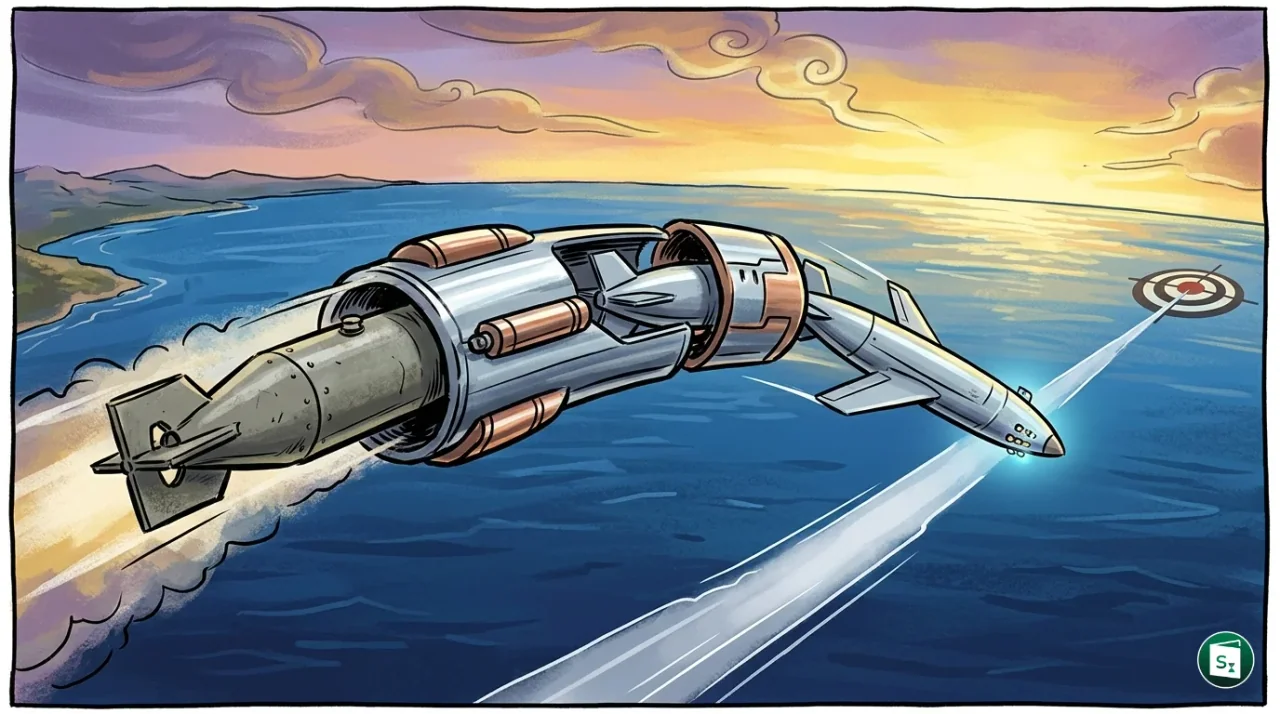
The Defence Research and Development Organisation (DRDO) and the Indian Air Force (IAF) successfully conducted the maiden flight-trial of the Tactical Advanced Range Augmentation (TARA) weapon off the Odisha coast on May 7, 2026. This indigenous glide weapon system is designed as a modular kit that converts conventional unguided bombs into high-precision, long-range munitions. The successful trial marks a significant leap in India’s quest for Atmanirbhar Bharat in advanced aerospace technology and stand-off strike capabilities.
The Dawn of Indigenous Glide Technology
The Tactical Advanced Range Augmentation (TARA) is a significant breakthrough in India’s defence manufacturing, developed primarily by the Research Centre Imarat (RCI) in Hyderabad. RCI is a premier laboratory of the DRDO that specializes in the design and development of missile systems and guided munitions. The project was executed in collaboration with various other DRDO labs and Development-cum-Production Partners (DcPP) from the Indian private sector, showcasing a successful synergy between government research and private industry.
How TARA Transforms “Dumb” Bombs into Precision Munitions
The core innovation of TARA lies in its modularity. Traditionally, unguided bombs, often referred to as “dumb bombs,” follow a ballistic trajectory after being released from an aircraft, which limits their accuracy and forces the aircraft to fly close to the target. TARA acts as a range extension kit that includes a set of wings, a flight control system, and a guidance unit. When attached to standard High-Speed Low Drag (HSLD) or General Purpose bombs, it allows the weapon to “glide” through the air, adjusting its path in real-time to hit a specific set of coordinates with extreme precision.
This conversion process is highly cost-effective as it allows the Indian Air Force to upgrade its existing stockpile of conventional warheads into advanced smart weapons. Similar systems globally, such as the American JDAM (Joint Direct Attack Munition), have revolutionized modern aerial warfare by providing precision strike capabilities without the need for expensive, dedicated cruise missiles.
Key Technical Specifications and Performance Data
The maiden trial of TARA was conducted using a Jaguar strike aircraft, which released the weapon from an altitude of approximately 5 kilometres. During the flight, the weapon achieved a speed of nearly Mach 0.8 (80% of the speed of sound) and demonstrated its long-range capabilities by striking a target at a range exceeding 150 kilometres.
The following table summarizes the primary performance characteristics of the TARA system:
| Feature | Specification |
|---|---|
| Maximum Range | 150 to 180 Kilometres |
| Release Altitude | Up to 10 Kilometres |
| Accuracy (CEP) | Less than 5 Metres |
| Navigation System | GPS with Inertial Navigation System (INS) |
| Compatibility | HSLD and General Purpose Bombs |
The Circular Error Probable (CEP) of less than five metres indicates that the weapon is highly accurate, capable of neutralizing specific buildings or infrastructure with minimal collateral damage.
Strategic Advantage: Enhancing IAF’s Stand-off Capability
The introduction of TARA provides the Indian Air Force with a crucial stand-off capability. In modern warfare, heavily defended targets are protected by sophisticated surface-to-air missile (SAM) systems. By utilizing glide weapons that can be launched from over 150 kilometres away, Indian pilots can strike targets while remaining well outside the detection and engagement range of enemy air defences.
This capability is essential for neutralizing strategic enemy infrastructure, such as command centres, fuel depots, and airbases, during the initial phases of a conflict. Furthermore, the indigenous nature of the TARA system ensures that India is not dependent on foreign suppliers for critical spare parts or software updates, strengthening the country’s strategic autonomy.
Future Integration Across Fighter Platforms
While the maiden flight was conducted from a Jaguar aircraft, the TARA system is designed for universal integration across the IAF’s diverse fighter fleet. Plans are already in motion to integrate the weapon with the Sukhoi Su-30MKI, the Mirage-2000, and the indigenously developed LCA Tejas.
The mass production of these kits has already commenced through Indian industry partners, reflecting a maturing ecosystem for defence production in the country. This project aligns with the Make in India initiative and significantly reduces the per-unit cost of precision munitions for the armed forces.
Key Takeaways
- The Tactical Advanced Range Augmentation (TARA) is India’s first indigenous modular glide weapon system.
- It was developed by the Research Centre Imarat (RCI), Hyderabad, in collaboration with other DRDO laboratories and private industry partners.
- The weapon converts unguided High-Speed Low Drag (HSLD) and general-purpose bombs into long-range precision-guided munitions.
- During its maiden trial off the Odisha coast, the weapon achieved a strike range of over 150 kilometres with a Circular Error Probable (CEP) of less than five metres.
- The system is designed for integration with various IAF aircraft, including the Jaguar, Su-30MKI, Mirage-2000, and LCA Tejas.
- TARA provides a cost-effective stand-off strike capability, allowing pilots to engage targets from outside the reach of enemy air defences.