The Defence Research and Development Organisation (DRDO) inaugurated a Chemical, Biological, Radiological and Nuclear (CBRN) Field Training and Demonstration Centre at the Burari Plains in New Delhi on May 14, 2026. This state-of-the-art facility, established under the Institute of Nuclear Medicine and Allied Sciences (INMAS), serves as a dedicated Centre of Excellence to strengthen India’s defense against unconventional emergencies. It marks a significant milestone in national security by providing a specialized platform for real-time field response and emergency medical training.
Strengthening National Preparedness for Unconventional Emergencies
The inauguration of the CBRN Field Training and Demonstration Centre marks a strategic expansion of India’s capabilities in managing high-risk scenarios involving chemical, biological, radiological, and nuclear threats. This facility is not merely a training ground but a Centre of Excellence (CoE) designed to bridge the gap between theoretical research and practical, on-field applications. By providing a controlled environment for complex simulations, the centre ensures that India is better prepared for the evolving nature of unconventional security challenges.
The project is spearheaded by the Institute of Nuclear Medicine and Allied Sciences (INMAS), a premier Delhi-based laboratory of the DRDO. INMAS has long been the nodal agency for research in radiation medicine and CBRN defense. The new centre at Burari Plains will allow INMAS to translate its laboratory findings into field-ready protocols, ensuring that the nation’s response mechanisms are both scientifically robust and tactically efficient. This initiative aligns with India’s broader security doctrine of building self-reliance in defense technology and disaster management.
A Specialized Hub for Advanced Research and Field Response
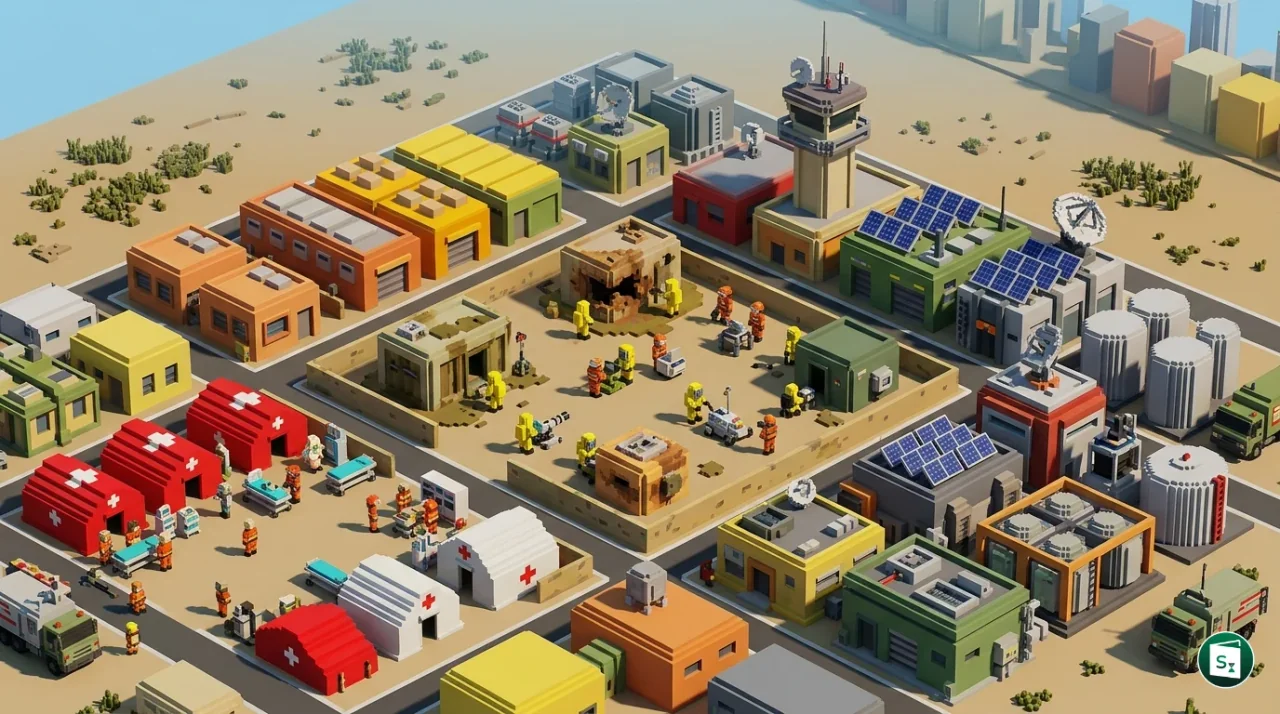
The Burari facility is equipped with cutting-edge technical infrastructure that sets it apart as a premier hub for CBRN research in South Asia. At the heart of the centre is a radiological and nuclear test-bed, which provides a secure environment for testing radiation detection equipment and validating decontamination procedures. This test-bed allows scientists and responders to simulate radiological contamination scenarios without posing risks to the public, facilitating the development of better shielding and protection protocols.
Heavy-Ion Research Capabilities
In addition to emergency response training, the centre houses heavy-ion research facilities. These facilities are critical for studying the biological effects of high-energy particles, which has implications not only for nuclear defense but also for space exploration and advanced cancer therapies. By integrating heavy-ion research into the CBRN framework, the DRDO aims to understand the long-term impacts of radiation exposure on human health, leading to the development of more effective radioprotective drugs and therapeutic interventions.
The centre also features specialized units for emergency medical response (EMR). These units are designed to provide immediate medical care to victims of CBRN incidents, focusing on specialized triage, decontamination, and the administration of antidotes. The integration of tactical response with medical care ensures a holistic approach to disaster management, where saving lives is as much a priority as containing the threat.
Empowering Frontline Responders Through Tactical Training
A primary objective of the CBRN Field Training and Demonstration Centre is to train the next generation of crisis responders. The facility will host rigorous workshops and field exercises for personnel from various departments, including the Ministry of Defence (MoD), the Ministry of Home Affairs (MHA), and the National Disaster Management Authority (NDMA). By training together, these agencies can develop a unified command structure and improve interoperability during real-world crises.
The tactical training focuses on hands-on experience with sophisticated CBRN detection and protection gear. Responders are trained to operate in high-stress environments where visibility and communication may be compromised. The simulations at Burari include large-scale decontamination drills, search and rescue operations in contaminated zones, and the management of mass casualties. This practical exposure is vital for the National Disaster Response Force (NDRF) and other paramilitary forces that are often the first to arrive at a disaster site.
DRDO and INMAS: A Legacy of CBRN Excellence
The Defence Research and Development Organisation (DRDO), established in 1958, has been the backbone of India’s military research. Headquartered in New Delhi, the DRDO operates under the Ministry of Defence. The Institute of Nuclear Medicine and Allied Sciences (INMAS), one of its key laboratories, was formally established in 1961, though its roots trace back to a Radiation Cell formed in 1956. INMAS was the first in the world to launch a formal diploma in radiation medicine, underscoring its historical leadership in the field.
India’s commitment to CBRN defense is also reflected in its adherence to international treaties. India is a signatory to the Chemical Weapons Convention (CWC) and the Biological Weapons Convention (BWC), which prohibit the development and use of these weapons. By establishing state-of-the-art training facilities like the one at Burari, India demonstrates its focus on defensive preparedness and humanitarian response, in line with global standards. The National Disaster Management Authority (NDMA), established under the Disaster Management Act, 2005, coordinates these national-level preparedness efforts.
| Feature | Details |
|---|---|
| Facility Name | CBRN Field Training and Demonstration Centre |
| Location | Burari Plains, New Delhi |
| Nodal Lab | Institute of Nuclear Medicine and Allied Sciences (INMAS) |
| Primary Focus | Radiological and Nuclear Emergency Preparedness |
| Key Research | Heavy-ion research and emergency medical response |
Key Takeaways
- The DRDO inaugurated a new CBRN Field Training and Demonstration Centre at the Burari Plains in New Delhi on May 14, 2026.
- The facility operates as a DRDO-CBRN Centre of Excellence (CoE) under the aegis of the Institute of Nuclear Medicine and Allied Sciences (INMAS).
- Key infrastructure includes a dedicated radiological and nuclear test-bed and heavy-ion research facilities for advanced radiation studies.
- The centre is designed to provide tactical and medical response training to personnel from the MoD, MHA, and NDMA.
- INMAS was established in 1961 and is a premier DRDO lab focused on nuclear medicine and CBRN defense.
- DRDO was founded in 1958 and is headquartered in New Delhi under the Ministry of Defence.