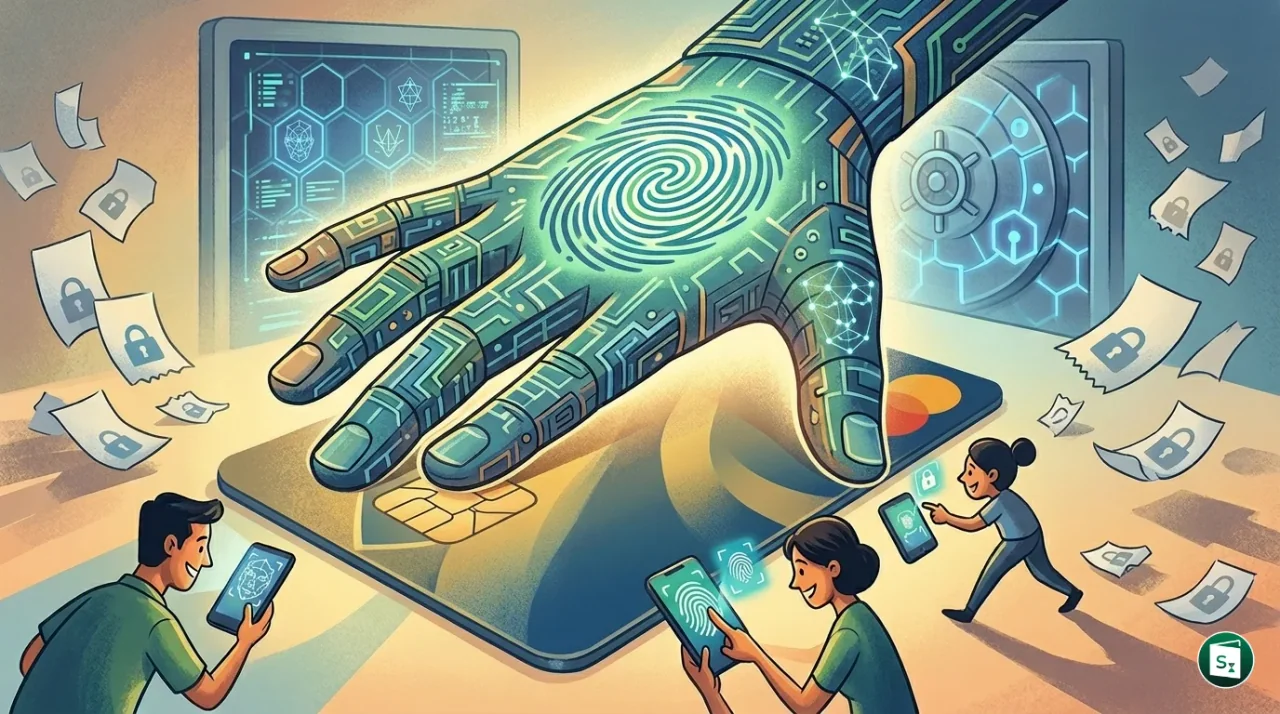
Flipkart has teamed up with Axis Bank and PayU to launch a biometric authentication feature for card transactions, allowing users to verify payments using fingerprint or facial recognition. This initiative marks a significant shift away from traditional One-Time Passwords (OTPs), aiming to reduce checkout friction and enhance security against digital fraud. By integrating device-bound authentication, the collaboration aligns with the latest regulatory push for more robust and user-friendly payment mechanisms in India.
Redefining Secure Checkout: The Biometric Shift
The new system allows Axis Bank cardholders to authorize their purchases on Flipkart using the native biometric capabilities of their smartphones, such as Fingerprint Identification or Face ID. This method serves as a direct replacement for the traditional SMS-based Two-Factor Authentication (2FA), which often suffers from latency issues and network delays. By leveraging device-bound credentials, the system ensures that the authentication factor is tied to the physical device and the user’s biological traits, making it significantly harder for attackers to compromise.
Collaborative Ecosystem: Roles of Axis Bank and PayU
The implementation of this technology involves a tripartite collaboration between e-commerce, banking, and payment infrastructure providers. Axis Bank, headquartered in Mumbai and led by MD and CEO Amitabh Chaudhry, acts as the card issuer providing the biometric verification layer. The bank utilizes technology from Wibmo, a digital payment security firm owned by PayU.
PayU India, which started its operations in 2011 and is headquartered in Mumbai, manages the merchant-side infrastructure. This includes the secure handling of authentication flows and ensuring that the biometric data remains encrypted and stored locally on the user’s device, adhering to global FIDO (Fast Identity Online) standards. Flipkart, founded in 2007 by Sachin Bansal and Binny Bansal, serves as the host platform where millions of users can now experience this streamlined payment journey.
RBI’s New Digital Payment Framework
This launch is timed with the implementation of the Reserve Bank of India (RBI) guidelines titled ‘Authentication Mechanisms for Digital Payment Transactions Directions, 2025’, which became effective on April 1, 2026. These directions mandate a more robust Additional Factor of Authentication (AFA) for digital payments, moving away from a heavy reliance on static SMS-based codes.
The RBI’s framework encourages the adoption of ‘dynamic’ factors that are uniquely generated for each transaction and cannot be reused. By utilizing biometrics, Flipkart and Axis Bank meet these security benchmarks while also improving the Transaction Success Rate (TSR). The central bank, established in 1935 and headquartered in Mumbai, has been actively pushing for ‘device-binding’ to prevent common cyber-threats like SIM-swapping and phishing.
Enhancing Security and Success Rates
The shift to biometric authentication addresses two primary challenges in the Indian digital landscape: security and convenience. Traditional OTPs can be intercepted through social engineering or technical vulnerabilities. Biometric verification, however, relies on the physical presence of the user and the integrity of their device’s ‘Secure Enclave’.
Furthermore, this technology significantly reduces ‘cart abandonment’ by eliminating the need to wait for an SMS or switch between apps to copy a code. This leads to higher success rates for high-value transactions, which are often aborted due to network failures during the OTP delivery process. As the digital economy continues to grow, such innovations are expected to become the standard across all major Indian e-commerce and banking platforms.
Key Takeaways
- Flipkart, Axis Bank, and PayU have introduced biometric authentication using Fingerprint and Face ID for card transactions.
- The new system replaces the traditional SMS-based One-Time Passwords (OTPs) to enhance security and user convenience.
- This initiative aligns with the RBI’s ‘Authentication Mechanisms for Digital Payment Transactions Directions, 2025’, effective from April 1, 2026.
- Axis Bank, headquartered in Mumbai, was established in 1993 (formerly UTI Bank) and is currently led by MD and CEO Amitabh Chaudhry.
- PayU India, which manages the payment infrastructure, began its Indian operations in 2011 and is headquartered in Mumbai.
- The Reserve Bank of India (RBI) was established in 1935 under the RBI Act, 1934, and is headquartered in Mumbai.