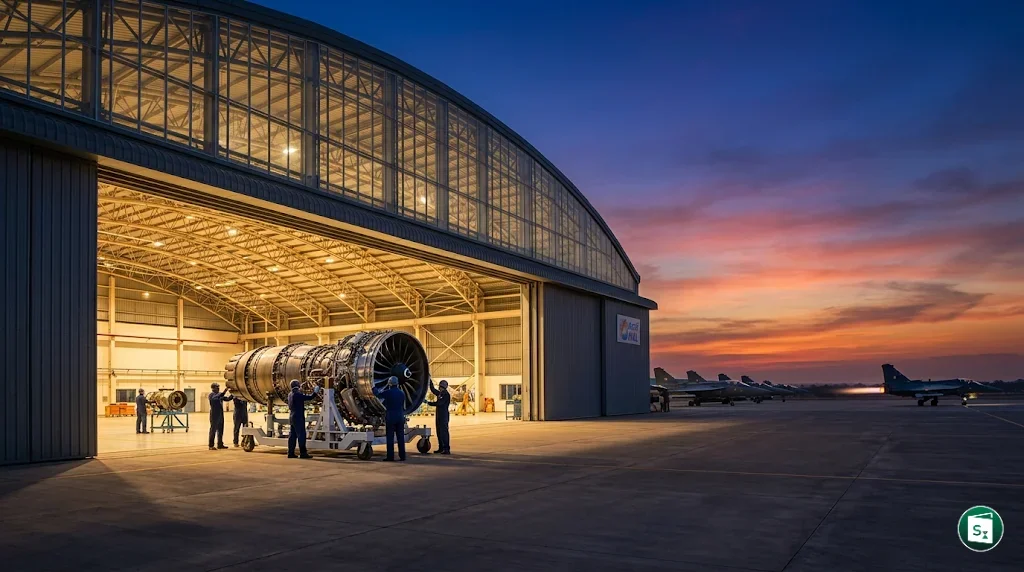
USA-based GE Aerospace and Hindustan Aeronautics Limited (HAL) finalized a landmark technical agreement on April 16, 2026, for the co-production of F414-GE-INS6 jet engines in India. This agreement concludes three years of intensive technical negotiations and establishes the framework for manufacturing high-performance engines to power India’s next-generation Tejas Mk2 fighter jets. The move represents a decisive step toward self-reliance in aerospace manufacturing while significantly deepening the strategic defence partnership between India and the United States.
A New Chapter in India-US Defence Cooperation
The finalization of technical specifications marks the completion of the most complex phase of the engine deal. This partnership originated from a Memorandum of Understanding (MoU) signed in June 2023 during the Prime Minister’s official state visit to the United States. Since then, both agencies have worked to align manufacturing standards and data-sharing protocols.
With these technical hurdles cleared, the focus now shifts to final commercial negotiations. These discussions will determine the specific pricing, delivery schedules, and lifecycle maintenance support for the engines. A formal, definitive contract is expected to be signed later in 2026. To ensure the Indian Air Force (IAF) receives its modern fleet on time, both partners have agreed to compress the initial setup timeline from three years to just two.
Breaking Down the F414 Technical Agreement
The technical agreement is historic due to the depth of expertise being shared with India. Unlike previous arrangements, which were often limited to simple assembly, this deal focuses on the core manufacturing processes that form the heart of a jet engine.
Transfer of Technology: The 80% Milestone
A central pillar of the agreement is the 80% Transfer of Technology (ToT) mandate. This is a significant jump from the 58% ToT achieved during a similar deal in 2012. The transfer covers both “know-how” (the ability to build) and “know-why” (the underlying design principles), granting India access to proprietary intellectual property that was previously restricted.
Critical Technologies for Indigenous Mastery
The agreement specifically includes the manufacturing of sensitive components required for high-performance aviation. Key technologies being transferred include:
- Single-Crystal Turbine Blades: These are specialized blades capable of withstanding extreme temperatures and pressures inside the engine’s hot section.
- Hot Section Coating: Advanced thermal barrier coatings that protect components from melting at high speeds.
- Laser Drilling: High-precision techniques used to create intricate cooling holes in engine parts.
- Powder Metallurgy: The fabrication of high-strength alloy discs and components through advanced metal processing.
Powering the Future: Tejas Mk2 and Beyond
The F414 engines are designed to provide the necessary power for India’s upcoming Medium Weight Fighter (MWF), officially known as the LCA Tejas Mk2. This aircraft is a more capable version of the Tejas Mk1, featuring a larger airframe and advanced sensor suites. India plans to induct approximately 120-130 Tejas Mk2 jets into the air force.
Initially, HAL will produce 99 engines at its dedicated facility in Bengaluru to support the Tejas Mk2 program. However, the F414 is also the engine of choice for the first two squadrons of the Advanced Medium Combat Aircraft (AMCA) Mk1, India’s fifth-generation stealth fighter, and the Twin-Engined Deck Based Fighter (TEDBF) for the Navy.
| Feature | F414-GE-INS6 Specification |
|---|---|
| Thrust Class | 98 kN (22,000 lb) with afterburner |
| Thrust-to-Weight Ratio | 9:1 |
| Control System | FADEC (Full Authority Digital Electronic Control) |
| Design Type | Afterburning turbofan with modular design |
| Airflow | 77.1 kg per second |
The F414-GE-INS6 offers a significant thrust increase over the F404 engines currently used in the Tejas Mk1 and Mk1A series. This extra power allows the Tejas Mk2 to carry heavier weapon loads and perform high-speed maneuvers more effectively.
Strategic Shift: Reducing Reliance on Foreign Fleets
A primary goal of this co-production deal is to modernize the Indian Air Force while reducing long-term dependence on foreign Original Equipment Manufacturers (OEMs). The Tejas Mk2 is intended to replace several legacy platforms currently in service, including the MiG-29, Mirage 2000, and Jaguar aircraft. By establishing a domestic engine ecosystem, India can ensure a stable supply chain and lower lifecycle costs for its fleet.
This project is a cornerstone of the Atmanirbhar Bharat (Self-Reliant India) initiative in the defence sector. It transitions India from a buyer of completed systems to a co-manufacturer of critical high-tech components. Hindustan Aeronautics Limited (HAL), which operates under the Ministry of Defence, will lead the domestic production effort. Established in 1940, HAL is headquartered in Bengaluru and has a long history of license-manufacturing aircraft, but the F414 deal represents its most ambitious technological leap to date.
The move also addresses recent supply chain challenges faced by the global aerospace industry. By setting up the Engine Manufacturing Facility in Bengaluru, India aims to become a regional hub for engine maintenance, repair, and overhaul (MRO) services, potentially serving other nations that use GE engines in the future.
Key Takeaways
- GE Aerospace and Hindustan Aeronautics Limited (HAL) finalized a landmark technical agreement for the co-production of F414 jet engines on April 16, 2026.
- The agreement involves an unprecedented 80% Transfer of Technology (ToT), covering critical manufacturing processes like single-crystal turbine blades and laser drilling.
- The F414-GE-INS6 engine belongs to the 98 kN thrust class and will power India’s next-generation Tejas Mk2 fighter jets.
- HAL is a central public sector undertaking established in 1940 and functions under the administrative control of the Ministry of Defence.
- The deal aims to facilitate the replacement of aging Russian-made aircraft fleets with indigenously produced multi-role fighter jets.
- A formal commercial contract is expected to be signed by the end of 2026, with the manufacturing facility based in Bengaluru.