India’s digital payment ecosystem experienced a transformative year in 2025, with the Unified Payments Interface (UPI) processing a record 228.5 billion transactions. According to the latest report by Worldline, this 33 percent year-on-year surge reflects a deepening shift toward a micro-transaction economy. The total value of these transactions reached nearly ₹300 trillion, further solidifying the country’s position as a global leader in real-time retail payments.
Unprecedented Growth in UPI Transaction Volumes
The Unified Payments Interface, launched in 2016 by the National Payments Corporation of India (NPCI), has redefined the retail payment landscape. In 2025, the platform handled 228.5 billion transactions, a significant climb from the 172.2 billion recorded in the previous year. This volume growth was accompanied by a robust increase in total transaction value, which touched ₹299.74 trillion.
A notable trend highlighted in the report is the decline in the Average Ticket Size (ATS) of UPI transactions. The overall ATS dropped by 9 percent to ₹1,314, suggesting that users are increasingly comfortable using UPI for small-value, routine purchases. This transition identifies India’s evolving status as a micro-transaction economy, where digital payments are rapidly displacing cash for even the smallest daily expenses.
The NPCI, which manages the UPI infrastructure, was established in 2008 as a non-profit company. It functions under the aegis of the RBI and the Indian Banks’ Association (IBA) to provide a secure and robust payment infrastructure for the entire banking system in India.
The Person-to-Merchant (P2M) Revolution
A significant driver of India’s digital payment growth is the Person-to-Merchant (P2M) segment. P2M transactions, which involve payments made by individuals to businesses, surged by 34 percent to reach 143.82 billion in 2025. This growth indicates a strong adoption of digital payments at the point of sale, from large retail outlets to small neighborhood vendors.
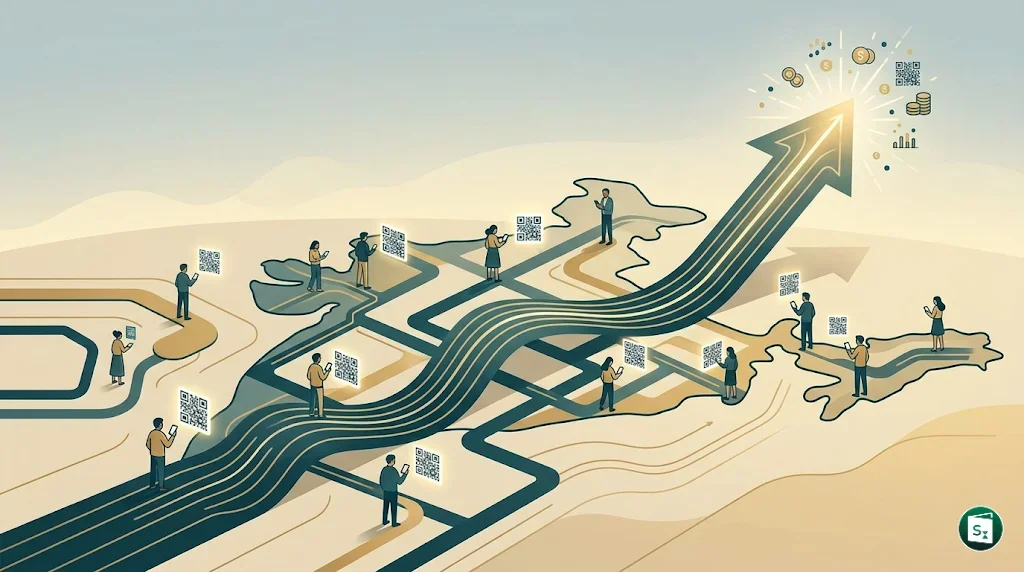
The expansion of merchant infrastructure has been critical to this success. The number of active Quick Response (QR) codes in India grew by 15 percent year-on-year, reaching a total of 731.38 million by the end of 2025. Furthermore, the ATS for merchant payments witnessed a decline, dropping to ₹592. This low average ticket size confirms that digital payments are effectively penetrating the base of the economic pyramid, becoming the preferred method for small-scale commerce.
Evolution of the Card Ecosystem and Bharat BillPay
While UPI continues to dominate the payment landscape, the traditional card ecosystem is carving out specific niches. By the end of 2025, the total number of payment cards in circulation in India exceeded 1.62 billion. There is a clear divergence between credit and debit card usage. Credit card transactions saw a healthy 27 percent growth, reaching 5.69 billion transactions, reflecting their continued popularity for high-value and premium commerce. In contrast, debit card volumes experienced a 23 percent decline, primarily as small-value transactions migrated to UPI.
The report also highlights the impressive performance of recurring payment platforms. Bharat BillPay (BBPS), an integrated bill payment system in India, registered a 40 percent increase in transaction volume. BBPS is operated by NPCI Bharat BillPay Limited (NBBL), a wholly-owned subsidiary of the NPCI. This ecosystem offers interoperable and accessible bill payment services across the country through a network of agents and online channels, simplifying utility and service payments for millions.
Strengthening Payment Infrastructure and Financial Inclusion
The data from Worldline, a global leader in payment services headquartered in Puteaux, France, underscores a maturing digital payments landscape in India. The surge in merchant acceptance points, including QR codes and POS (Point of Sale) terminals, is a testament to the success of the Digital India mission. By providing multiple payment rails that work in a complementary fashion, the Indian financial ecosystem is becoming more inclusive, ensuring that even rural and semi-urban populations have access to formal digital financial services.
As India moves toward a cashless future, the focus is shifting from simply providing access to ensuring the security and efficiency of the existing infrastructure. The Worldline report suggests that the dominance of UPI, combined with the strategic growth of credit cards and bill payment platforms, creates a multi-layered financial framework. This framework is capable of supporting the diverse needs of India’s vast population, ranging from small-ticket vegetable purchases to large-scale industrial transactions.
Key Takeaways
- The Unified Payments Interface (UPI) processed 228.5 billion transactions in 2025, marking a 33 percent year-on-year growth.
- The total value of UPI transactions in 2025 reached a significant milestone of ₹299.74 trillion.
- Person-to-Merchant (P2M) transactions surged by 34 percent to 143.82 billion, with the average ticket size for such payments dropping to ₹592.
- India’s merchant infrastructure expanded with the total number of active Quick Response (QR) codes reaching 731.38 million by the end of 2025.
- The National Payments Corporation of India (NPCI), established in 2008, serves as the umbrella body for retail payments in the country.
- Bharat BillPay (BBPS), managed by a subsidiary of NPCI, registered a 40 percent increase in transaction volume during 2025.