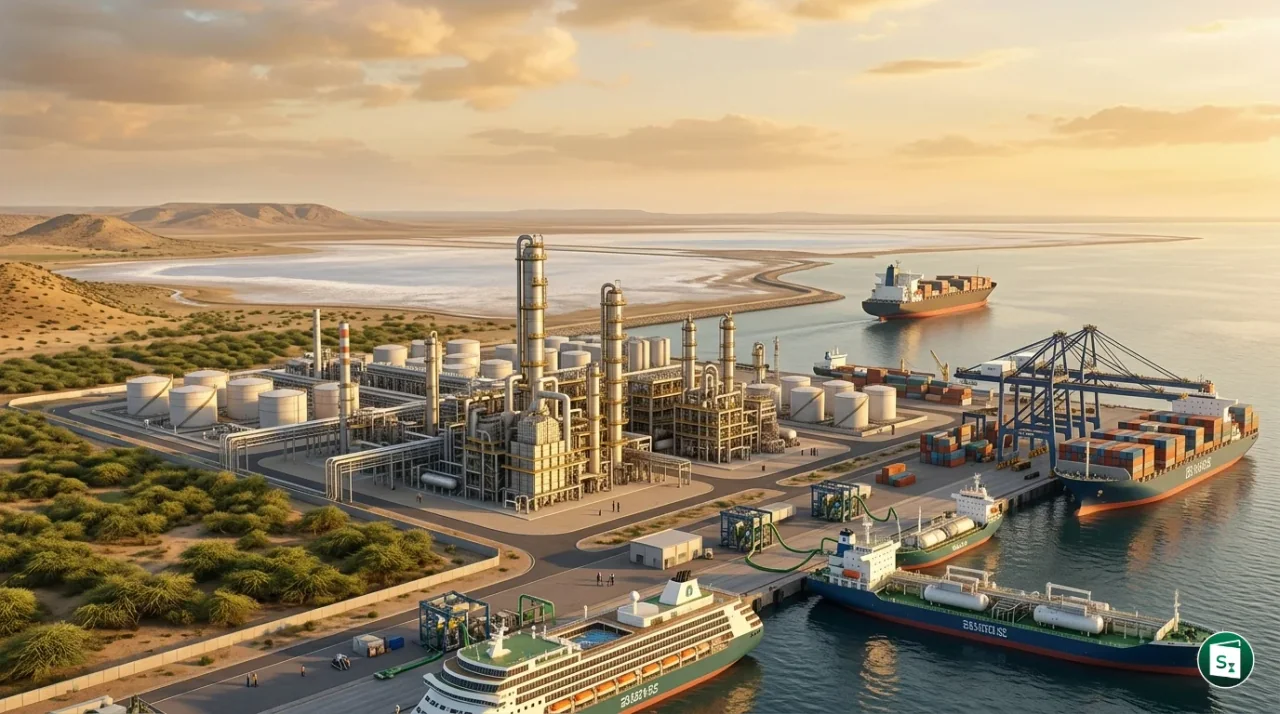
India inaugurated its first green methanol production facility on May 13, 2026, at the Deendayal Port Authority (DPA) in Kandla, Gujarat. This landmark project utilizes advanced biomass gasification technology to transform the invasive Prosopis juliflora shrub into high-purity sustainable marine fuel. The initiative marks a significant step toward decarbonizing India’s shipping sector and restoring the local ecological balance in the Kutch region.
India’s First Green Methanol Facility: A Milestone in Sustainable Fuel
The green methanol facility is a pioneering collaboration between Thermax Limited, which handles the engineering and chemical processing, and Ankur Scientific Energy Technology Limited, providing the core gasification technology. Executed for Synthesis, the plant has an initial production capacity of 5 tonnes per day, which translates to approximately 1,800 tonnes annually. This modular unit is designed to produce bio-methanol with over 99.9% purity, meeting international ASTM standards and complying with stringent European Union certification norms for green fuels.
The facility represents India’s first successful attempt to produce methanol from non-fossil sources on a commercial pilot scale. Unlike conventional grey methanol produced from natural gas or coal, green methanol is derived from renewable biomass, significantly reducing the carbon footprint of the fuel. This project serves as a demonstration model that can be scaled up to meet the growing demand for clean energy in the maritime and industrial sectors.
Harnessing Invasive ‘Gando Baval’ as Feedstock
The primary feedstock for the facility is Prosopis juliflora, a hardy and invasive Mexican shrub introduced to India in the late 19th century. In the Kutch region of Gujarat, it is locally known as Gando Baval (crazy baval) due to its aggressive spread across the Banni grasslands. While it was originally intended to check desertification, it has since become an ecological menace, overwhelming native flora, depleting groundwater levels, and threatening the livelihoods of pastoral communities.
Addressing the Ecological Challenge in Kutch
By utilizing this invasive species as a resource, the project creates a circular economy model that provides both environmental and economic benefits. The large-scale removal of Prosopis juliflora for fuel production helps restore the native biodiversity of the Banni ecosystem. This dual-purpose approach transforms a significant ecological burden into a sustainable source of energy, providing a template for other regions in India grappling with invasive plant species.
Advanced Biomass Gasification Technology
The facility uses a two-stage thermochemical process to convert solid biomass into liquid methanol. In the first stage, Ankur Scientific’s biomass gasifier uses controlled heating with a limited supply of oxygen to break down the wood into syngas (synthesis gas). This gas is a mixture of hydrogen, carbon monoxide, and carbon dioxide.
In the second stage, Thermax’s chemical processing unit cleans and conditions the syngas before passing it through a catalyst-based reactor. This process synthesizes the gas into high-purity green methanol. The integration of these two advanced technologies ensures high efficiency and minimal waste, making it a viable alternative to petroleum-based fuel production.
Strategic Decarbonization of the Maritime Sector
Methanol is increasingly recognized as a critical fuel for the decarbonization of the global shipping industry. The international maritime sector is under pressure to reduce greenhouse gas emissions, and green methanol offers a ready-to-use alternative that can be utilized in existing engine designs with minor modifications. India’s maritime sector is projected to require approximately 37,000 tonnes of methanol by 2030, and this facility is a crucial first step toward achieving self-reliance in this domain.
Alignment with Harit Sagar Guidelines and Vision 2030
The project is closely aligned with the Harit Sagar Guidelines (2023) launched by the Ministry of Ports, Shipping and Waterways, which aim to transition Indian ports toward zero carbon emissions. It also supports the Maritime India Vision 2030, a comprehensive roadmap to modernize and green the country’s maritime infrastructure. By producing domestic green fuel, the facility helps reduce India’s dependence on imported fossil fuels and contributes to the national goal of achieving Net Zero by 2070.
Deendayal Port: A Hub for India’s Green Transition
The Deendayal Port Authority (DPA), formerly known as Kandla Port, is one of India’s 12 major ports and has historically been the country’s largest cargo-handling port by volume. Located in the Kutch district of Gujarat, the port is strategically positioned to serve the hinterland of North and West India. The establishment of the green methanol plant within the port premises highlights DPA’s commitment to becoming a global hub for green energy.
The port was renamed in 2017 after Pandit Deendayal Upadhyay, a prominent Indian thinker and politician. By hosting India’s first green methanol facility, Deendayal Port is positioning itself as a leader in the adoption of green hydrogen and its derivatives, fostering an ecosystem for sustainable maritime logistics.
Key Takeaways
- India’s first green methanol production facility was established at the Deendayal Port Authority (DPA) in Kutch, Gujarat, on May 13, 2026.
- The project is a collaborative effort between Thermax Limited and Ankur Scientific Energy Technology Limited, with an initial capacity of 5 tonnes per day.
- The facility uses advanced biomass gasification technology to convert the invasive shrub Prosopis juliflora (locally known as Gando Baval) into sustainable marine fuel.
- The green methanol produced meets international ASTM standards with a purity level exceeding 99.9%.
- The initiative aligns with the Harit Sagar Guidelines (2023) and Maritime India Vision 2030 to decarbonize the Indian shipping sector.
- Deendayal Port, formerly known as Kandla Port, is one of India’s 12 major ports and was renamed in 2017 after Pandit Deendayal Upadhyay.