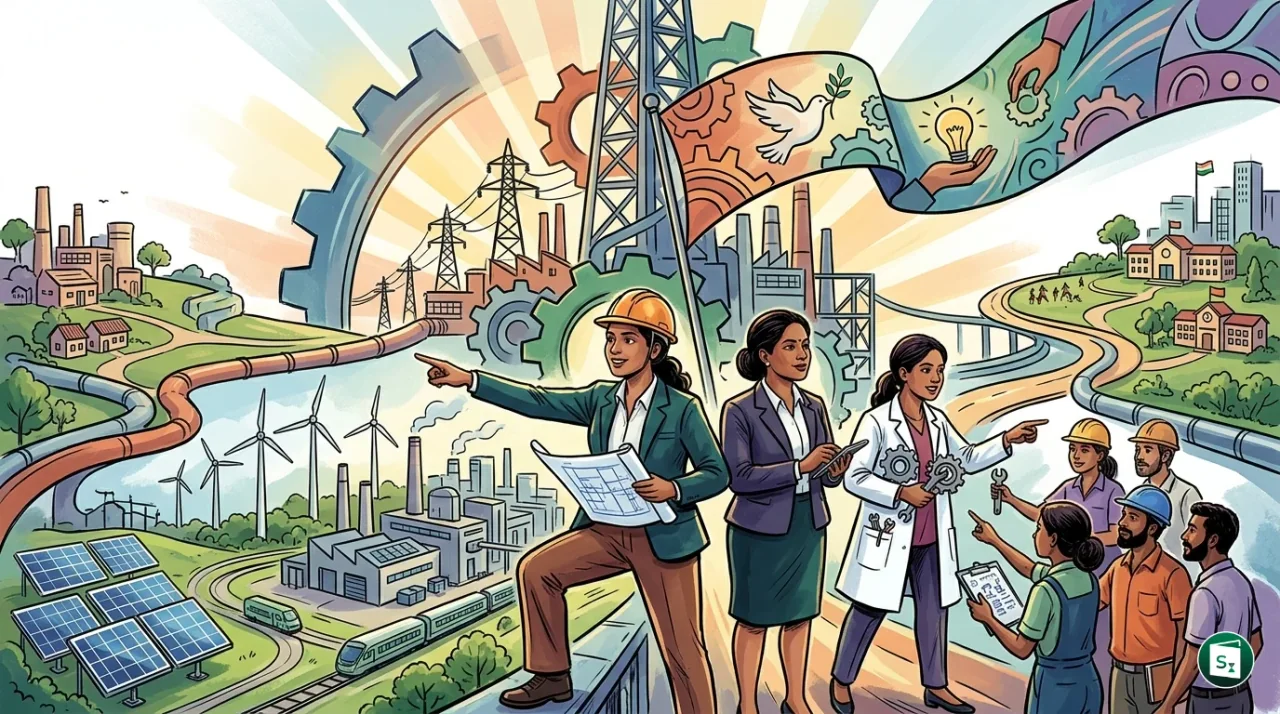
The first-ever International Day of Women in Industry was celebrated on April 21, 2026, marking a historic step toward acknowledging the vital contributions of women to global industrial progress. Proclaimed by the United Nations Industrial Development Organization (UNIDO), the day aims to highlight the importance of gender equality and the empowerment of women in achieving sustainable industrialization. This inaugural observation focuses on the theme “Celebrating Women’s Leadership in Industrial Development” to inspire more inclusive participation across the sector.
Proclamation and Significance of the Day
The International Day of Women in Industry (IDWI) was officially proclaimed by a resolution at the UNIDO General Conference during the 2025 Global Industry Summit held in Riyadh, Saudi Arabia. The choice of April 21 as the date for this annual observation is deeply symbolic. It commemorates the anniversary of the entry into force of UNIDO’s first Policy on Gender Equality and the Empowerment of Women in 2009.
This day serves as a global platform to advocate for gender-responsive industrial policies. It addresses the existing gender gap in the industrial workforce, where women often remain underrepresented, particularly in technical and leadership roles. By dedicating a specific day to women in industry, the international community reinforces its commitment to Sustainable Development Goal 5 (Gender Equality) and Sustainable Development Goal 9 (Industry, Innovation, and Infrastructure).
Theme for 2026: Leadership in Industrial Development
The theme for the inaugural International Day of Women in Industry is “Celebrating Women’s Leadership in Industrial Development”. This theme underscores the necessity of having women at the decision-making table to drive innovation and sustainability. Research consistently shows that diverse leadership teams are more likely to implement greener technologies and foster socially responsible business practices.
Focusing on leadership is crucial because, while women’s participation in the industrial workforce is growing, they still face a “glass ceiling” in many regions. By highlighting success stories of women CEOs, plant managers, and industrial engineers, the 2026 celebrations aim to break stereotypes. UNIDO has emphasized that the transition to Industry 5.0, which focuses on human-centricity and sustainability, cannot be achieved without the full participation of women leaders.
UNIDO’s Commitment to Gender Equality
The United Nations Industrial Development Organization (UNIDO) is a specialized agency of the United Nations that promotes industrial development for poverty reduction, inclusive globalization, and environmental sustainability. Headquartered in Vienna, Austria, UNIDO was established in 1966 and became a specialized agency in 1985. Since then, it has played a pivotal role in shaping global industrial standards.
The 2009 Gender Policy was a landmark document for the organization, as it mandated the integration of gender perspectives into all its technical cooperation programs. UNIDO’s current strategy, led by Director General Gerd Müller, continues to prioritize women’s economic empowerment. The organization works with governments to remove legal and structural barriers that prevent women from entering high-growth industrial sectors like renewable energy and electronics.
Women in India’s Industrial Sector: Current Trends
In India, the participation of women in the manufacturing sector has seen a significant rise. As of 2026, women constitute approximately 35.2% of the manufacturing workforce. This growth is particularly evident in emerging industrial hubs in Southern and Western India, where states like Tamil Nadu have reported female participation rates as high as 43%.
The “feminization” of manufacturing jobs is most visible in specific sectors where women now hold a majority of positions. The following table highlights the concentration of the female workforce in key Indian industries:
| Industry Sector | Approximate Female Participation |
|---|---|
| Tobacco Manufacturing | 93% |
| Apparel and Garments | 65% |
| Textiles | 50% |
| Electronics Assembly | 70% to 80% |
Government initiatives, such as the new Labour Codes, have further supported this trend by permitting women to work night shifts across all sectors, provided safety protocols are in place. Additionally, Production Linked Incentive (PLI) schemes in sectors like electronics and mobile manufacturing have directly contributed to large-scale female hiring in dedicated industrial zones.
The Path Towards Inclusive Industrialization
While the progress is encouraging, the International Day of Women in Industry also highlights the challenges that remain. A large portion of the female industrial workforce in developing nations is still concentrated in the informal sector, where they often lack social security and legal protection. Moving forward, the focus is on integrating these workers into the formal economy and providing them with specialized training in STEM (Science, Technology, Engineering, and Mathematics) fields.
UNIDO advocates for a multi-stakeholder approach involving governments, private sector leaders, and civil society to create a more equitable industrial landscape. By addressing barriers such as the lack of affordable childcare and unsafe transportation, nations can unlock the full economic potential of their female workforce. The celebration of this day is a reminder that inclusive industrialization is not just a social imperative but a critical driver of global economic resilience.
Key Takeaways
- The first International Day of Women in Industry was observed globally on April 21, 2026.
- The date commemorates the entry into force of the first Policy on Gender Equality by UNIDO in 2009.
- The theme for the 2026 observation is “Celebrating Women’s Leadership in Industrial Development”.
- UNIDO, headquartered in Vienna, was established in 1966 and is currently led by Director General Gerd Müller.
- In India, women make up approximately 35.2% of the manufacturing workforce as of 2026.
- The initiative aligns with Sustainable Development Goal 5 (Gender Equality) and Goal 9 (Industry, Innovation, and Infrastructure).