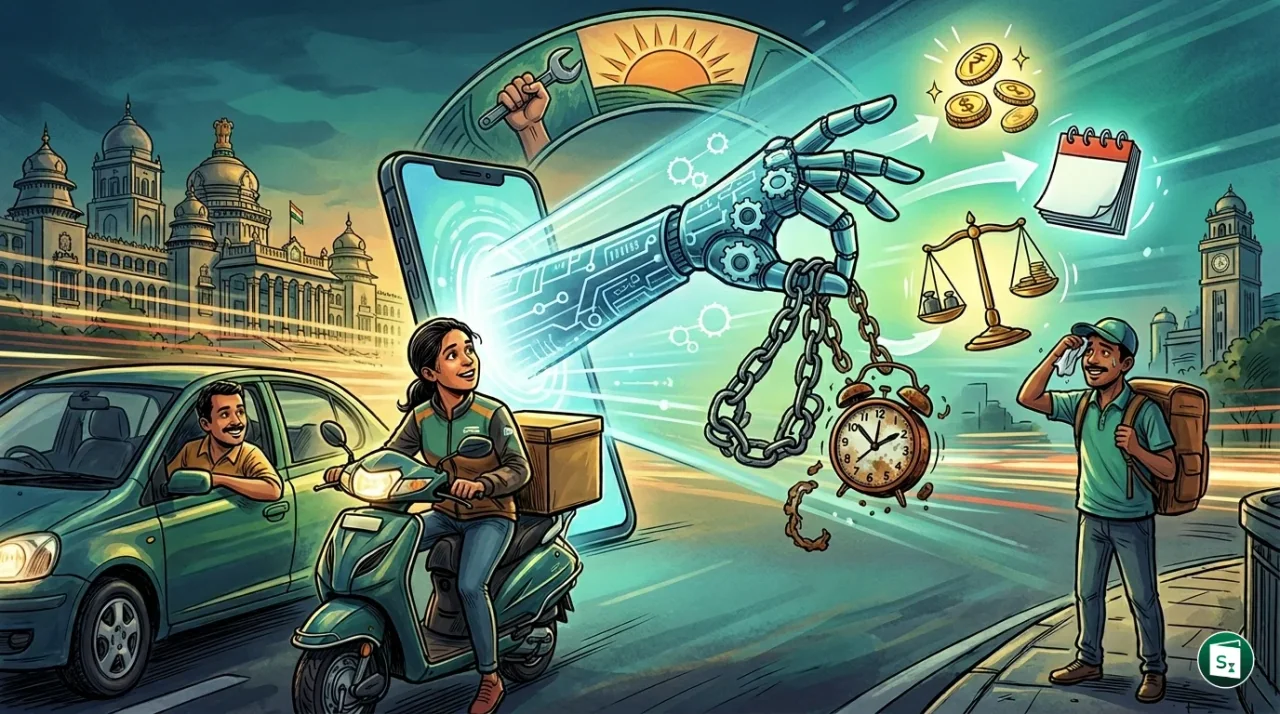
Karnataka inaugurated India’s first digital grievance redressal framework for gig workers on May 1, 2026, creating a formal legal channel for platform-based labor disputes. Operating through the Integrated Public Grievance Redressal System (IPGRS) portal, the mechanism allows workers to file complaints regarding payments, working environments, and unfair deactivations. This move operationalizes key provisions of the state’s landmark welfare legislation for the gig economy.
A Milestone for Labor Rights in the Gig Economy
The framework was developed by the Karnataka Platform-based Gig Workers’ Board in collaboration with the Department of e-Governance. It provides a structured mechanism for workers engaged with digital aggregators to seek redressal for professional grievances. By integrating this system into the state’s existing IPGRS infrastructure, the government aims to bring transparency and accountability to a sector that has historically operated with minimal regulatory oversight.
The launch, which took place on International Workers’ Day, underscores the state’s commitment to the welfare of platform-based employees. This digital platform is designed to handle a wide range of issues, including unpaid wages, hazardous working conditions, and disputes arising from algorithmic management. It represents the first time an Indian state has provided a dedicated legal recourse for gig workers, who are often classified as independent contractors rather than traditional employees.
The IPGRS Framework: How the System Works
The Integrated Public Grievance Redressal System (IPGRS) serves as the primary entry point for gig workers to register their concerns. When a worker submits a complaint via the portal, it is automatically categorized and forwarded to the Internal Dispute Resolution Committee (IDRC) of the respective aggregator platform. Every aggregator operating in Karnataka is now mandated to maintain this committee to address worker issues internally before the state intervenes.
This automated routing ensures that the grievance reaches the relevant authority without bureaucratic delays. The portal tracks each complaint through a unique ID, allowing workers to monitor the status of their grievances in real-time. This system bridges the gap between the worker and the management of large platform companies, providing a formal record of all disputes and their resolutions.
Timeline for Dispute Resolution and Escalation
The framework establishes strict timelines to prevent grievances from languishing. Once a complaint is received, the platform’s IDRC is expected to attempt a resolution within 15 working days. A final order on the grievance must be issued within a maximum of 45 days. If the platform fails to meet these deadlines, the worker has the right to move the matter to the next level of authority.
For cases where the worker is dissatisfied with the IDRC’s decision, an escalation mechanism is provided. The worker can appeal the decision to the Karnataka Platform-Based Gig Workers Welfare Board within 30 days of receiving the final order. The Board, which is chaired by the state Labour Minister, currently Santosh Lad, acts as a quasi-judicial body to ensure fair treatment and legal compliance by the aggregators.
Legal Foundation: The 2025 Gig Workers Act
The grievance redressal framework is a direct outcome of the Karnataka Platform-Based Gig Workers (Social Security and Welfare) Act, 2025. This legislative act was the first in India to specifically target the social security needs of platform laborers. It mandates that aggregators contribute to a welfare fund, provide accidental insurance, and implement a transparent payment system. The digital portal is the implementation tool that gives teeth to these legislative promises.
While the central government’s Code on Social Security, 2020, introduced the definitions of ‘gig worker’ and ‘platform worker’ at a national level, Karnataka’s act goes further by establishing a state-specific board and a legal redressal mechanism. This proactive approach addresses the unique challenges of the gig economy, such as the lack of formal contracts and the vulnerability of workers to arbitrary algorithm-driven decisions.
Significance for the Gig Workforce
The introduction of a digital grievance system is a significant step toward formalizing India’s vast gig economy. Karnataka, particularly Bengaluru, is a major hub for digital platforms, with estimates suggesting over 12 lakh active gig workers across the state. For these workers, the portal provides a shield against common industry challenges, such as arbitrary account deactivation without prior notice or explanation.
By mandating that aggregators provide reasons for deactivation and a chance for the worker to be heard, the framework introduces a layer of professional dignity. It also addresses the critical issue of payment delays or deductions, which often occur due to technical glitches or opaque platform policies. The availability of a state-monitored portal ensures that platforms cannot ignore worker complaints, as the data is accessible to the Labour Department for regulatory auditing.
Key Takeaways
- Karnataka launched India’s first digital grievance redressal portal for gig and platform workers on May 1, 2026.
- The portal is integrated into the state’s existing Integrated Public Grievance Redressal System (IPGRS) framework.
- The initiative operationalizes the legal provisions of the Karnataka Platform-Based Gig Workers (Social Security and Welfare) Act, 2025.
- Every digital aggregator is required to form an Internal Dispute Resolution Committee (IDRC) to address worker complaints.
- The IDRC is mandated to resolve grievances within 15 working days, with a final order required within 45 days.
- Unresolved or unsatisfactory decisions can be appealed to the Karnataka Platform-Based Gig Workers Welfare Board within 30 days.
- The state Labour Minister, currently Santosh Lad, acts as the ex-officio Chairperson of the Welfare Board.