Karnataka launched India’s first integrated technology-driven monitoring portal on May 22, 2026, to track Not of Standard Quality (NSQ) medicines and regulate Narcotic Drugs and Psychotropic Substances (NDPS). Developed by the state Food Safety and Drug Administration (FDA) department, the portal establishes a digital framework for real-time surveillance of drug quality across the state. This initiative makes Karnataka the first state in India to automate the recall of substandard drugs while strictly monitoring controlled substances to ensure public health safety.
Strengthening Public Safety Through Digital Surveillance
The portal represents a major shift from manual, paper-based monitoring to an integrated digital ecosystem. By connecting the databases of manufacturers, wholesalers, and retailers, the state can now monitor the entire pharmaceutical supply chain in real time. This level of connectivity ensures that any quality failure or suspicious distribution pattern is immediately visible to the regulatory authorities, significantly reducing the response time during emergencies.
The Karnataka Drugs Control Department (KDCD), which operates under the Ministry of Health and Family Welfare, is the primary implementing agency for this project. The initiative is part of a broader push to modernize drug regulation in Karnataka, which is a major pharmaceutical hub in India, contributing approximately 10% of the country’s pharmaceutical revenue. By digitizing record-keeping, the department aims to eliminate the gaps that previously allowed substandard drugs to remain in the market after being flagged.
Revolutionizing the Recall of Substandard Medicines
Medicines that fail to meet the prescribed standards of quality are classified as Not of Standard Quality (NSQ). Previously, once a drug was declared NSQ, the recall process was manual and slow, often taking weeks to reach every retail pharmacy. The new portal automates this process through several key features:
Automated Batch Locking Mechanism
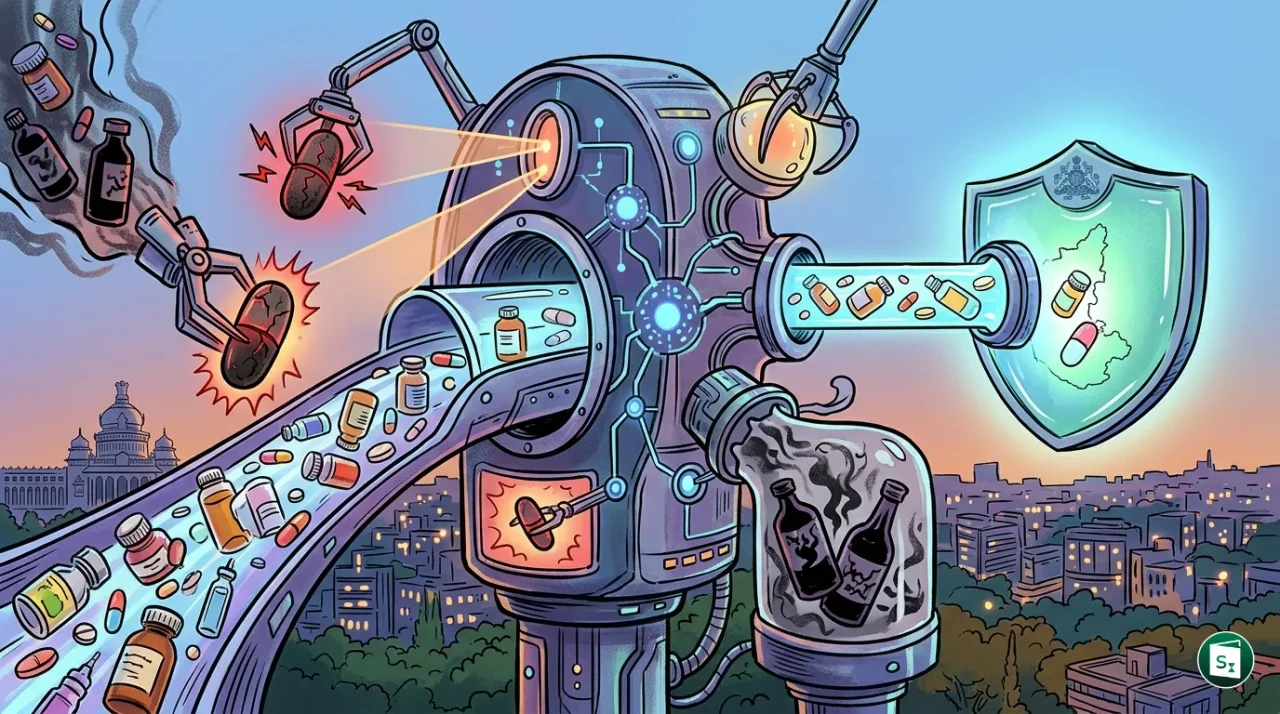
The most innovative feature of the portal is the Automatic Locking system. Once a specific batch of a drug is identified as substandard and uploaded to the portal, the system automatically locks that batch in the linked databases of all registered wholesalers and retailers. This prevents any further transaction or sale of the affected medicines instantly across the state.
Real-time Inventory Visibility
The portal provides the FDA department with real-time data on the available stock of any NSQ batch. Authorities can track exactly how much stock is held by retailers and the quantities returned to suppliers. Furthermore, Karnataka has introduced the e-signing of Form-13, the official laboratory report for substandard drugs. This allows for the immediate legal initiation of the recall process. In the 2025-26 period, Karnataka successfully recalled medicines worth ₹1.85 crore, and the new portal is expected to significantly enhance this efficiency.
Enhanced Regulation of Narcotic and Psychotropic Drugs
Beyond quality monitoring, the portal introduces stringent digital oversight for medicines regulated under the Narcotic Drugs and Psychotropic Substances (NDPS) category. These drugs, often used for pain management or psychiatric conditions, have a high potential for misuse and addiction.
Digital Record-Keeping
Pharmacies in Karnataka are now required to maintain digital records of every NDPS drug sale. This includes uploading the patient’s name, doctor’s credentials, and a copy of the prescription to the portal. This system replaces the traditional physical registers, which were difficult to audit and often only checked during occasional inspections.
Data-Driven Pattern Analysis
The portal enables the KDCD to conduct advanced data analytics to identify suspicious trends. For example, the system can flag instances where unusually high quantities of controlled substances are being sold to a single individual or if a specific doctor is issuing an excessive number of NDPS prescriptions. By identifying these patterns early, the department can conduct targeted inspections of pharmacies and medical practitioners, ensuring that these powerful medicines are used only for legitimate therapeutic purposes.
The Regulatory Framework: Acts and Implementation
The regulation of drug quality in India is primarily governed by the Drugs and Cosmetics Act, 1940. This central legislation ensures that all drugs manufactured and sold in India meet the safety and efficacy standards prescribed in its Second Schedule. Drugs that fail lab tests for parameters like dissolution or active ingredient content are officially listed as NSQ. While the national-level Central Drugs Standard Control Organization (CDSCO) issues monthly alerts, the responsibility for enforcement and batch recall lies with state regulators.
Simultaneously, the Narcotic Drugs and Psychotropic Substances (NDPS) Act, 1985, provides the legal basis for controlling substances with a high potential for abuse. Karnataka’s new portal integrates the requirements of both these acts into a single digital platform, setting a national benchmark for regulatory efficiency.
Significance for Karnataka’s Pharmaceutical Sector
Karnataka is one of India’s most important pharmaceutical landscapes, ranking 5th in India for pharmaceutical exports. The state accounts for roughly 12% of the country’s total pharma export value and hosts major global and domestic players. Bengaluru, often referred to as the Biotech Capital of India, is at the forefront of the Biopharma SHAKTI initiative, which focuses on high-value biosimilars and innovation.
By implementing this first-of-its-kind portal, Karnataka is reinforcing its position as a global hub for pharmaceutical manufacturing and compliance. The system not only protects domestic consumers but also enhances the international reputation of drugs manufactured in the state by ensuring a highly transparent and accountable supply chain.
Key Takeaways
- Karnataka launched India’s first integrated monitoring portal for Not of Standard Quality (NSQ) and NDPS drugs on May 22, 2026.
- The portal features an Automatic Locking mechanism that freezes substandard drug batches in wholesaler and retailer databases instantly across the state.
- Karnataka has introduced the e-signing of Form-13 to accelerate the legal process for recalling flagged medicines.
- Pharmacies are now mandated to maintain digital records for all NDPS drug sales, including patient details and doctor prescriptions.
- The Food Safety and Drug Administration department uses pattern analysis to identify suspicious trends, such as excessive prescriptions or sales of controlled substances.
- The regulatory framework for the portal is based on the Drugs and Cosmetics Act, 1940, and the NDPS Act, 1985.