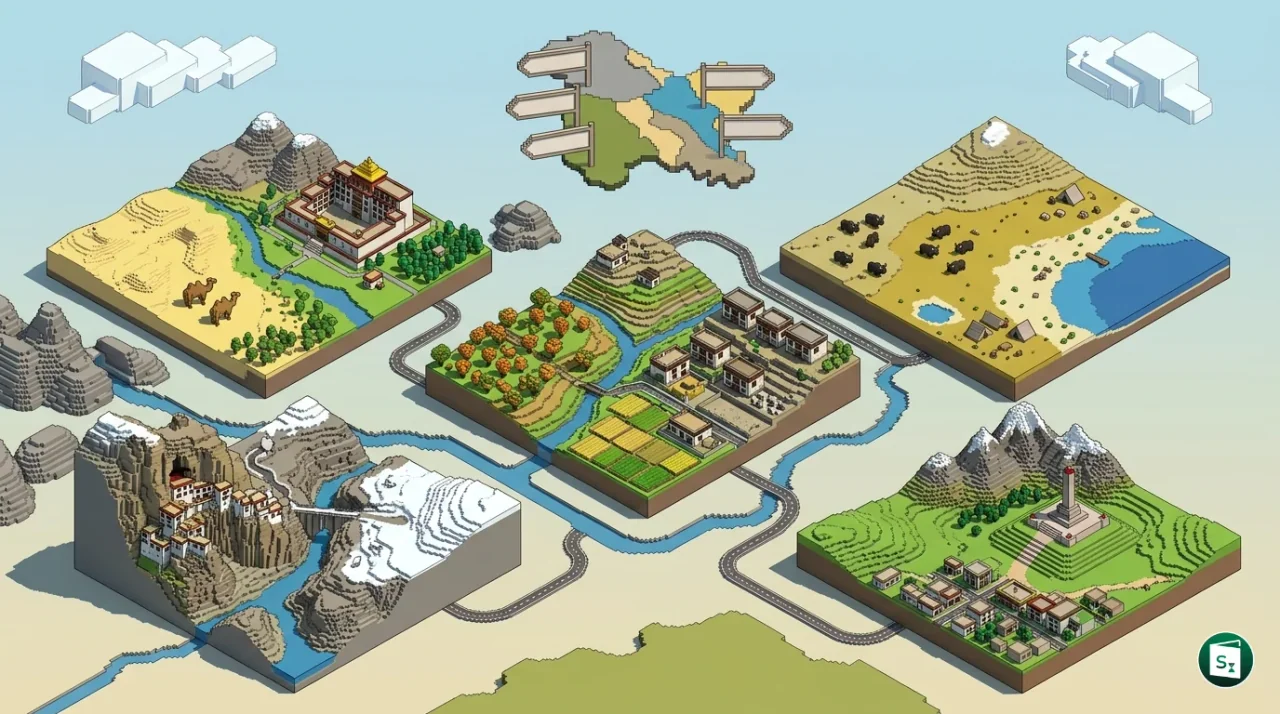
The Lieutenant Governor of Ladakh, Vinai Kumar Saxena, has officially notified the establishment of five new districts in the Union Territory, marking a major expansion of the region’s administrative framework. These new districts, namely Nubra, Sham, Changthang, Zanskar, and Drass, increase the total number of districts in Ladakh from two to seven. This transition aims to decentralise governance and improve the delivery of public services in some of the most remote and strategically sensitive parts of India.
Overview of the Administrative Reorganisation
The decision to expand the number of districts in Ladakh was first given preliminary approval by the Ministry of Home Affairs (MHA) in August 2024. Following this, the Union Territory administration constituted a high-level committee to oversee the logistical and administrative requirements for the new districts. This committee conducted extensive field visits and consulted with local delegations to finalise the boundaries, staffing, and infrastructure needs for each new administrative unit.
Prior to this reorganisation, Ladakh consisted of only two districts: Leh and Kargil. The vast and rugged geography of the region, coupled with a sparse and scattered population, often made it difficult for residents in remote areas to access government offices. In some cases, citizens had to travel more than 300 kilometres to reach the district headquarters. The creation of these five new districts is designed to bring the administration directly to the doorsteps of the people.
Details of the Five New Districts
The new districts have been carved out by subdividing the existing territories of Leh and Kargil. Each district has been assigned a headquarters to facilitate local administration.
Districts Carved Out from Leh
Three of the new districts were previously part of the Leh district:
- Nubra: Known as the ‘Valley of Flowers,’ Nubra is a high-altitude cold desert located to the north of Leh. Its headquarters is at Diskit. The region is strategically vital as it provides the primary approach to the Siachen Glacier.
- Changthang: This district encompasses a vast high-altitude plateau bordering China. Its headquarters is located at Nyoma. It is home to the Changpa nomads, who produce the world-renowned Pashmina wool, and contains the famous Pangong Tso lake.
- Sham: Often called the ‘Apricot Valley,’ Sham is known for its traditional agriculture and ancient monasteries. The administrative headquarters for this district has been established at Khaltse.
Districts Carved Out from Kargil
Two new districts have been created from the erstwhile Kargil district:
- Zanskar: Historically one of the most isolated regions in India, Zanskar is famous for the Chadar Trek on the frozen Zanskar River. Its headquarters is at Padum. The new district status will help address the long-standing demand for better connectivity and dedicated administrative focus.
- Drass: Located in the Kargil sector, Drass is celebrated as the second coldest inhabited place on Earth. It was a major theatre during the 1999 Kargil War. The headquarters for this district is at Drass-Ranbirpura.
Strategic and Administrative Significance
The administrative reorganisation of Ladakh carries significant weight for India’s internal governance and national security. By creating smaller administrative units, the government aims to ensure that development funds and welfare schemes are more effectively utilised at the grassroots level.
Decentralisation and Improved Governance
Smaller districts allow for a more focused approach to local challenges. In a region where many villages are cut off by heavy snowfall for several months a year, having local administrative offices reduces the dependence on the distant centres of Leh and Kargil. This move is expected to accelerate infrastructure projects, such as the construction of all-weather tunnels and bridges, which are critical for the survival and economic growth of these high-altitude communities.
Strengthening Border Management and Security
Ladakh is a sensitive frontier region that shares borders with both Pakistan and China. The creation of districts like Nubra, Changthang, and Drass, all located along vital borders, strengthens India’s civilian presence in these areas. A robust civilian administration acts as a critical support system for the military and security forces. It ensures better monitoring of activities across the Line of Actual Control (LAC) and the border with Pakistan while providing the local population with a greater sense of belonging and national integration.
Historical and Geographical Context of Ladakh
Ladakh’s transformation into a Union Territory without a legislature took place on 31 October 2019, following the Jammu and Kashmir Reorganisation Act, 2019. Since then, the region has been directly administered by the Central Government through the Lieutenant Governor.
Historically, Ladakh has unique local governance structures known as the Ladakh Autonomous Hill Development Councils (LAHDC). The LAHDC Leh was established in 1995, while the LAHDC Kargil was formed in 2003. These councils have played a vital role in local planning and development. The current expansion into seven districts raises important questions regarding the future structure and jurisdiction of these councils, which the administration is expected to address in subsequent phases.
Geographically, Ladakh is a high-altitude cold desert located between the Karakoram Range to the north and the Himalayas to the south. It is home to the Indus River, which flows through the heart of the territory. The region’s extreme climate and difficult terrain have historically dictated its slow pace of development, a challenge that the new administrative setup intends to overcome.
Key Takeaways
- The Union Territory of Ladakh has officially notified the creation of five new districts, increasing the total number of districts from two to seven.
- The new districts carved out from the Leh and Kargil regions are Nubra, Sham, Changthang, Zanskar, and Drass.
- This administrative reorganisation follows the preliminary approval granted by the Ministry of Home Affairs in August 2024.
- Ladakh became a Union Territory on 31 October 2019 under the Jammu and Kashmir Reorganisation Act, 2019.
- The creation of these districts aims to improve decentralised governance, national security, and public service delivery in remote border areas.
- Drass is notable as the second coldest inhabited place on Earth and a key site of the 1999 Kargil War.