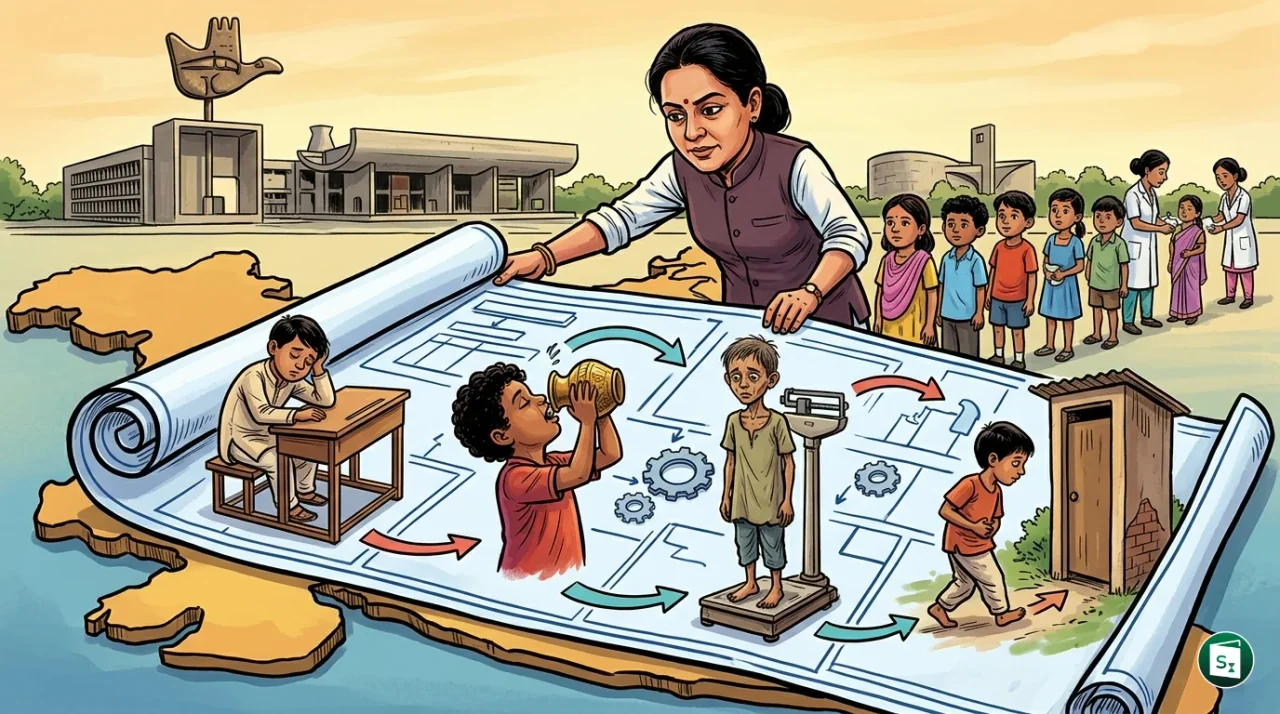
The Ministry of Health and Family Welfare (MoHFW) has released the first-ever national framework for the screening, diagnosis, and management of childhood diabetes in India. Launched during the 10th National Summit on Innovation and Inclusivity in Chandigarh, the Guidance Document on Diabetes Mellitus in Children introduces standardized protocols to ensure early detection and lifelong care. This initiative marks a significant step toward institutionalizing pediatric diabetes care within India’s public healthcare infrastructure.
India’s First National Framework for Childhood Diabetes
The release of the Guidance Document on Diabetes Mellitus in Children represents a landmark moment for India’s healthcare sector. For the first time, the country has a structured and standardized national framework specifically dedicated to the pediatric population, covering children from birth to 18 years of age. This document was unveiled during the National Summit on Best Practices in Public Healthcare Service Delivery held in Chandigarh.
The summit, organized by the MoHFW, serves as a platform for sharing scalable healthcare solutions across Indian states. By launching this framework, the government aims to formalize the clinical and public health response to childhood diabetes, which has historically been managed through fragmented protocols. The new guidelines unify screening, diagnostic procedures, and long-term treatment strategies into a single national standard to improve patient outcomes and reduce mortality.
The 4Ts Awareness Strategy: Identifying Early Symptoms
A key feature of the new national framework is the 4Ts awareness framework, designed to help parents, teachers, and caregivers identify the early warning signs of Type 1 Diabetes in children. Type 1 diabetes is an autoimmune condition where the body produces little to no insulin. Its symptoms can often be mistaken for common childhood illnesses, leading to delays in treatment. The 4Ts mnemonic provides a simple yet effective tool for rapid recognition.
The four symptoms included in the framework are:
- Toilet: Increased frequency of urination, including a return to bedwetting in children who were previously dry.
- Thirsty: Excessive or unquenchable thirst that persists despite regular fluid intake.
- Tired: Unusual levels of exhaustion, lethargy, or a noticeable lack of energy during daily activities.
- Thinner: Unexplained or rapid weight loss despite having a normal or increased appetite.
Early detection through the 4Ts strategy is critical to preventing Diabetic Ketoacidosis (DKA). DKA is a life-threatening complication that often occurs when Type 1 diabetes is diagnosed late, making awareness campaigns in schools and communities a top priority under the new guidelines.
Universal Screening and the Continuum of Care Model
The guidance document mandates universal screening for all children from birth to 18 years of age. To achieve this, the government will leverage existing community-level and school-based platforms, including Anganwadi centers and educational institutions. This proactive approach ensures that cases are identified early, even in remote or underserved areas where medical facilities may be limited.
To manage diagnosed cases effectively, the framework establishes an Integrated Continuum of Care. This model creates a seamless link between different levels of the healthcare system, ensuring a smooth transition from diagnosis to long-term support. The care path begins with community-level screening, followed by management at district health facilities, and advanced care at medical colleges for complex cases. This structured referral system is designed to provide children with consistent and high-quality medical attention regardless of their geographic location.
Bridging the Gap: Free Healthcare and Support Services
A major pillar of the national framework is the provision of a comprehensive, free-of-cost care package at public health facilities. Recognizing the heavy financial burden that chronic diseases like Type 1 diabetes can place on families, the MoHFW has committed to providing essential services and supplies without charge. This package includes diagnostic tests, lifelong insulin therapy, and monitoring devices such as glucometers and test strips.
Beyond clinical treatment, the framework emphasizes the empowerment of families and caregivers. Managing childhood diabetes requires constant vigilance and specialized skills. The guidelines include structured training programs to help families master insulin administration, blood glucose monitoring, and emergency response. By combining financial support with caregiver education, the framework aims to improve the quality of life for children and reduce long-term complications such as kidney damage or vision loss.
Understanding the Burden of Diabetes in India’s Youth
India currently carries one of the highest burdens of Type 1 Diabetes (T1DM) globally. Data from the IDF Diabetes Atlas 2023 indicates that approximately 1.2 million children and adolescents are living with the condition across the country. The incidence of Type 1 diabetes in India’s younger population is estimated to be increasing by 3 to 5 percent annually. While Type 2 diabetes is also on the rise due to shifting lifestyles and childhood obesity, Type 1 remains a critical concern because of the absolute requirement for external insulin.
The launch of this national framework is a strategic response to these growing figures. Previously, childhood diabetes care in India relied largely on clinical guidelines from the Indian Council of Medical Research (ICMR). The new MoHFW document expands this scope by adopting a public health approach. By integrating care into the national healthcare mission, the government ensures that life-saving treatment is not just a clinical possibility but a public health guarantee for all children.
Key Takeaways
- The Ministry of Health and Family Welfare (MoHFW) released India’s first national Guidance Document on Diabetes Mellitus in Children in May 2026.
- The framework was launched during the 10th National Summit on Innovation and Inclusivity held in Chandigarh.
- The 4Ts awareness framework, standing for Toilet, Thirsty, Tired, and Thinner, helps identify early symptoms of Type 1 Diabetes.
- Public health facilities will now provide a free-of-cost care package including diagnostics, lifelong insulin therapy, and glucometers.
- The guidelines mandate universal screening for all children from birth to 18 years through school and community-based platforms like Anganwadis.
- India has one of the world’s highest burdens of childhood diabetes, with approximately 1.2 million young patients according to the IDF Diabetes Atlas 2023.