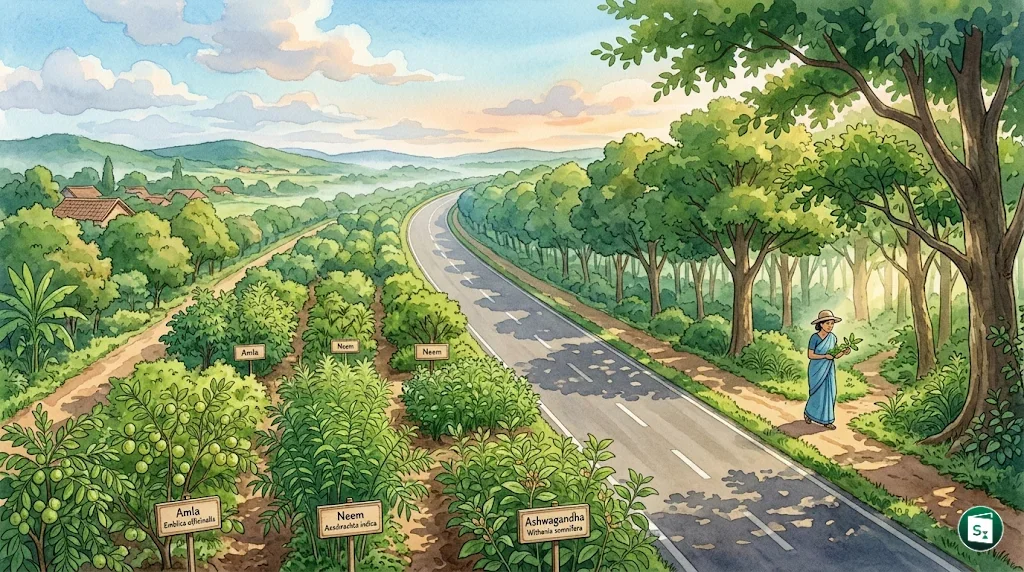
The National Highways Authority of India officially launched the Arogya Van (Health Forest) initiative on April 16, 2026, to develop thematic corridors of medicinal tree species along India’s highway network. This environmental project focuses on establishing functional green belts that promote traditional medicine systems like Ayurveda and conserve indigenous flora across various states. By transforming vacant land parcels into productive repositories of biological diversity, the initiative aims to integrate ecological conservation with infrastructure development.
Objectives of the Arogya Van Initiative
The primary goal of the Arogya Van project is to enhance the environmental and cultural value of the green corridors along the National Highways. Unlike traditional roadside plantations that focus solely on aesthetic appeal or soil stabilization, these health forests are designed to be functional ecosystems. They serve as living repositories of traditional Indian medicinal knowledge, raising public awareness about the therapeutic properties of indigenous tree species.
Beyond its cultural significance, the initiative aims to strengthen ecosystem resilience by introducing a diverse range of plant life. These thematic corridors provide vital habitats for pollinators, birds, and various microfauna, thereby contributing to broader biodiversity conservation efforts. The shift toward medicinal plantations reflects a strategic transition in highway landscaping, moving from passive greenery to active ecological assets.
Implementation and Scope of Phase I
In the initial phase of the project, the National Highways Authority of India has identified 17 specific land parcels for development. These plantations are strategically located near toll plazas, wayside amenities, interchanges, and cloverleaf junctions to maximize their visibility to commuters and enhance public awareness.
| Project Metric | Phase I Coverage |
|---|---|
| Total Land Parcels | 17 Units |
| Total Land Area | 62.8 Hectares |
| Sapling Target | 67,462 Trees |
| Biodiversity | 36 Distinct Species |
To ensure long term sustainability, the authority has also earmarked an additional 188 hectares of vacant land for future expansion. The first phase of the Arogya Van project spans 11 states and Union Territories, ensuring a wide geographic footprint across different agro-climatic zones.
| Geographic Zone | Participating States and UTs |
|---|---|
| Northern India | Delhi-NCR, Haryana, Rajasthan |
| Central India | Madhya Pradesh, Chhattisgarh |
| Western India | Gujarat, Maharashtra |
| Southern India | Andhra Pradesh, Karnataka, Tamil Nadu |
| Eastern India | Odisha |
The authority has selected tree species based on their medicinal properties and regional suitability. The diverse selection includes well known varieties such as Neem, Amla (Indian Gooseberry), Jamun, Imli (Tamarind), Lemon, Gular (Cluster Fig), and Maulsari (Spanish Cherry).
Strategic Significance of Functional Green Corridors
The development of Arogya Van corridors marks a significant departure from conventional roadside forestry. By prioritizing medicinal plants, the National Highways Authority of India is addressing multiple environmental and health objectives simultaneously. These plantations act as carbon sinks and assist in dust mitigation, while their thematic nature provides an educational experience for travelers.
The initiative aligns with Bharat’s broader commitment to preserving its traditional medicinal heritage, particularly the Ayurveda system, which relies heavily on these specific floral species. By creating these health forests, the government is not only enhancing the ecological resilience of the highways but also promoting the conservation of endangered or rare medicinal plant species that are native to different regions of the country.
Institutional Framework and Green Initiatives by NHAI
The National Highways Authority of India (NHAI) is a statutory body established under the National Highways Authority of India Act, 1988. While the legislative act was passed in 1988, the authority became fully operational in 1995. It functions under the administrative control of the Ministry of Road Transport and Highways and is headquartered in New Delhi.
The Arogya Van project is part of a larger portfolio of green initiatives managed by the authority. In 2020, the authority launched the Harit Bharat Sankalp, a nation-wide plantation drive to celebrate its 25th anniversary. To ensure the effective monitoring of these plantations, the authority uses the Harit Path mobile application. This digital platform tracks the location, growth, and maintenance status of saplings, ensuring high survival rates through technological oversight.
Key Takeaways
- The National Highways Authority of India launched the Arogya Van initiative on April 16, 2026, to establish thematic medicinal tree corridors.
- The first phase of the project covers 17 land parcels across 62.8 hectares and includes the planting of 67,462 medicinal trees.
- A total of 36 distinct species, such as Neem, Amla, Jamun, and Gular, have been selected for the thematic plantations.
- The initiative spans 11 states, including Rajasthan, Maharashtra, and Karnataka, primarily focusing on land near toll plazas and highway interchanges.
- NHAI is a statutory body constituted under the NHAI Act, 1988, and it became fully operational in 1995.
- The Harit Path mobile application is the primary digital tool used by the authority to monitor the growth and maintenance of highway plantations.