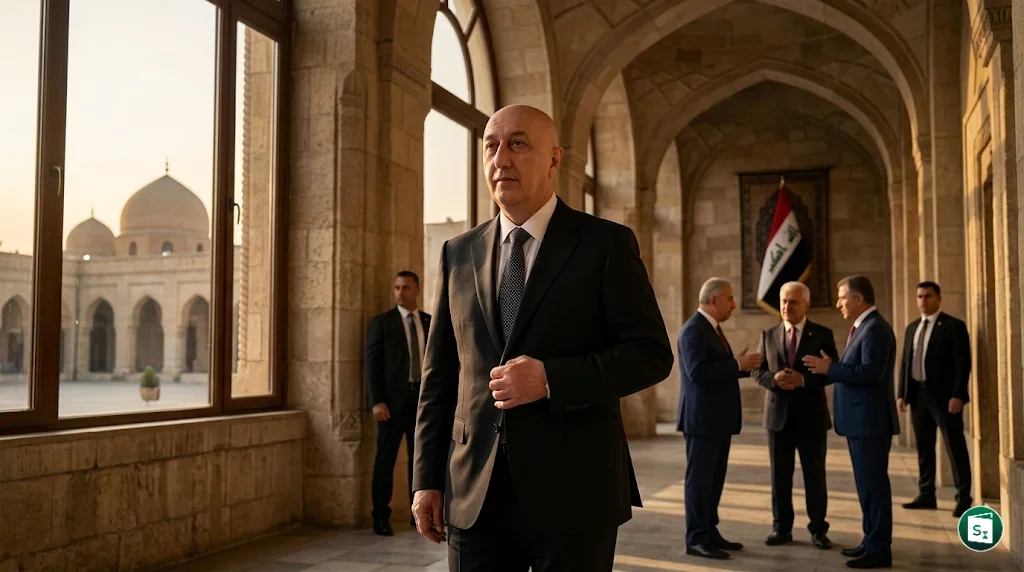
Nizar Mohammed Saeed Amedi, a senior member of the Patriotic Union of Kurdistan (PUK), was elected as the 9th President of Iraq by the country’s parliament on April 11, 2026. He officially assumed office the following day, succeeding Abdul Latif Rashid after securing a decisive victory in the second round of parliamentary voting. This transition in leadership comes at a critical juncture for Iraq as it navigates internal political shifts and regional complexities.
Election Outcome and the Parliamentary Voting Process
The election of the President in Iraq is an indirect process conducted by the Council of Representatives, the national parliament. In the voting session held on April 11, 2026, Nizar Amedi secured 227 votes in the second round of balloting. His victory followed a first round where no candidate managed to achieve the constitutionally mandated two-thirds majority of the total parliamentary membership.
The session was marked by significant political maneuvering. While Amedi enjoyed broad support from several parliamentary blocs, the Kurdistan Democratic Party (KDP), a major rival to the PUK within the Kurdistan Region, chose to boycott the session. The KDP rejected the outcome, claiming the election did not reflect a unified Kurdish consensus. Despite the boycott, the legal quorum was met, allowing the process to proceed and conclude with Amedi’s inauguration on April 12, 2026.
Profile of Nizar Mohammed Saeed Amedi
Born on February 8, 1968, in the Amedi district of Iraq, Nizar Mohammed Saeed Amedi has a long-standing career in both technical and political fields. He graduated with a degree in Mechanical Engineering from the University of Mosul in 1993. Before dedicating himself to public service, he worked as a teacher in the early 1990s.
Amedi’s political journey is deeply connected with the Patriotic Union of Kurdistan (PUK). Over the past two decades, he has held several high-ranking administrative and advisory positions:
- Federal Minister of Environment: He served in the cabinet of Prime Minister Mohammed Shia al-Sudani from late 2022 until 2024.
- Presidential Advisor: Between 2005 and 2022, he served as a senior advisor to the Presidency under multiple leaders, including Fuad Masoum and Barham Salih.
- Chief of Staff: He previously served as the Chief of Staff to President Jalal Talabani between 2008 and 2014.
- Political Bureau Head: Most recently, he led the PUK’s political operations in Baghdad, managing the party’s relations with federal authorities and the Kurdistan Regional Government (KRG).
Political Significance and the PUK-KDP Dynamic
The election of Nizar Amedi represents a significant departure from the traditional Kurdish consensus that has characterized Iraqi politics since 2003. Under the informal Muhasasa (quota) system, government positions are distributed among Iraq’s primary ethnic and religious groups. By convention, the presidency is reserved for a Kurd, the prime ministership for a Shia Muslim, and the speakership of parliament for a Sunni Muslim.
Historically, the two main Kurdish parties, the PUK and the KDP, agreed on a joint candidate for the presidency. However, the 2026 election saw a complete breakdown of this partnership. The KDP, which holds a larger number of seats in the regional assembly, sought a candidate that reflected its electoral strength. Reports suggest that the PUK secured support for Amedi through a strategic deal involving the status of Kirkuk, where the governorship was allegedly traded to a Turkmen candidate in exchange for parliamentary support from other factions. This rift has led the KDP to announce an indefinite boycott of federal parliament sessions, citing constitutional violations and a lack of partnership.
Constitutional Provisions for the Iraqi Presidency
The role and election of the President are governed by the Iraqi Constitution of 2005. While the office is largely ceremonial, it holds symbolic importance as a representative of national unity.
Election Process (Article 70)
According to Article 70, the Council of Representatives elects the President from among the candidates by a two-thirds majority of the total number of its members. If no candidate secures this majority in the first round, the two candidates with the highest number of votes compete in a second round. The candidate who receives the higher number of votes in the second balloting is declared the President.
Eligibility Criteria (Article 68)
To be eligible for the presidency, a candidate must meet the requirements outlined in Article 68:
- Must be an Iraqi by birth and born to Iraqi parents.
- Must be fully qualified and at least 40 years of age.
- Must possess a good reputation and political experience.
- Must not have been convicted of any crime involving moral turpitude.
The President’s primary duties include ratifying treaties and laws approved by the parliament, issuing pardons upon the recommendation of the Prime Minister, and performing ceremonial duties as the Head of State.
Key Takeaways
- Nizar Mohammed Saeed Amedi was elected as the 9th President of Iraq on April 11, 2026.
- He represents the Patriotic Union of Kurdistan (PUK) and succeeds Abdul Latif Rashid.
- Amedi secured 227 votes in the second round of voting in the Council of Representatives, Iraq’s parliament.
- Under Article 70 of the Iraqi Constitution, the President is elected by the parliament, requiring a two-thirds majority in the first round.
- The election was boycotted by the Kurdistan Democratic Party (KDP), highlighting a rift in the traditional Kurdish political consensus.
- Nizar Amedi previously served as the Federal Minister of Environment and was a senior advisor to several former presidents.