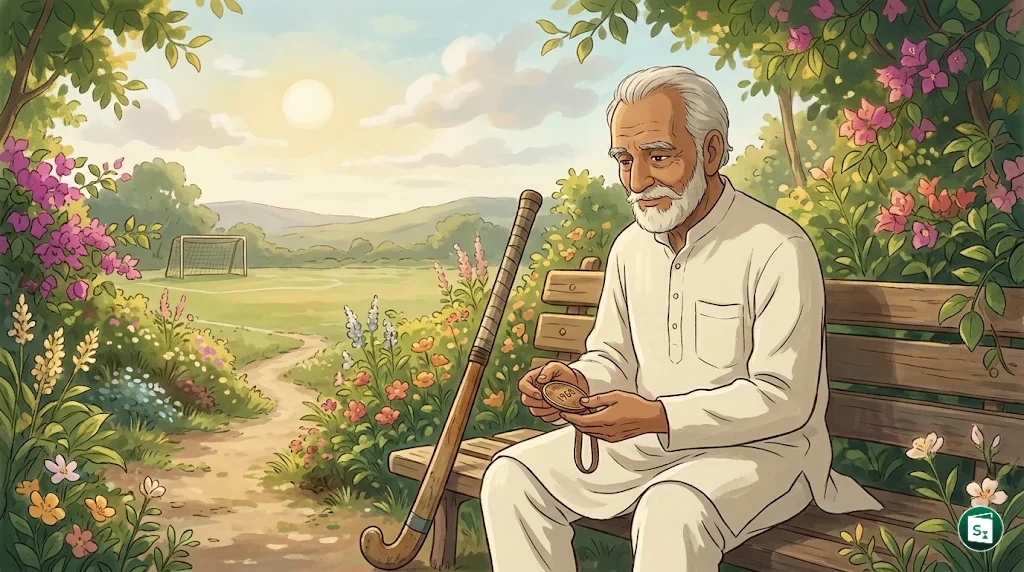
Gurbax Singh Grewal, the legendary Indian hockey forward and a bronze medalist from the 1968 Mexico City Olympics, passed away at the age of 84 on April 24, 2026. A stalwart of Mumbai hockey and Western Railways, Grewal was known for his exceptional speed and technical prowess on the turf during a period of transition for Indian hockey. His passing marks the end of a significant chapter in the sport’s history, where he served with distinction as both a player and a dedicated administrator.
A Legacy on the Turf: The 1968 Olympic Journey
Born on April 1, 1942, in Lyallpur (now Faisalabad in Pakistan), Gurbax Singh Grewal moved to Mumbai in his early twenties to pursue his passion for hockey. He soon became a vital part of the Western Railways team, one of the most prestigious hockey institutions in the country. His career reached its zenith during the 1968 Mexico City Olympics, where he represented India as a pacey forward.
The 1968 Olympics remains a unique milestone in Grewal’s life as he played alongside his brother, Balbir Singh Grewal. This was a rare instance in Indian hockey history where two brothers were part of the same Olympic squad. The Indian team secured the bronze medal after defeating West Germany with a score of 2-1 in the third place playoff. This tournament was significant as it marked the first time India failed to reach the Olympic final since its debut in 1928, highlighting a shift in the global dominance of the sport.
Contribution to Mumbai Hockey and Administration
Beyond his achievements on the international stage, Gurbax Singh Grewal was a central figure in the development of hockey in Mumbai. He served as a Sports Officer with Western Railways, where he mentored numerous young talents and helped maintain the institution’s dominance in domestic competitions. His influence extended to the Mumbai Hockey Association (MHA), where he served as the Honorary Secretary.
During his tenure at the MHA, Grewal was instrumental in modernizing the sport’s infrastructure in the city. One of his most significant contributions was overseeing the renovation of the Mahindra Stadium, ensuring that it remained a premier venue for both national and international matches. His administrative acumen and deep understanding of the game allowed him to navigate the complexities of sports governance while keeping the interests of players at the forefront.
Grewal’s commitment to the sport did not end with his retirement from professional play. He remained an active mentor, often seen at local grounds sharing his vast knowledge with aspiring hockey players. His dedication was recognized by Hockey India, the national governing body, which praised his lifelong service to the game. Grewal’s legacy continues through the many athletes he inspired and the improved facilities he left behind in Mumbai.
A Master of Technical Skill and Speed
Grewal was celebrated not just for his achievements but for his unique style of play. As a forward, he possessed remarkable speed and technical ball-handling skills that made him a formidable opponent on the grass pitches of the 1960s. His ability to create scoring opportunities and his tactical discipline were hallmarks of his game. Even after the transition to synthetic turf, Grewal’s insights into the fundamentals of hockey remained highly relevant. His life was a testament to the values of discipline, teamwork, and an unwavering love for the sport, qualities that defined the golden era of Indian hockey.
Key Takeaways
- Gurbax Singh Grewal, a member of India’s 1968 Mexico City Olympics bronze medal-winning team, passed away at the age of 84.
- He represented Western Railways and was a prominent figure in Mumbai hockey as both a player and administrator.
- A unique career milestone was his participation in the 1968 Olympics alongside his brother, Balbir Singh Grewal.
- He served as the Honorary Secretary of the Mumbai Hockey Association and oversaw the renovation of the Mahindra Stadium.
- The 1968 Olympics marked the first time India won an Olympic bronze medal after failing to reach the final for the first time since 1928.