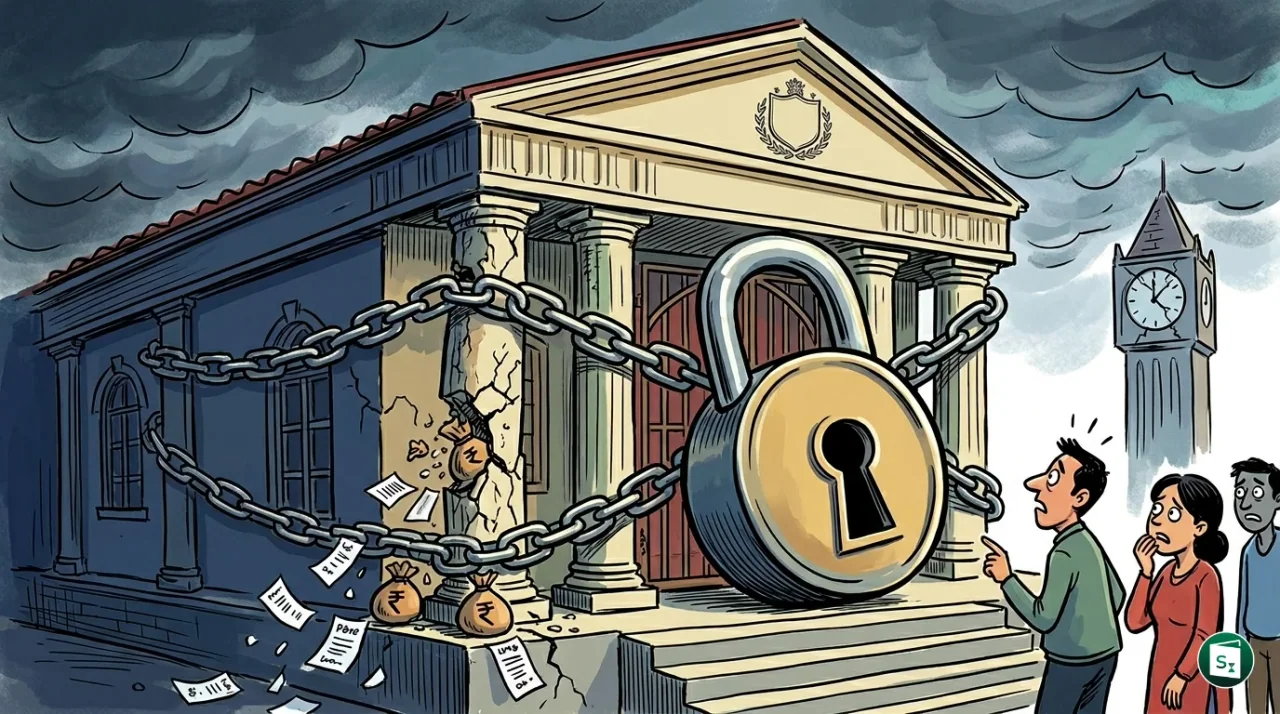
The Reserve Bank of India (RBI) has cancelled the banking licence of Paytm Payments Bank Limited (PPBL), effective from the close of business on April 24, 2026. The banking regulator cited persistent non-compliance and material supervisory concerns as the primary reasons for this severe enforcement action. This move initiates the final winding-up process of the entity, which had been under strict business restrictions since early 2024.
Grounds for License Cancellation
The cancellation of the license was carried out under the powers conferred on the RBI by Section 22(4) of the Banking Regulation Act, 1949. This section allows the central bank to revoke a license if a banking company fails to comply with stipulated conditions or conducts its affairs in a manner detrimental to the interest of its depositors.
In the case of Paytm Payments Bank, the RBI observed that the bank’s general character of management was prejudicial to public interest. Despite several opportunities given over the years to rectify compliance lapses, especially concerning Know Your Customer (KYC) norms and data security, the bank failed to satisfy the regulator’s standards. The RBI concluded that allowing the bank to continue its operations would serve no useful purpose and could potentially harm the broader financial ecosystem.
Impact on Operations and Depositors
With the cancellation of the license, Paytm Payments Bank is strictly prohibited from conducting any banking business. This includes accepting fresh deposits or processing credit transactions. However, the RBI has assured that the bank maintains sufficient liquidity to repay its existing depositors. The regulator will soon file an application with the High Court for the official winding up or liquidation of the bank.
For the parent company, One97 Communications Limited, the impact is expected to be contained. The company has clarified that its core payment services, including the Paytm app, UPI merchant payments, and payment gateway, remain fully operational. These services are now handled through other partner banks rather than the in-house payments bank entity.
What Are Payments Banks?
Payments Banks are a specialized category of banks introduced by the RBI to further financial inclusion by providing small savings accounts and remittance services. The concept was first recommended by the Dr. Nachiket Mor Committee in 2014. These banks target low-income households, small businesses, and the unorganized sector.
Unlike traditional commercial banks, payments banks operate under significant restrictions. They cannot provide loans or issue credit cards. Their primary function is to facilitate digital payments and accept demand deposits, which are currently capped at ₹2 lakh per individual customer.
Key Regulatory Restrictions
To ensure financial stability, the RBI mandates strict investment rules for these entities. Since they cannot lend, they must invest the majority of their deposits in safe government instruments.
| Feature | Payments Bank Restriction |
|---|---|
| Lending | Prohibited from providing loans or credit cards |
| Deposits | Can accept only demand deposits up to ₹2 lakh |
| Investments | Minimum 75% of deposits must be in G-Secs or T-Bills |
| NRI Deposits | Not permitted to accept deposits from NRIs |
The Road Ahead for Paytm
The cancellation of the license marks the end of an era for what was once one of India’s most prominent fintech experiments. The focus for Paytm now shifts towards its role as a Third-Party Application Provider (TPAP) for UPI services. By partnering with other scheduled commercial banks, the company aims to continue its merchant and consumer payment operations without owning a banking license.
From a regulatory standpoint, this action sends a strong signal to the entire fintech industry regarding the non-negotiable nature of compliance and governance. The RBI has repeatedly emphasized that innovation must not come at the cost of regulatory integrity or customer security.
Key Takeaways
- The Reserve Bank of India (RBI) cancelled the banking license of Paytm Payments Bank Limited (PPBL) effective April 24, 2026.
- The regulatory action was taken under Section 22(4) of the Banking Regulation Act, 1949, due to persistent non-compliance and material supervisory concerns.
- Payments Banks in India were conceptualized based on the recommendations of the Dr. Nachiket Mor Committee in 2014.
- These specialized banks are prohibited from lending and cannot issue credit cards to their customers.
- Individual customer deposits in payments banks are capped at ₹2 lakh, and at least 75% of these deposits must be invested in Government Securities (G-Secs).
- The winding-up process for the bank will be initiated through an application to the High Court, while ensuring all depositor liabilities are met.