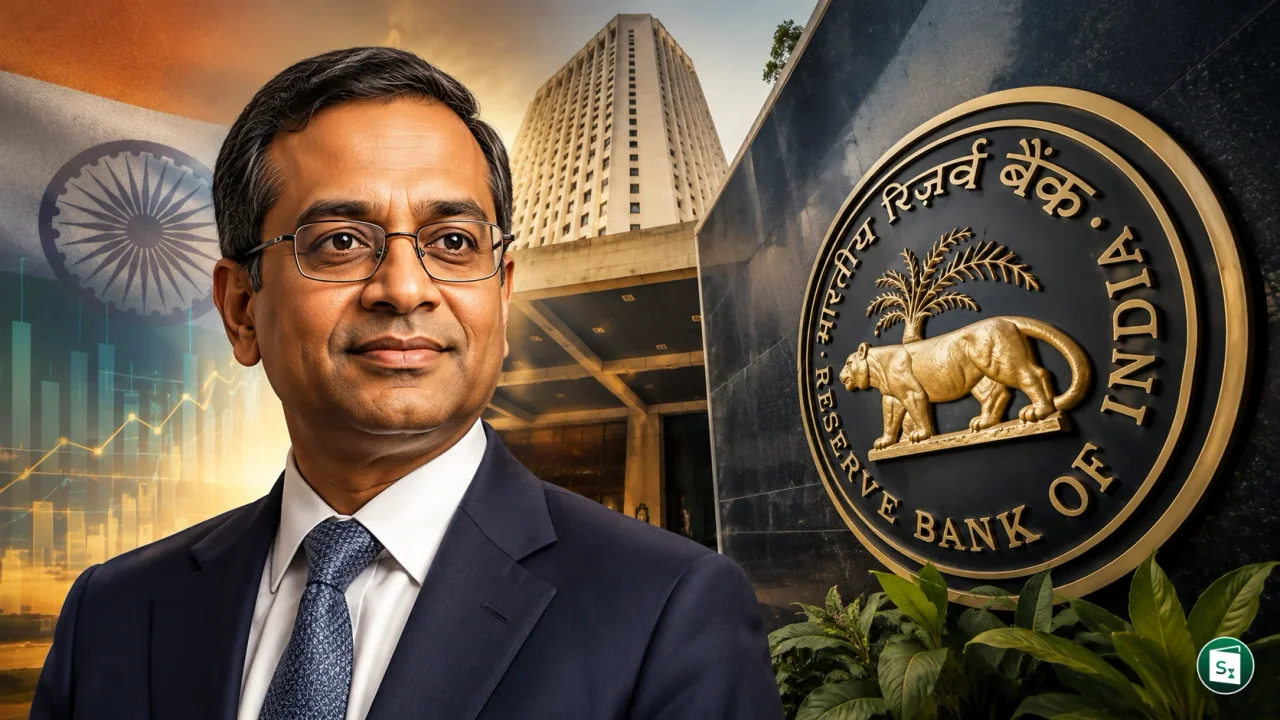
The Appointments Committee of the Cabinet has approved the appointment of Rohit Jain as the Deputy Governor of the Reserve Bank of India (RBI) for a three-year term. Effective from May 3, 2026, Jain succeeds T Rabi Sankar, following the completion of the latter’s tenure at the central bank. This appointment brings a veteran central banker into the top executive layer of India’s monetary authority.
Who Is Rohit Jain?
Rohit Jain is a career central banker with over 34 years of experience at the Reserve Bank of India. Before his elevation to the post of Deputy Governor, he served as an Executive Director at the RBI, where he was primarily responsible for the Department of Supervision. Having joined the institution in 1991, Jain has deep expertise in regulatory and supervisory frameworks, which are critical for maintaining the stability of India’s financial system.
During his tenure as Executive Director, he played a significant role in overseeing the health of commercial banks and non-banking financial companies (NBFCs). His appointment as Deputy Governor is seen as a move to leverage his internal experience to strengthen the RBI’s oversight mechanisms during a period of rapid digital transformation in the banking sector.
Redistribution of Portfolios at the RBI
With the induction of Rohit Jain, the RBI has announced a reshuffle of portfolios among its four Deputy Governors. Jain has been assigned the charge of ten departments, many of which were previously handled by T Rabi Sankar. His key responsibilities include the Financial Markets Regulation Department, Foreign Exchange Department, Fintech Department, and the Risk Monitoring Department.
Other departments, such as the Department of Currency Management and the Department of Payment and Settlement Systems, which were also under Sankar’s purview, have been reassigned to Deputy Governor Shirish Chandra Murmu. This reallocation ensures a balanced distribution of critical operational and regulatory functions across the top leadership.
Understanding the RBI Board Structure
The management and general superintendence of the Reserve Bank of India are vested in the Central Board of Directors. The structure of this board is governed by Section 8 of the Reserve Bank of India Act, 1934. According to the Act, the board consists of a Governor and not more than four Deputy Governors, all of whom are appointed by the Central Government.
By convention, the four Deputy Governor positions are typically filled by two individuals promoted from within the RBI (career central bankers), one commercial banker, and one economist of repute. This diverse mix allows the central bank to maintain a balance between internal operational expertise, commercial banking insights, and macroeconomic theory.
The Appointment Process for Deputy Governors
The selection of a Deputy Governor follows a rigorous multi-stage process to ensure the highest standards of professional competence. It begins with the Financial Sector Regulatory Appointments Search Committee (FSRASC), which is chaired by the Cabinet Secretary. This committee also includes the RBI Governor, the Secretary of the Department of Financial Services, and independent experts.
The FSRASC identifies and interviews potential candidates before making a final recommendation. These recommendations are then sent to the Appointments Committee of the Cabinet (ACC), which is headed by the Prime Minister. The ACC has the final authority to approve the appointment, which is then officially notified by the government.
Static GK: Reserve Bank of India
To provide further context, here are essential facts about India’s central bank that are frequently asked in competitive examinations:
| Feature | Details |
|---|---|
| Establishment | April 1, 1935 (under the RBI Act, 1934) |
| Nationalisation | January 1, 1949 |
| Headquarters | Mumbai (originally established in Kolkata) |
| First Governor | Sir Osborne Smith |
| First Indian Governor | C.D. Deshmukh |
| Statutory Basis | Reserve Bank of India Act, 1934 |
| Current Board | 1 Governor and maximum 4 Deputy Governors |
The RBI operates as the lender of last resort and is the primary authority for maintaining price stability and regulating the credit system in India.
Key Takeaways
- Rohit Jain has been appointed as the Deputy Governor of the Reserve Bank of India for a three-year term.
- His appointment is effective from May 3, 2026, succeeding T Rabi Sankar.
- Before this role, Jain served as the Executive Director in charge of the Department of Supervision at the RBI.
- The Financial Sector Regulatory Appointments Search Committee (FSRASC), headed by the Cabinet Secretary, recommends candidates for this post.
- The Appointments Committee of the Cabinet (ACC), chaired by the Prime Minister, provides final approval for the appointment.
- Section 8 of the Reserve Bank of India Act, 1934, mandates that the central bank can have a maximum of four Deputy Governors.