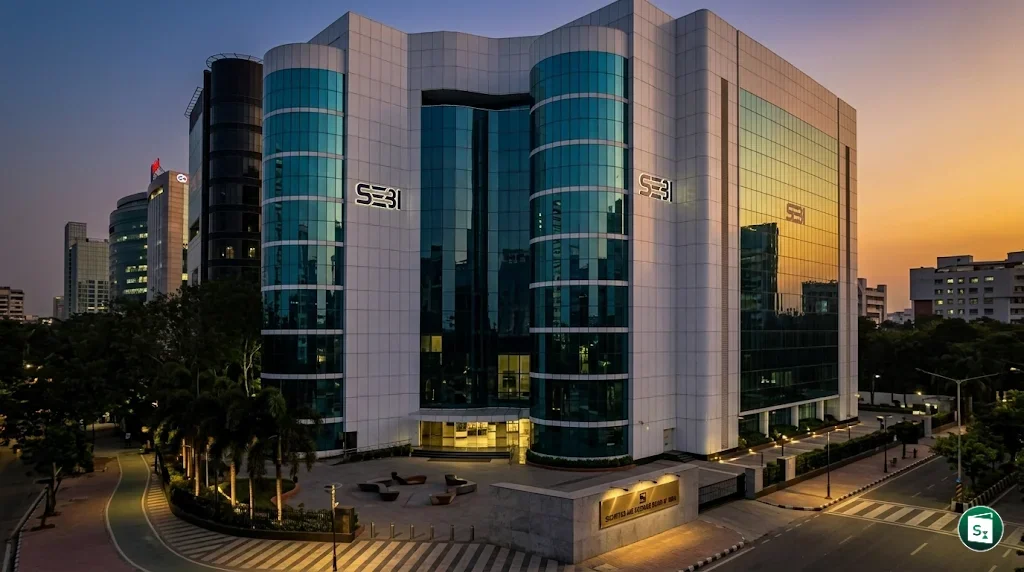
The Securities and Exchange Board of India (SEBI) introduced a comprehensive, one-time relief package on April 7, 2026, to assist companies in managing IPO timelines and public shareholding requirements. The measures extend the validity of IPO observation letters and relax Minimum Public Shareholding (MPS) compliance for deadlines falling between April and September 2026. This regulatory intervention aims to provide a safety net for issuers during a period of heightened global geopolitical stress and market uncertainty.
Bridging the Gap: Response to Global Market Stress
The Indian capital markets have recently faced significant headwinds attributed to geopolitical tensions in the Middle East and fluctuating global investor sentiment. These factors led to subdued retail and institutional participation, prompting several companies to defer their listing plans or struggle with public float requirements. In response to representations from various industry bodies, SEBI decided to intervene to prevent the duplication of regulatory processes.
The Securities and Exchange Board of India, which was established in 1988 and became a statutory body under the SEBI Act, 1992, acts as the apex regulator for the securities market. With its headquarters in Mumbai, the regulator regularly reviews market conditions to ensure the ease of doing business. This latest relief is designed to ensure that the primary market remains resilient despite external economic shocks.
Extension of IPO Observation Letter Validity
Under the standard SEBI (Issue of Capital and Disclosure Requirements) Regulations, 2018, often referred to as the ICDR Regulations, a company must launch its public issue within 12 months of receiving the final observation letter from the regulator. If the company fails to launch the IPO within this window, the approval expires, and the entity must refile its draft offer document.
SEBI has now granted a one-time extension for all observation letters set to expire between April 1, 2026, and September 30, 2026. These approvals will now remain valid until September 30, 2026. To avail of this extension, the Lead Manager of the issue must submit a formal undertaking to SEBI. This undertaking must confirm that the issuer continues to comply with the disclosure norms specified in Schedule XVI of the ICDR Regulations while submitting the updated offer documents.
Relaxation in Minimum Public Shareholding Compliance
The Minimum Public Shareholding (MPS) rule requires every listed company in India to maintain a public float of at least 25%. This regulation, governed by the Securities Contracts (Regulation) Rules (SCRR), 1957, ensures sufficient liquidity and prevents cornering of shares by promoters. Companies that fail to meet this threshold within the stipulated three-year period from listing usually face penal actions, including fines and the freezing of promoter shares.
For companies whose deadlines to reach the 25% threshold fall within the April to September 2026 window, SEBI has provided a temporary reprieve from penalties. The regulator has instructed stock exchanges and depositories not to initiate any new penal actions during this specific period. Furthermore, any penalties or restrictions already imposed on companies for non-compliance during this six-month window may be withdrawn. This relaxation allows companies to wait for better market conditions to offload shares without the pressure of immediate regulatory sanctions.
Strategic Rationale and Institutional Safeguards
This two-pronged approach serves a dual strategic purpose. First, it prevents the administrative burden of re-filing offer documents, which can be a costly and time-consuming process for corporates. By extending the validity of observation letters, SEBI ensures that companies that have already undergone rigorous vetting do not have to repeat the entire cycle once market appetite returns.
Second, the relaxation in MPS norms protects market valuations. Forcing companies to sell large blocks of shares in a volatile market could lead to a sharp decline in stock prices, harming minority shareholders. By providing a grace period, the regulator allows for a more orderly transition to the mandatory public float level. However, SEBI has clarified that this is a one-time measure and the fundamental requirement to maintain 25% public holding remains unchanged for the long term.
Key Takeaways
- SEBI extended the validity of IPO observation letters that were set to expire between April 1 and September 30, 2026, until the end of September.
- Listed companies have been granted a one-time relaxation from penal actions for not meeting the 25% Minimum Public Shareholding threshold during the same period.
- The Securities and Exchange Board of India (SEBI) was established in 1988 and operates as a statutory body under the SEBI Act, 1992.
- Companies availing of the IPO extension must have their Lead Manager submit an undertaking of compliance with Schedule XVI of the ICDR Regulations, 2018.
- The Minimum Public Shareholding (MPS) norms are primarily governed by Rule 19A of the Securities Contracts (Regulation) Rules, 1957.
- These relief measures were introduced to counter market volatility caused by geopolitical tensions and low investor participation.