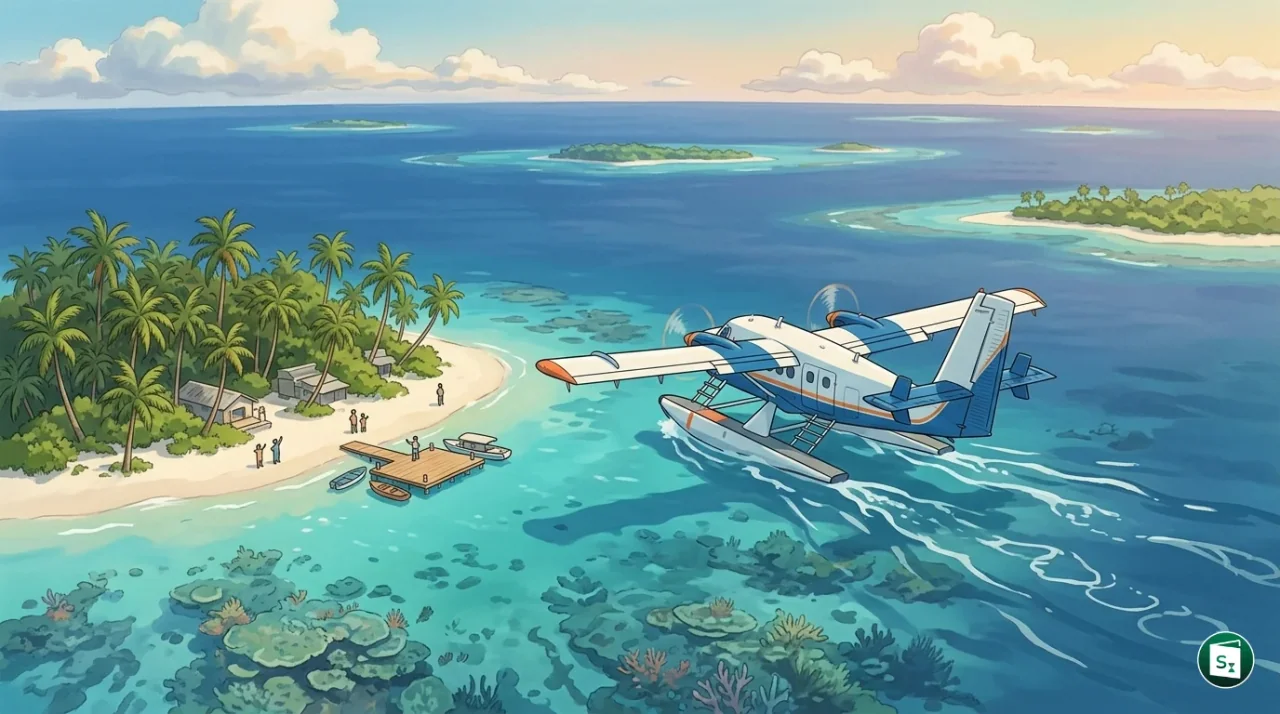
SkyHop Aviation Pvt Ltd has become India’s first dedicated commercial seaplane operator after receiving the Air Operator Certificate from the Directorate General of Civil Aviation on May 7, 2026. This landmark approval clears the way for the launch of amphibious flight services in the Lakshadweep archipelago, utilizing indigenously modified aircraft. The initiative marks a significant step in enhancing regional connectivity through the development of water aerodromes across India’s remote island territories.
India’s First Dedicated Commercial Seaplane Operator
The Directorate General of Civil Aviation (DGCA), the statutory body governing civil aviation in India, granted the Air Operator Certificate (AOC) to SkyHop Aviation Pvt Ltd on May 7, 2026. This certification formally establishes the company as the first dedicated commercial seaplane operator in the country. The DGCA, which operates under the Ministry of Civil Aviation (MoCA), is headquartered in New Delhi and is currently led by Director General Vir Vikram Yadav.
Unlike earlier pilot projects that relied on foreign-registered aircraft and international technical support, SkyHop Aviation is the first to deploy an Indian-registered fleet. This move is aligned with the Aircraft (Amendment) Act, 2020, which strengthened the regulatory framework for aviation safety and oversight in India. The grant of the AOC follows rigorous safety audits and successful test flights, including water take-offs and landings conducted at locations like the Ganga Barrage in Uttarakhand.
Indigenous Modification and Technical Specifications
The service will utilize the De Havilland Canada (DHC)-6 Twin Otter, a 19-seater twin-engine turboprop aircraft renowned globally for its Short Take-off and Landing (STOL) capabilities. In a major milestone for the domestic aviation engineering sector, the aircraft has been indigenously converted into a seaplane within India. This process involved the installation of amphibious float attachments, which allow the plane to operate from both conventional runways and water surfaces.
The indigenous modification was carried out under the supervision of the DGCA, ensuring that the engineering changes met stringent airworthiness standards. This conversion is a significant achievement under the Make in India initiative, as it reduces dependence on foreign maintenance facilities for seaplane operations. The Twin Otter’s versatility makes it ideal for India’s diverse geography, as it can land on lakes, rivers, and coastal waters where building expensive permanent runways is often unfeasible due to environmental or land constraints.
Enhancing Connectivity in the Lakshadweep Archipelago
The first phase of SkyHop Aviation’s operations will focus on the Lakshadweep islands, a region where inter-island transport has historically been limited by the availability of traditional airports and the slow speed of ferry services. Currently, Agatti is the only island in the archipelago with a conventional runway. The introduction of seaplanes will connect islands such as Kavaratti, Minicoy, and Bangaram, which lack land-based air infrastructure.
This initiative is part of the government’s flagship UDAN (Ude Desh ka Aam Nagrik) Regional Connectivity Scheme, which aims to make air travel affordable and accessible in remote areas. Under the UDAN 5.0 and earlier rounds, the Ministry of Civil Aviation has identified several water aerodromes for development. These aerodromes consist of a designated area on water for take-offs and landings, along with a floating jetty and terminal building for passenger handling. By utilizing these facilities, the seaplane service will dramatically reduce travel time between the islands and the Indian mainland.
Strategic Significance for Regional Development
The launch of commercial seaplane services is expected to have a transformative impact on the blue economy of the Lakshadweep region. Tourism is a primary driver of the local economy, and improved accessibility will likely attract more domestic and international visitors to the pristine coral atolls. Beyond tourism, the seaplane service provides a critical link for medical emergencies and disaster management, allowing for faster evacuation of patients from remote islands to specialized hospitals on the mainland or in Agatti.
From an environmental perspective, seaplanes offer a more sustainable alternative to building traditional airports. Developing a full-scale airport in ecologically sensitive zones like Lakshadweep requires extensive land reclamation and destruction of natural habitats. In contrast, water aerodromes have a significantly lower ecological footprint. Furthermore, the successful operation of this service in Lakshadweep will serve as a pilot for similar projects in other island territories like the Andaman and Nicobar Islands, as well as across the major river basins of mainland India.
Key Takeaways
- SkyHop Aviation Pvt Ltd has received the Air Operator Certificate (AOC) to become India’s first dedicated commercial seaplane operator.
- The approval was granted by the Directorate General of Civil Aviation (DGCA), a statutory body under the Ministry of Civil Aviation, on May 7, 2026.
- The airline will initially focus on the Lakshadweep islands, connecting islands like Kavaratti, Minicoy, and Bangaram through water aerodromes.
- The service utilizes a 19-seater De Havilland Canada (DHC)-6 Twin Otter aircraft, which has been indigenously modified with float attachments in India.
- The project is supported by the UDAN (Regional Connectivity Scheme), aimed at improving accessibility in remote and underserved areas.
- The Director General of Civil Aviation is currently Vir Vikram Yadav, and the Ministry of Civil Aviation is led by Minister Kinjarapu Ram Mohan Naidu.