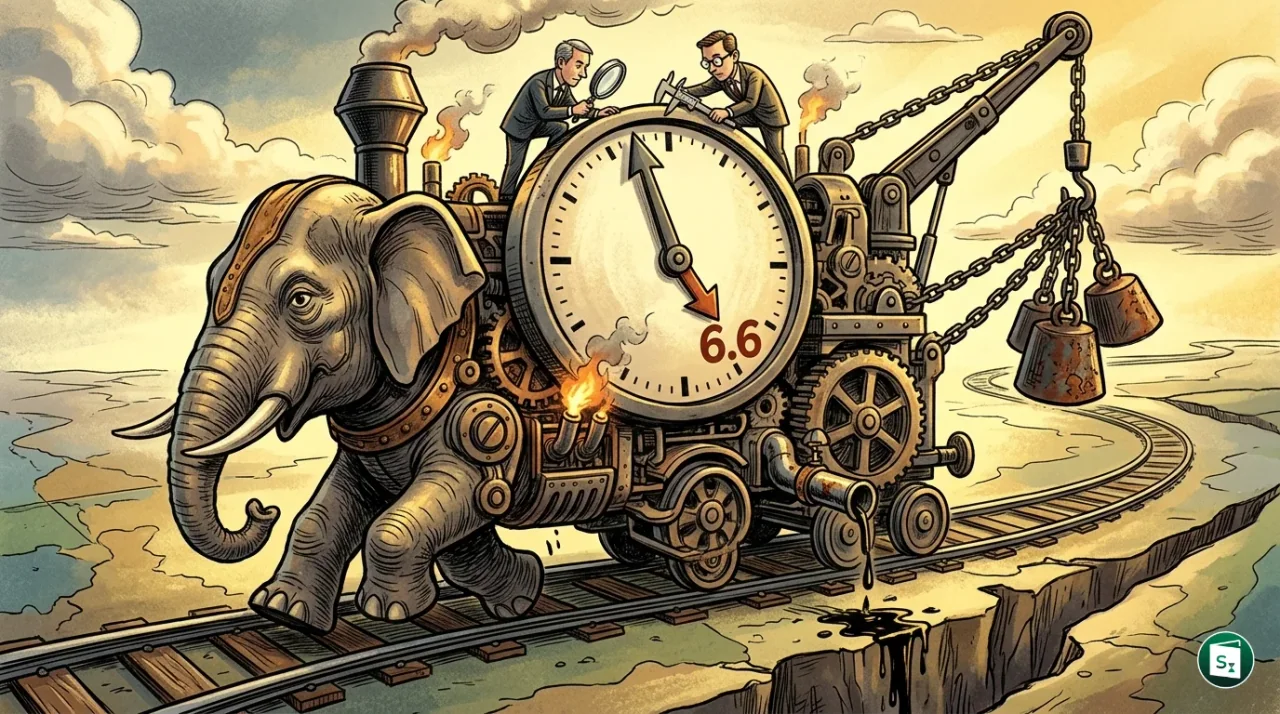
S&P Global Market Intelligence and CRISIL Ratings Ltd have revised India’s Gross Domestic Product (GDP) growth forecast for the fiscal year 2026-27 (FY27) downward to 6.6%, a reduction of 50 basis points (bps) from previous estimates. This adjustment, detailed in the joint report titled India Forward - Emerging Perspectives, reflects growing concerns over external macroeconomic pressures and energy shocks. Despite the revision, the Indian economy is expected to maintain a robust growth trajectory, having recorded an estimated 7.6% expansion in the preceding fiscal year.
Downward Revision of GDP for FY27
The revision by S&P Global and CRISIL comes at a time when the global economy is navigating significant volatility. The report slashes the growth projection from an earlier estimate of 7.1% to 6.6% for the upcoming fiscal year. This 50 bps cut is primarily attributed to a combination of high energy prices and supply chain disruptions. The agencies noted that while the domestic economy remains resilient, the external environment has become increasingly challenging, necessitating a more cautious outlook for India’s growth momentum in the medium term.
Key Macroeconomic Highlights of the Report
The report provides a comprehensive overview of India’s economic performance and expectations across multiple fiscal periods. Between FY23 and FY26, the country achieved an average annual growth rate of 7.3%, underscoring its position as one of the fastest growing major economies.
| Indicator | FY26 Estimate | FY27 Projection |
|---|---|---|
| GDP Growth | 7.6% | 6.6% |
| Retail Inflation | 5.1% | 5.1% |
| Current Account Deficit (CAD) | 0.8% | 2.2% |
| Debt-to-GDP Ratio | 56.1% | 57.5% |
Retail inflation for FY26 is projected to average 5.1%, which is expected to persist into the following year. The widening of the Current Account Deficit from 0.8% in FY26 to 2.2% in FY27 signals a potential strain on India’s external trade balance, primarily due to higher import costs.
Factors Influencing the Economic Outlook
The primary catalyst for the downward revision is the series of external shocks originating from West Asia. The ongoing geopolitical conflict has led to significant disruptions in energy supplies, particularly through the Strait of Hormuz, a critical maritime passage for global oil and gas trade. These disruptions have caused crude oil prices to surge, with forecasts placing them in the $90 to $95 per barrel range.
Higher energy costs often lead to second-round effects, where increased freight and transportation expenses contribute to broader inflationary pressures. Furthermore, currency volatility and softer global demand for Indian exports are expected to act as headwinds. Analysts suggest that these factors will likely constrain private consumption and investment, which are vital engines of the Indian economy.
Fiscal Consolidation and External Balances
A key concern highlighted in the report is the projected rise in India’s Debt-to-GDP ratio, which is forecasted to increase to 57.5% in FY27 from 56.1% in FY26. This upward movement poses a challenge to the government’s medium-term fiscal consolidation goals, which aimed to bring the ratio down to the 49% to 51% range by FY31.
The expansion of the Current Account Deficit (CAD) to 2.2% of GDP also highlights the vulnerability of the Indian economy to external price shocks. A higher CAD indicates that the value of goods and services imported exceeds those exported, often requiring foreign capital inflows to bridge the gap. While India’s domestic fundamentals, such as banking sector health and digital infrastructure, remain strong, the report emphasizes the need for targeted structural reforms in energy and food security to mitigate future risks.
Understanding S&P Global and CRISIL Ratings
CRISIL, which stands for Credit Rating Information Services of India Limited, was established in 1987 as India’s first credit rating agency. Headquartered in Mumbai, it is a subsidiary of the American financial services giant S&P Global. CRISIL provides a wide range of services, including credit ratings, research, and policy advisory, playing a crucial role in India’s financial markets by assessing the creditworthiness of corporate and government entities.
S&P Global Market Intelligence, a division of S&P Global Inc., is a leading provider of multi-asset class data and analytical solutions. It offers insights into market performance, valuations, and credit risks for institutional investors and corporations worldwide. The joint report by these two entities combines global macroeconomic perspectives with deep local expertise to provide a nuanced view of the Indian economic landscape.
Key Takeaways
- The India Forward - Emerging Perspectives report was jointly released by S&P Global Market Intelligence and CRISIL Ratings Ltd in May 2026.
- India’s GDP growth forecast for FY27 has been revised downward to 6.6%, reflecting a 50 basis point reduction from previous estimates.
- The country’s retail inflation is projected to average 5.1% in FY26, with external shocks in West Asia cited as a primary driver.
- The Current Account Deficit (CAD) is expected to expand from 0.8% of GDP in FY26 to 2.2% in FY27 due to higher energy import costs.
- India’s Debt-to-GDP ratio is forecasted to rise to 57.5% in FY27, up from 56.1% in the previous year.
- CRISIL, established in 1987 and headquartered in Mumbai, is India’s first credit rating agency and a subsidiary of S&P Global.