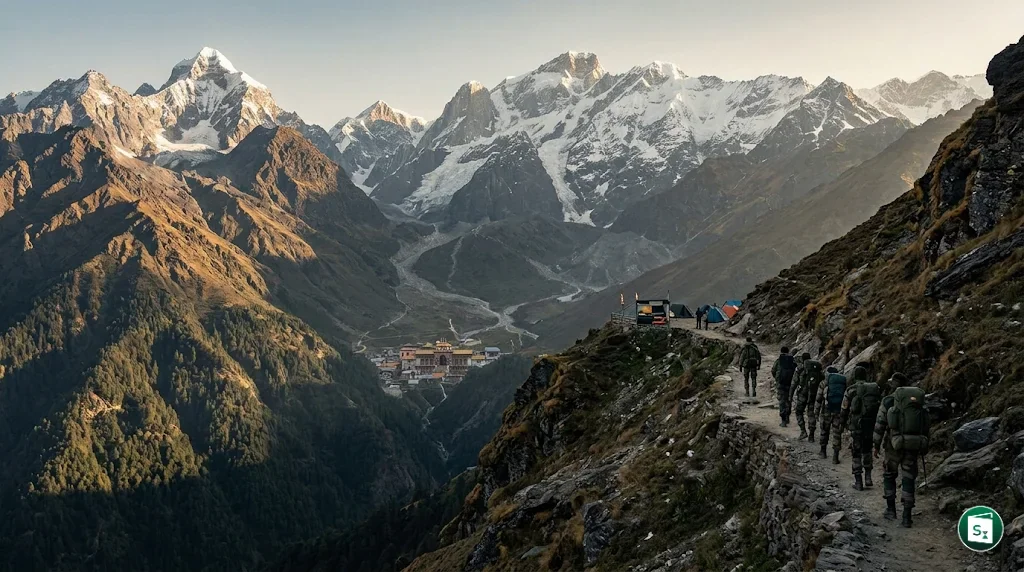
Chief of Defence Staff General Anil Chauhan flagged off the second edition of the Surya Devbhoomi Challenge 2.0 on April 22, 2026, at the sacred town of Badrinath in Uttarakhand. The five-day high-altitude endurance event covers a grueling 113-kilometre route through the historic Badrinath-Kedarnath corridor. Organized by the Indian Army, the initiative aims to promote sustainable adventure tourism and strengthen the connection between the military and regional communities.
The Surya Devbhoomi Challenge 2.0: An Ultra-Endurance Journey
The Surya Devbhoomi Challenge 2.0 is a premier ultra-endurance event that tests the physical and mental resilience of participants in one of the most challenging high-altitude terrains in the world. As the second iteration of this military-led initiative, the event spans five days and covers a total distance of 113 kilometres. Unlike conventional races, this challenge focuses on “purpose-driven endurance,” combining athletic excellence with a sense of national heritage.
The expedition is spearheaded by the Surya Command, also known as the Central Command of the Indian Army. Established in 1963 and headquartered in Lucknow, the Surya Command is responsible for the defense and security of a vast region that includes the strategically vital border state of Uttarakhand. By organizing such events, the Command fosters a spirit of camaraderie between soldiers and civilians while highlighting the tactical and logistical capabilities required to operate in high-altitude environments.
Traversing the Sacred Kedars and Char Dham Corridor
The route of the challenge is historically and culturally significant, as it traverses the Char Dham corridor, a region synonymous with the ancient pilgrimage circuit of Uttarakhand. The 113-kilometre path links the Badrinath and Kedarnath valleys, taking participants through some of the most remote and pristine landscapes in the Garhwal Himalayas. A key feature of the expedition is the inclusion of the three sacred Kedars, which are part of the larger Panch Kedar pilgrimage.
The three specific temples covered during the event include:
- Kalpeshwar: Located in the Urgam Valley, this is the only temple among the Panch Kedar that remains accessible throughout the year. It is dedicated to the hair (Jata) of Lord Shiva.
- Rudranath: Set amidst high-altitude alpine meadows (Bugyals), this temple is known for its face-like representation of Shiva and is considered one of the most challenging trekking destinations in the region.
- Tungnath: Situated at an altitude of approximately 3,680 metres, it is the highest temple dedicated to Lord Shiva in the world.
By following this historic trail, the Indian Army is revitalizing old trekking routes that were once the primary means of travel between these sacred sites. This helps in preserving the cultural heritage of the region while opening up new avenues for sustainable mountain tourism.
Strategic Partnership and Civil-Military Synergy
The Surya Devbhoomi Challenge 2.0 is an example of effective collaboration between the military and specialized civilian organizations. The Indian Army has entered into a strategic partnership with IconMetrix to manage the logistical complexities and communication strategies of the event. This partnership ensures that the challenge reaches a nationwide audience, connecting urban fitness enthusiasts with the advocacy for border region development.
Additionally, the Tourism Department of the Uttarakhand Government provides critical local support, aligning the event with the state’s vision of becoming a global hub for adventure sports. One of the primary goals of the challenge is to foster civil-military synergy. By allowing civilians and veterans to run alongside active-duty personnel from the Army, Navy, and Air Force, the event creates a platform for mutual understanding and national integration. It also serves as a tribute to the resilience of those who live and serve in the high-altitude frontiers of the country.
Alignment with the Vibrant Village Programme
A major objective of the Surya Devbhoomi Challenge 2.0 is its alignment with the Vibrant Village Programme (VVP). Launched by the Government of India in the Union Budget 2022-23, the VVP aims to comprehensively develop villages along India’s northern border. The program focuses on improving infrastructure, enhancing tourism potential, and generating livelihood opportunities to prevent migration from these strategically located villages.
By conducting a high-profile endurance event in the border districts of Chamoli and Rudraprayag, the Indian Army is bringing national attention to these remote areas. The event encourages the development of home-stays, local handicrafts, and sustainable tourism infrastructure in the villages along the route. This “development through adventure” approach not only boosts the local economy but also strengthens the security of the border regions by ensuring that these areas remain populated and vibrant.
Key Takeaways
- Chief of Defence Staff General Anil Chauhan flagged off the Surya Devbhoomi Challenge 2.0 on April 22, 2026, in Badrinath.
- The event is a 113 km long, five-day high-altitude endurance expedition traversing the Char Dham corridor.
- The route covers three temples of the Panch Kedar circuit: Kalpeshwar, Rudranath, and Tungnath.
- The challenge is organized by the Indian Army (Surya Command) in strategic partnership with IconMetrix.
- The initiative supports the Vibrant Village Programme, which was launched in the 2022-23 Budget for border village development.
- General Anil Chauhan is the second Chief of Defence Staff of India, having assumed office in September 2022.