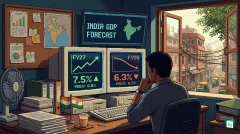
The World Bank has raised its growth forecast for the Indian economy for the 2026-27 fiscal year, projecting a Gross Domestic Product growth rate of 6.6%. This upward revision from the previous estimate of 6.3% comes as India continues to demonstrate strong macroeconomic stability amid significant global uncertainties. The latest report highlights India’s position as one of the fastest-growing major economies, driven by resilient domestic demand and a strategic focus on industrial expansion.
India’s GDP Growth: An Upward Path for FY27
The World Bank’s report, titled South Asia Economic Update April 2026: Working with Industrial Policy, provides a comprehensive analysis of the economic landscape in the region. The upward revision of India’s growth projection to 6.6% for the 2026-27 fiscal year reflects the country’s ability to maintain momentum despite global headwinds. These challenges primarily include disruptions in global energy markets and elevated energy prices caused by ongoing conflicts in West Asia.
In the absence of these external shocks, the report indicates that India’s potential growth could have reached as high as 7.2%. However, the current projection remains robust, especially when compared to the broader South Asian region, which is expected to see a growth moderation to 6.3% in 2026. This disparity underscores India’s unique position, supported by its large internal market and diversified export base.
Drivers of Economic Resilience
India’s economic performance is anchored by its strong macroeconomic fundamentals. As of early April 2026, the country’s foreign exchange reserves reached approximately $697.12 billion, providing a significant cushion against external volatility. Additionally, the Provisional Consumer Price Index (CPI) inflation for March 2026 stood at 3.40%, remaining well within the target range of the Reserve Bank of India (RBI).
The healthy state of the financial sector and increased public investment in infrastructure have further bolstered growth. The RBI, in its first bi-monthly monetary policy for FY27, maintained a neutral stance with a repo rate of 5.25%, signaling a cautious yet optimistic approach toward steadying the economy. These factors, combined with a rebound in private consumption, have created a stable environment for long-term industrial planning.
Working with Industrial Policy: A Regional Perspective
A significant focus of the World Bank’s update is the use of industrial policy in South Asian nations. The report notes that countries in this region are utilizing industrial policy tools at approximately twice the rate of other Emerging Market and Developing Economies. These policies are largely directed toward the manufacturing sector, aiming to foster export growth and create high-quality employment.
In the Indian context, the Production-Linked Incentive (PLI) scheme has been a cornerstone of this strategy. By late 2025, the PLI scheme had attracted realized investments exceeding ₹2.16 lakh crore across 14 sectors, creating over 1.4 million jobs. While the World Bank observes mixed results for industrial policies across the broader region, it emphasizes that cross-cutting reforms in public infrastructure and the reduction of trade barriers are essential to complement these sector-specific incentives.
Institutional Background: The World Bank
The World Bank, established in 1944 during the Bretton Woods Conference, is a pivotal international financial institution that provides loans and grants to the governments of low- and middle-income countries for the purpose of pursuing capital projects. It is composed of two primary organizations: the International Bank for Reconstruction and Development (IBRD) and the International Development Association (IDA).
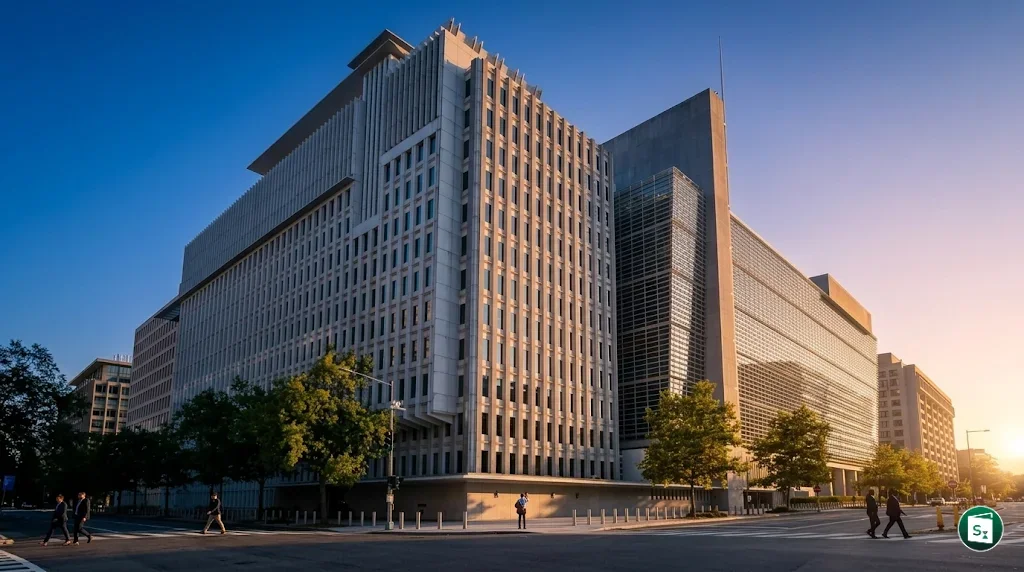
The IBRD focuses on middle-income and creditworthy low-income countries, while the IDA, established in 1960, provides concessional loans and grants to the world’s poorest nations. Headquartered in Washington, D.C., the World Bank Group is currently led by President Ajay Banga, who assumed office in June 2023. With a membership of 189 countries, the institution plays a critical role in global poverty reduction and the promotion of shared prosperity through technical assistance and financial support.
Key Takeaways
- The World Bank has revised India’s GDP growth forecast for FY27 upwards to 6.6% from the earlier estimate of 6.3%.
- India is projected to remain among the fastest-growing major economies globally, despite energy market disruptions linked to conflict in West Asia.
- The South Asia Economic Update April 2026 notes that South Asian nations use industrial policy tools at twice the rate of other emerging markets.
- In India, the Production-Linked Incentive (PLI) scheme across 14 sectors has realized over ₹2.16 lakh crore in investments by late 2025.
- India’s foreign exchange reserves reached a robust level of $697.12 billion in early April 2026.
- The World Bank, headquartered in Washington, D.C., was established in 1944 and is currently led by President Ajay Banga.