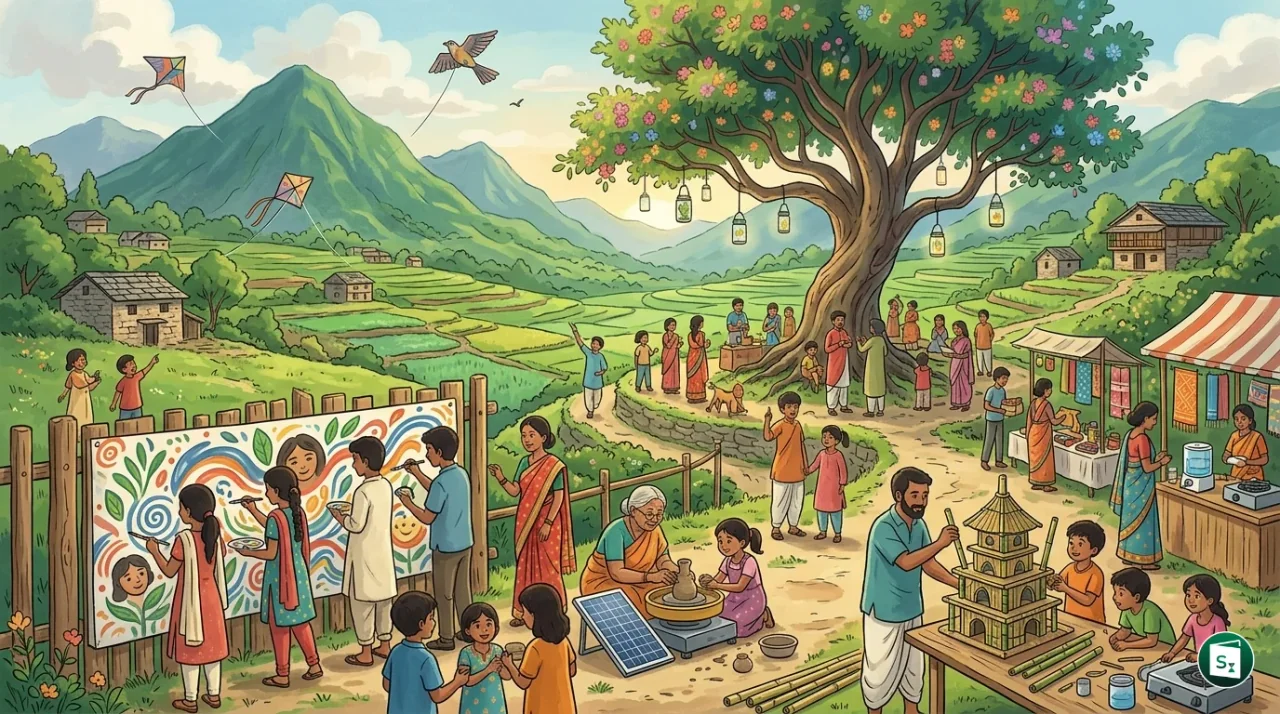
World Creativity and Innovation Day is observed globally on April 21 to highlight the critical role of creative thinking and innovation in addressing global challenges and driving sustainable development. The United Nations formally established this day to encourage diverse approaches to problem-solving, ranging from artistic expression to technological breakthroughs. In 2026, the day is celebrated under the theme Harnessing Creativity for Global Progress, emphasizing the need for original ideas to achieve the Sustainable Development Goals (SDGs).
What Is World Creativity and Innovation Day?
The United Nations General Assembly adopted Resolution 71/284 in April 2017, officially designating April 21 as World Creativity and Innovation Day. The first official observation took place in 2018, although the day had been celebrated informally by various organizations since 2002. Its establishment reflects a global consensus that innovation is essential for harnessing the economic potential of nations and for providing solutions to social and environmental issues.
The day is often celebrated as the culmination of World Creativity and Innovation Week, which begins on April 15, the birthday of Leonardo da Vinci. By dedicating a specific day to these concepts, the international community aims to foster an environment where “out-of-the-box” thinking is encouraged across all sectors, including education, industry, and governance. This focus is particularly relevant for achieving the UN 2030 Agenda for Sustainable Development, which relies heavily on innovative methods to end poverty and protect the planet.
The “Orange Economy”: Creativity as an Economic Driver
A central theme associated with World Creativity and Innovation Day is the promotion of the Orange Economy, also known as the Creative Economy. This term encompasses all economic activities that derive value from intellectual capital, creativity, and cultural heritage. It includes diverse industries such as architecture, visual arts, software development, fashion, and digital media. According to the United Nations, the creative economy accounts for approximately 3% of global GDP and provides millions of jobs, particularly for the younger generation.
The significance of the Orange Economy lies in its ability to generate wealth through ideas rather than traditional mass production. By focusing on intellectual property and talent, nations can drive inclusive growth and cultural preservation. In the context of the post-pandemic global landscape, the creative industries have emerged as a resilient sector capable of fostering social cohesion and bridging the digital divide through innovative technologies.
India’s Rising Innovation Footprint
India has made significant strides in the global innovation landscape, reflecting its transition towards a knowledge-based economy. According to the Economic Survey 2025-26, India is ranked 38th in the Global Innovation Index (GII) 2025, a substantial rise from its 66th position in 2019. This progress highlights India’s status as the top-performing economy in the Central and Southern Asia region and a leader among lower-middle-income countries.
The World Intellectual Property Organization (WIPO), which publishes the GII, has consistently identified India as an “innovation over-performer.” This designation is based on India’s ability to produce high-quality innovation outputs, such as Information and Communication Technology (ICT) services exports and high-value unicorn companies, relative to its level of economic development. The government’s focus on digitisation and structural reforms has been a key driver in sustaining this momentum.
Key Government Initiatives Fostering Innovation
The Government of India has launched several flagship programmes to nurture a culture of creativity and entrepreneurship. The Atal Innovation Mission (AIM), operating under NITI Aayog, serves as an umbrella initiative to promote innovation at various levels, from schools to research institutions. A core component of this mission is the establishment of Atal Tinkering Labs (ATLs) in schools, which provide students with hands-on experience in modern technologies like robotics, AI, and 3D printing. As of 2026, the mission has also supported over 200 Atal Incubation Centres (AICs) to help startups scale their operations.
Another pivotal initiative is Startup India, which celebrated its tenth anniversary in 2026. Since its launch in January 2016, the programme has transformed India into the world’s third-largest startup ecosystem. By December 2025, the country had more than 200,000 DPIIT-recognized startups and over 125 unicorns with a combined valuation exceeding $360 billion. These initiatives have not only fostered innovation but have also generated more than 21 lakh jobs, demonstrating the tangible impact of creative entrepreneurship on the national economy.
Key Takeaways
- World Creativity and Innovation Day is celebrated annually on April 21 to promote creative problem-solving for sustainable development.
- The United Nations formally recognized the day in 2017 through Resolution 71/284, with the first official observation in 2018.
- The theme for the 2026 celebration is “Harnessing Creativity for Global Progress.”
- India is ranked 38th in the Global Innovation Index (GII) 2025, according to the Economic Survey 2025-26.
- The Startup India initiative completed 10 years in 2026, having supported over 2 lakh recognized startups.
- The Atal Innovation Mission (AIM), a flagship initiative of NITI Aayog, manages over 200 incubation centres and thousands of school-level tinkering labs.
- The Orange Economy (Creative Economy) contributes approximately 3% to global GDP and is a major driver of youth employment.