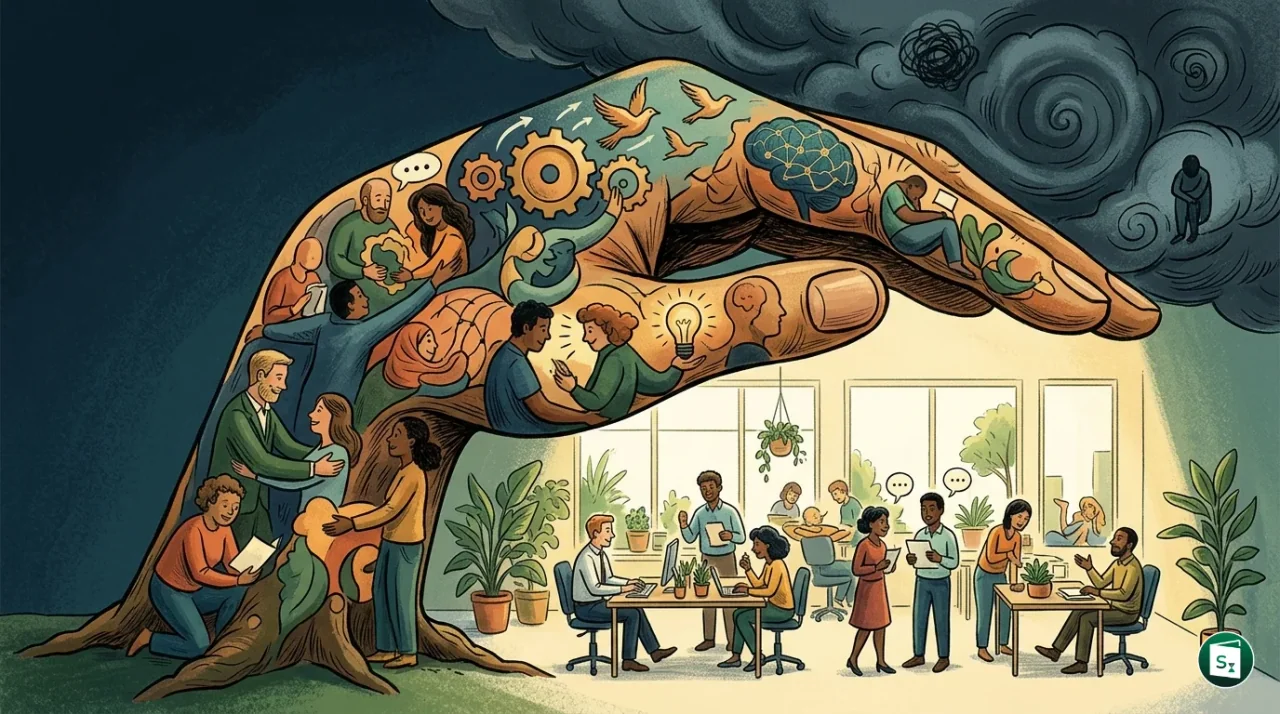
The World Day for Safety and Health at Work was observed globally on April 28, 2026, focusing on the theme of ensuring a healthy psychosocial working environment. Led by the International Labour Organization (ILO), the 2026 campaign emphasizes that mental wellbeing and organizational culture are as vital to occupational safety as physical protection. This observance comes as global data reveals that workplace stress and psychosocial hazards contribute to over 840,000 deaths annually.
Understanding Psychosocial Risks in the Modern Workplace
Psychosocial risks refer to the aspects of work design, organization, and management that have the potential to cause psychological or physical harm. These include factors such as excessive workloads, lack of role clarity, job insecurity, and workplace harassment. Unlike traditional physical hazards like machinery or chemicals, psychosocial risks are often invisible but equally damaging.
In April 2026, the ILO released a landmark report titled ‘The psychosocial working environment: Global developments and pathways for action.’ The report highlights that the rapid digitalization of work and the rise of artificial intelligence have introduced new forms of stress. Workers are increasingly facing techno-stress and the pressure of being constantly connected, which blurs the lines between professional and personal life.
Global Impact of Occupational Health Hazards
The scale of work-related fatalities and injuries remains a major global concern. According to recent ILO estimates, approximately 2.93 million workers die each year due to work-related accidents and diseases. While fatal accidents are a significant part of this figure, the majority of deaths are caused by work-related illnesses that develop over time.
The economic implications are equally staggering, with the ILO estimating that occupational safety failures cost the global economy approximately 1.37 per cent of global GDP annually. Psychosocial risks specifically contribute to the loss of nearly 45 million disability-adjusted life years (DALYs) every year. This data underscores that investing in safe working environments is not only a moral imperative but also a sound economic strategy.
India’s Regulatory Shift: Full Operationalization of the OSHWC Code
In alignment with global safety standards, India has reached a major milestone in labour law reform. As of May 2026, the Occupational Safety, Health and Working Conditions (OSHWC) Code, 2020 is fully operational across the country. This code consolidates 13 legacy labour laws into a single framework, simplifying compliance while enhancing worker protection.
The OSHWC Code introduces several progressive mandates that address both physical and mental health. It establishes a maximum limit of 48 working hours per week and requires employers to provide free annual health check-ups for employees aged 40 and above. Additionally, it permits women to work in night shifts with their written consent, provided that employers ensure adequate safety and transportation facilities. These measures collectively aim to create a more inclusive and resilient working environment in India.
The Evolution and Significance of April 28
The World Day for Safety and Health at Work has been officially observed by the ILO since 2003. Its roots, however, go back to 1996, when the global trade union movement established the International Commemoration Day for Dead and Injured Workers. The ILO’s involvement was requested by trade unions to elevate the political profile of occupational safety and health (OSH) and to promote a global culture of prevention.
The ILO itself is a unique agency within the United Nations system, having been founded in 1919 as part of the Treaty of Versailles. Headquartered in Geneva, Switzerland, it is the only UN body with a tripartite structure, bringing together governments, employers, and workers. This collaborative approach is essential for developing international labour standards and ensuring that workplaces are safe, productive, and respectful of human dignity.
Key Takeaways
- The World Day for Safety and Health at Work is observed annually on April 28 to promote a global culture of prevention.
- The theme for 2026 is ‘Let’s ensure a healthy psychosocial working environment’, focusing on mental wellbeing and organizational culture.
- Approximately 2.93 million workers die each year due to work-related accidents and diseases, costing the global economy 1.37 per cent of global GDP.
- The International Labour Organization (ILO), established in 1919, is headquartered in Geneva, Switzerland, and operates with a unique tripartite structure.
- India’s Occupational Safety, Health and Working Conditions (OSHWC) Code, 2020 became fully operational in May 2026, consolidating 13 legacy labour laws.
- The OSHWC Code mandates a maximum of 48 working hours per week and free annual health check-ups for employees aged 40 and above.