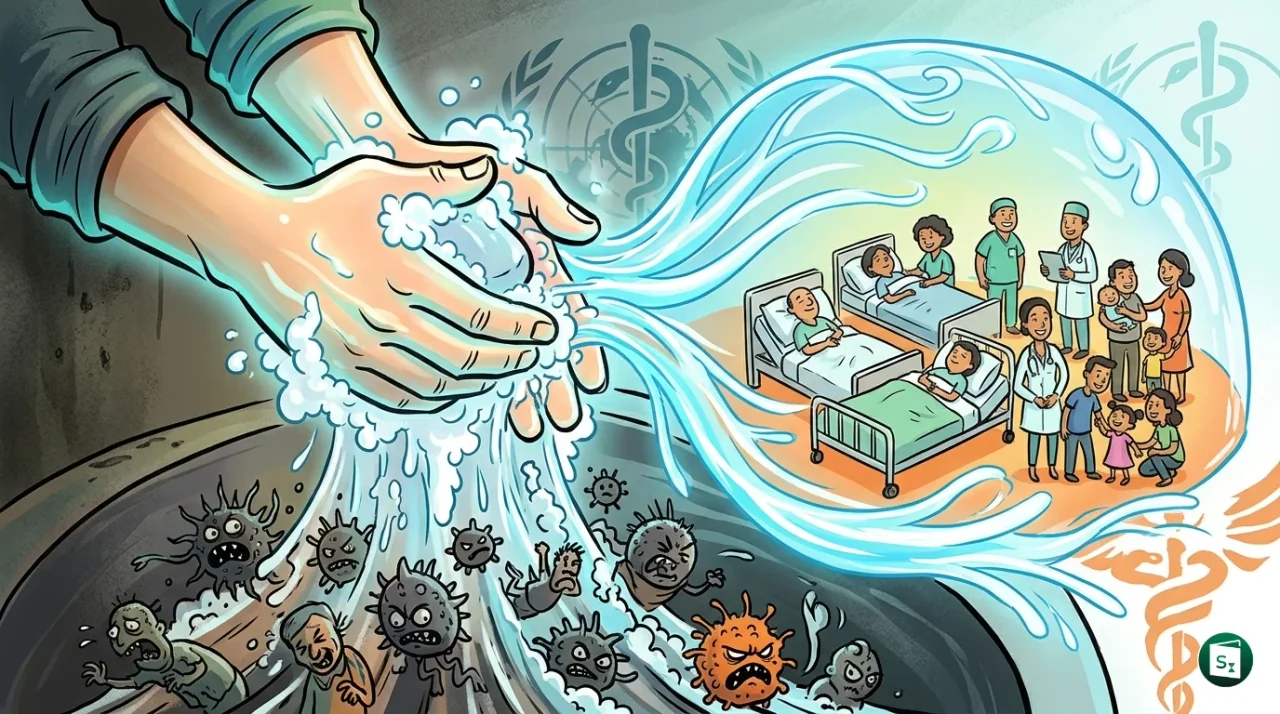
The World Health Organization observed World Hand Hygiene Day on May 5, 2026, to reinforce infection prevention protocols across global healthcare facilities. Operating under the annual campaign theme, ‘Action saves lives: Safer care starts with clean hands,’ the initiative urges clinical institutions to transform handwashing awareness into consistent daily practices. By highlighting clean hands as the primary defense against hospital-acquired infections, the movement aims to drastically reduce patient morbidity and combat antimicrobial resistance.
Background of the Global Campaign
The origins of World Hand Hygiene Day are deeply rooted in the global struggle to improve patient safety. The World Health Organization (WHO) officially established the campaign in 2009 under the flagship initiative “SAVE LIVES: Clean Your Hands”. This campaign was designed as a natural extension of the WHO’s First Global Patient Safety Challenge, known as Clean Care is Safer Care, which was introduced in 2005 to address the rising threat of healthcare-associated infections.
Over the years, the movement has expanded into a massive global network. Today, tens of thousands of healthcare facilities across more than 180 countries have registered their commitment to the campaign, pledging to implement standardized hygiene protocols. By organizing this annual event, the WHO aims to maintain a high global profile on the importance of hand hygiene, uniting healthcare workers, policy makers, and community members in a shared mission to elevate care standards.
Symbolic Meaning of May 5 and the Five Moments
The specific date of the annual observation, May 5, was chosen by the WHO for its symbolic significance. The fifth day of the fifth month (5/5) represents three core pillars: the five fingers on a human hand, the five primary components of the WHO Multimodal Hand Hygiene Improvement Strategy, and the five clinical touchpoints defined in the My 5 Moments for Hand Hygiene framework. This clinical framework is designed to integrate seamless infection control directly into the daily workflows of healthcare practitioners.
The table below outlines the five critical moments when healthcare workers are required to perform hand hygiene:
| Moment | Clinical Timing | Primary Objective |
|---|---|---|
| Moment 1: Before touching a patient | Clean hands before approaching or touching a patient | Protects the patient from harmful pathogens carried on the healthcare worker’s hands |
| Moment 2: Before clean or aseptic procedures | Clean hands immediately prior to performing any aseptic task, such as inserting a catheter | Protects the patient from harmful germs, including their own microflora, from entering the body |
| Moment 3: After body fluid exposure risk | Clean hands immediately after potential exposure to body fluids, even if gloves are worn | Protects the healthcare worker and the clinical environment from patient pathogens |
| Moment 4: After touching a patient | Clean hands upon leaving the patient’s bedside or immediate care zone | Safeguards the healthcare worker and the clinical environment from spreading infections |
| Moment 5: After touching patient surroundings | Clean hands after touching any object or furniture in the patient’s room, even if the patient was not touched | Prevents transmission of pathogens that survive on inanimate clinical surfaces |
Global Burden of Healthcare-Associated Infections
Healthcare-associated infections represent a substantial threat to patient safety worldwide. Data from the WHO indicates that, on average, 1 in 10 hospitalized patients contracts at least one infection during their hospital stay. This global crisis exhibits stark disparities based on the socioeconomic development of healthcare systems. In high-income countries, approximately 7 out of 100 patients in acute-care facilities acquire a hospital infection. In contrast, in low- and middle-income countries, the rate more than doubles to 15 out of 100 patients, reflecting severe resource constraints and infrastructural gaps in infection control.
These infections are also primary drivers of two global health crises: sepsis and antimicrobial resistance. Nearly 23.6% of sepsis cases recorded globally are healthcare-associated. In addition, an estimated 136 million cases of antibiotic-resistant infections are acquired within clinical environments annually. Proper hand hygiene remains the most effective tool to mitigate this burden. Evidence shows that consistent hand hygiene can prevent up to 50% of avoidable infections during healthcare delivery. When integrated into wider infection prevention and control strategies, it can reduce infection rates by up to 70%. Beyond saving lives, hand hygiene programs are highly cost-effective, generating economic savings that average 16 times the cost of implementation.
India’s Cleanliness Drive: The Kayakalp Initiative
To address these hygiene challenges within its own healthcare system, India launched a transformative program to elevate clinical hygiene standards. The Ministry of Health and Family Welfare introduced the Kayakalp initiative in 2015 under the National Health Mission. This national program incentivizes public health facilities, ranging from primary health centers to large tertiary hospitals, to maintain high standards of cleanliness, waste management, and infection control. By fostering a culture of peer review and healthy competition, the initiative aims to make public hospitals safer and more hygienic for all patients.
Under the Kayakalp guidelines, standard clinical precautions are strictly enforced, with a primary focus on hand hygiene. The program mandates that healthcare personnel wash their hands with soap and water for 40 to 60 seconds when hands are visibly soiled. For routine patient contact when hands are not visibly dirty, the use of alcohol-based hand rubs is promoted. Public hospitals are also required to ensure a continuous, clean water supply, liquid soap, and hygienic hand drying facilities at all wash stations, while prohibiting the use of common shared towels due to the high risk of cross-contamination.
Institutional governance plays a crucial role in the implementation of these measures. Public facilities are encouraged to establish specialized Infection Control Committees to oversee cleanliness practices. These committees are responsible for conducting routine audits, training staff members on proper hand hygiene techniques, and ensuring adherence to clinical waste management policies. Through this structured approach, the government aims to reduce infection-related mortality and build public trust in the national healthcare infrastructure.
Key Takeaways
- World Hand Hygiene Day is observed globally on May 5 under the leadership of the World Health Organization (WHO).
- The campaign theme for 2026 is “Action saves lives: Safer care starts with clean hands”, emphasizing the need to convert hygiene awareness into clinical practice.
- The annual campaign was officially launched in 2009 as a core component of the global “SAVE LIVES: Clean Your Hands” initiative.
- The WHO clinical framework “My 5 Moments for Hand Hygiene” outlines five specific touchpoints where health workers must perform hand hygiene during patient care.
- Global WHO data reveals that 1 in 10 hospitalized patients contracts at least one healthcare-associated infection, with the rate rising to 15 out of 100 patients in low- and middle-income countries.
- The Ministry of Health and Family Welfare introduced the Kayakalp initiative in 2015 under the National Health Mission to promote hygiene standards across India’s public health facilities.