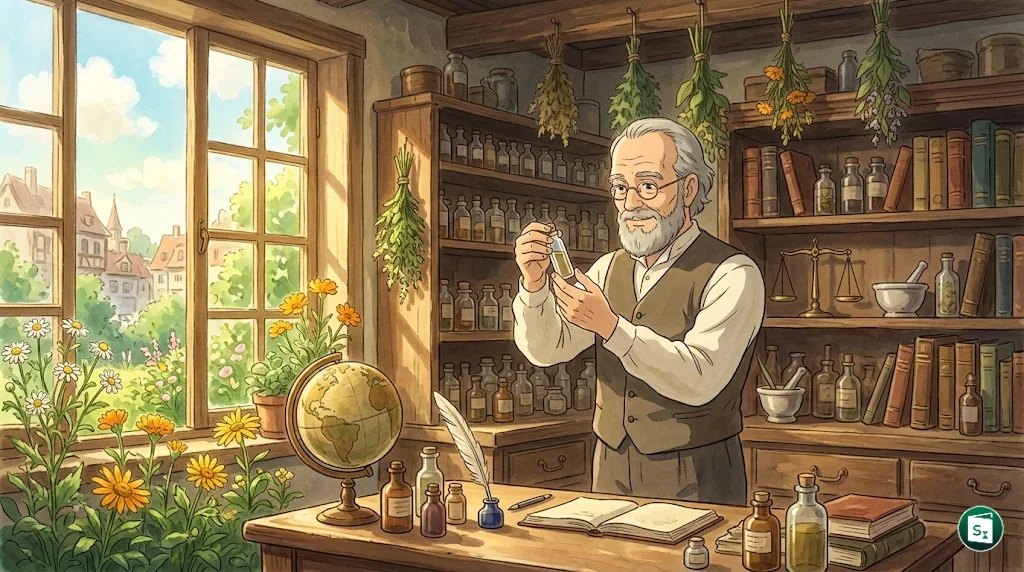
World Homeopathy Day 2026 was observed on April 10 to commemorate the 271st birth anniversary of Dr. Christian Friedrich Samuel Hahnemann, the founder of homeopathy. This year’s celebration revolved around the theme ‘Homoeopathy for Sustainable Health,’ highlighting the system’s role in providing affordable and holistic healthcare globally. The occasion was marked by major digital launches in India, aimed at integrating traditional medicine with modern evidence-based research.
Who Was Dr. Samuel Hahnemann?
Born on April 10, 1755, in Meissen, Germany, Dr. Christian Friedrich Samuel Hahnemann was a trained physician and chemist who grew increasingly disillusioned with the medical practices of his era. During the late 18th century, conventional medicine often relied on aggressive treatments such as bloodletting, purging, and the use of toxic substances like mercury, which Hahnemann believed caused more harm than good to the patient.
His journey toward establishing a new medical system began while he was translating William Cullen’s Materia Medica. He encountered a claim that Cinchona bark (the source of quinine) was effective in treating malaria due to its bitterness. To test this, Hahnemann ingested the bark himself while healthy and observed that it produced symptoms strikingly similar to malaria. This observation led him to formulate the ‘Law of Similars’, the foundational concept that a substance which causes symptoms in a healthy person can cure those same symptoms in a sick person.
Hahnemann codified his findings in his seminal work, the ‘Organon of the Healing Art’, first published in 1810. He later expanded his research in ‘Materia Medica Pura’ (1811) and ‘The Chronic Diseases’ (1828). His contributions shifted the focus of treatment toward a more humane and patient-centric approach, emphasizing the body’s innate ability to heal itself when given the right stimulus.
Core Principles of Homeopathic Medicine
Homeopathy is built upon several fundamental tenets that distinguish it from conventional pharmacology. These principles focus on individualized care and the use of natural substances in highly diluted forms.
- Law of Similars (Similia Similibus Curentur): This is the primary rule of homeopathy, translating to ‘let likes be cured by likes.’ It posits that a remedy which produces specific symptoms in a healthy individual can be used to treat similar symptoms in a diseased person.
- Minimum Dose: Dr. Hahnemann advocated for using the smallest possible amount of a substance to trigger the body’s healing response. This principle aims to eliminate the secondary side effects often associated with higher concentrations of drugs.
- Potentization (Dynamization): This involves a process of serial dilution and succussion (vigorous shaking). Practitioners believe that this process releases the curative power of the substance, making it more effective even as the physical concentration decreases.
- The Vital Force: Homeopathy considers health to be a state of balance in a non-material Vital Force that animates the human body. Illness is viewed as a derangement of this force, and treatment aims to restore its equilibrium.
- Individualization: Unlike a one-size-fits-all approach, homeopathy treats the patient as a whole. Remedies are selected based on the unique physical, emotional, and mental symptom profile of the individual.
Theme for 2026: Homoeopathy for Sustainable Health
The theme for World Homeopathy Day 2026, ‘Homoeopathy for Sustainable Health,’ underscores the potential of this medical system to contribute to long-term, eco-friendly, and cost-effective healthcare solutions. Sustainability in health refers to a system that remains accessible and efficient without depleting resources or causing environmental harm.
Homeopathy aligns with the United Nations Sustainable Development Goals (SDG 3), which aims to ensure healthy lives and promote well-being for all ages. Since homeopathic remedies are derived from natural sources and require minimal industrial processing, they represent a low-carbon alternative in the pharmaceutical sector. Furthermore, the focus on treating the root cause rather than just symptoms contributes to sustainable health outcomes by reducing the dependency on long-term chemical interventions.
Homeopathy Landscape in India
India has one of the world’s most robust infrastructures for homeopathic medicine. The Ministry of Ayush (Ayurveda, Yoga and Naturopathy, Unani, Siddha, and Homoeopathy) serves as the nodal ministry for developing and promoting traditional systems of medicine. Two key statutory bodies, the Central Council for Research in Homoeopathy (CCRH) and the National Commission for Homoeopathy (NCH), oversee research standards and professional education, respectively.
The CCRH, established in 1978 and headquartered in New Delhi, is the apex organization for conducting scientific research in homeopathy. During the 2026 celebrations at Vigyan Bhawan, the government introduced several digital tools to modernize the sector:
- Ayush Grid Portal: A new certification course was launched on this digital platform to standardize training for practitioners.
- AI Integration: The Ministry unveiled AI-enabled knowledge dissemination tools to provide evidence-based information to the public and professionals.
- Hindi Shabdkosh Website: A digital dictionary was launched to simplify technical homeopathic terminology for Hindi-speaking regions.
- IRINS Connection: The integration with the Indian Research Information Network System (IRINS) aims to improve the visibility and impact of homeopathic research on global platforms.
Key Takeaways
- World Homeopathy Day is observed annually on April 10 to honor the birth anniversary of Dr. Samuel Hahnemann, the founder of the system.
- The theme for the 2026 celebration is ‘Homoeopathy for Sustainable Health,’ focusing on affordable and holistic healthcare.
- Dr. Samuel Hahnemann established the Law of Similars and authored foundational texts including the ‘Organon of the Healing Art.’
- The Central Council for Research in Homoeopathy (CCRH), an autonomous body under the Ministry of Ayush, was established in 1978.
- Major digital initiatives launched in 2026 include the integration of homeopathic research with the IRINS and new courses on the Ayush Grid.
- Core homeopathic principles include Minimum Dose, Potentization, and the restoration of the body’s Vital Force.