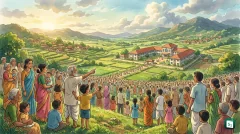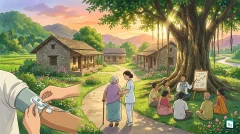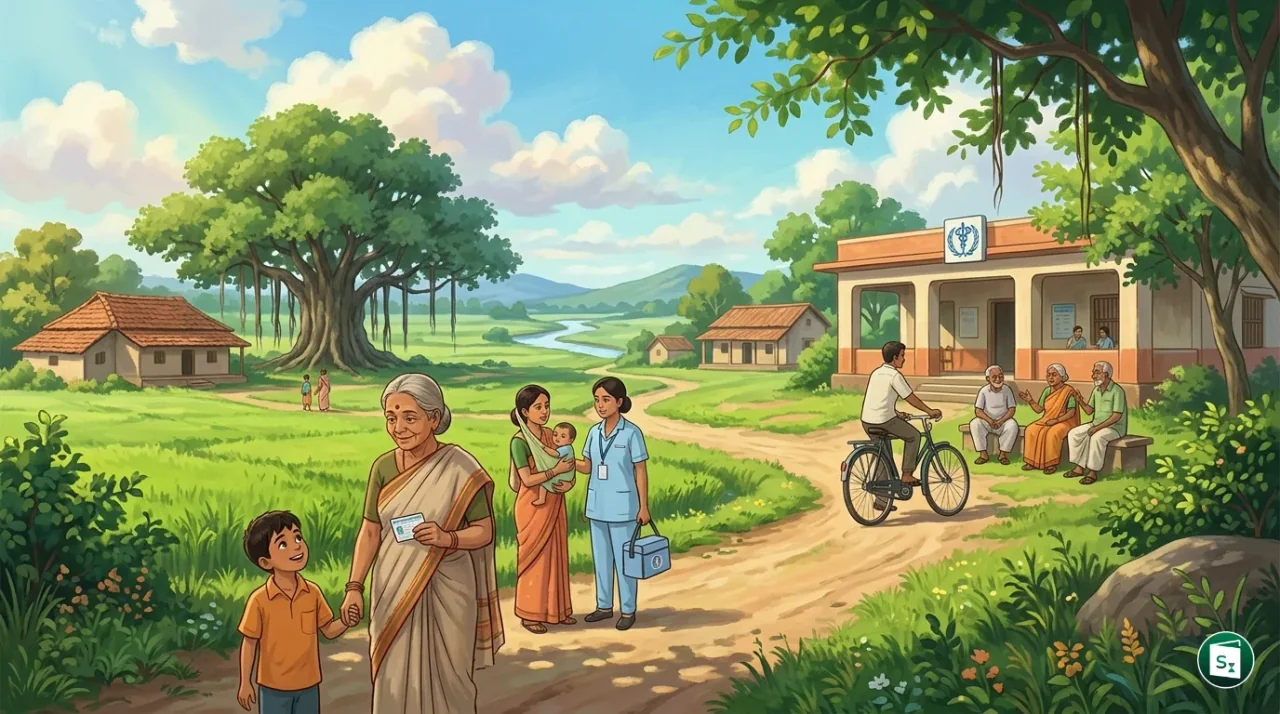
World Immunization Week 2026 was observed globally from April 24 to 30, emphasizing the critical role of vaccines in ensuring health across all age groups. Centred on the theme ‘For Every Generation, Vaccines Work’, the week highlighted the power of immunization to prevent disease and save lives from infancy through old age. This year’s observance is particularly significant as the global health community conducts a mid-term review of the Immunization Agenda 2030 (IA2030).
World Immunization Week: A Global Commitment to Health
World Immunization Week is a global public health campaign celebrated annually in the last week of April. Initiated by the World Health Assembly in 2012, the week aims to promote the use of vaccines to protect people of all ages against disease. The World Health Assembly is the decision-making body of the World Health Organization (WHO), which was established on April 7, 1948, and is headquartered in Geneva, Switzerland.
The campaign serves as a platform to increase awareness about the importance of vaccines, which currently prevent more than 20 life-threatening diseases. Since its inception, the initiative has grown into one of the most significant global health events, bringing together governments, international agencies, and local communities to strengthen immunization systems. Under the leadership of Director-General Dr. Tedros Adhanom Ghebreyesus, WHO continues to advocate for equitable vaccine access, particularly in low and middle-income countries.
Theme 2026: “For Every Generation, Vaccines Work”
The theme for World Immunization Week 2026, ‘For Every Generation, Vaccines Work’, underscores the lifelong importance of immunization. It shifts the focus from childhood vaccination to a broader ‘life-course’ approach, acknowledging that vaccines are essential tools for health at every stage of life. From preventing pneumonia in infants and protecting adolescents from cervical cancer to safeguarding the elderly against seasonal influenza, the campaign highlights the intergenerational benefits of high immunization coverage.
By protecting individuals across generations, vaccines contribute to the overall resilience of families and societies. In 2026, the WHO campaign specifically focuses on rebuilding trust in vaccine science and addressing vaccine hesitancy. It aims to empower health workers with communication tools to engage families and provide transparent information about vaccine safety. This approach is vital to ensuring that future generations continue to benefit from the same life-saving technology that has eradicated diseases like smallpox and nearly eliminated polio globally.
The Mid-Term Review of Immunization Agenda 2030 (IA2030)
The year 2026 marks the halfway point of the Immunization Agenda 2030 (IA2030), a global strategy launched in 2021 to leave no one behind in the provision of immunization services. As part of this milestone, the WHO and its Member States are conducting a comprehensive mid-term review to assess progress and recalibrate strategies for the remainder of the decade. The review’s initial findings were discussed at the 158th WHO Executive Board meeting in February 2026, and a formal report is scheduled for deliberation at the 79th World Health Assembly in May 2026.
IA2030 is built on seven strategic priorities, including reaching ‘zero-dose’ children and integrating immunization into primary health care. While global efforts have averted an estimated 17 million deaths between 2021 and 2024, challenges remain in recovering fully from pandemic-induced disruptions. The mid-term review emphasizes the need for increased domestic financing and stronger country ownership to ensure that the vision of a world where everyone, everywhere, benefits from vaccines becomes a reality by 2030.
India’s Progress: Achieving Universal Coverage through U-WIN and Mission Indradhanush
India has made remarkable strides in its immunization landscape, achieving a full immunization coverage of 98.4% as of January 2026. This success is driven by the Universal Immunisation Programme (UIP), one of the world’s largest public health initiatives. Central to India’s recent progress is the U-WIN portal, a digital registry that mirrors the Co-WIN platform used during the COVID-19 pandemic. As of March 2026, U-WIN has registered 11.87 crore children and 3.96 crore pregnant women, enabling real-time, name-based tracking of vaccination status across more than 1.2 lakh sites.
Complementing this digital push is Mission Indradhanush, launched in December 2014 to reach unvaccinated and partially vaccinated children and pregnant women. Through various intensified phases, the mission has successfully targeted high-risk and hard-to-reach areas, significantly reducing the number of ‘zero-dose’ children to just 0.06% in 2024.
| Metric | Achievement (as of 2026) |
|---|---|
| Full Immunization Coverage | 98.4% |
| U-WIN Child Registrations | 11.87 Crore |
| U-WIN Pregnant Women Registrations | 3.96 Crore |
| Zero-Dose Children (2024) | 0.06% |
| Active Vaccination Sites | 1.2 Lakh |
The Road Ahead: Integrating New Vaccines and Enhancing Resilience
As India and the world move toward 2030, the focus is shifting toward the integration of new life-saving vaccines into routine schedules. In February 2026, India launched a nationwide Human Papillomavirus (HPV) vaccination campaign for girls aged 14 years to prevent cervical cancer. Provided free of cost at government health facilities, the vaccine represents a major step in expanding the scope of the Universal Immunisation Programme beyond traditional childhood diseases.
The future of immunization also involves leveraging the data-driven insights from platforms like U-WIN to improve vaccine supply chains and cold chain management. By ensuring that vaccines reach the last-mile beneficiaries without loss of potency, health systems can better withstand future outbreaks. The emphasis remains on maintaining high coverage while simultaneously introducing innovations like indigenous vaccines, ensuring that for every generation, vaccines continue to work effectively to safeguard public health.
Key Takeaways
- World Immunization Week 2026 was observed from April 24 to 30 with the theme “For Every Generation, Vaccines Work”.
- The World Health Assembly initiated the annual observance in 2012 to promote the power of vaccines as a lifelong health tool.
- The Immunization Agenda 2030 (IA2030), launched in 2021, is currently undergoing a mid-term review to assess progress at its halfway point.
- India achieved a full immunization coverage of 98.4% as of January 2026, driven by the Universal Immunisation Programme (UIP).
- The U-WIN portal is India’s national digital registry for immunization, supporting real-time tracking across 1.2 lakh vaccination sites.
- Mission Indradhanush, launched in December 2014, has helped reduce India’s ‘zero-dose’ children to 0.06% in 2024.
- India launched a nationwide HPV vaccination campaign for girls aged 14 years in February 2026 to combat cervical cancer.