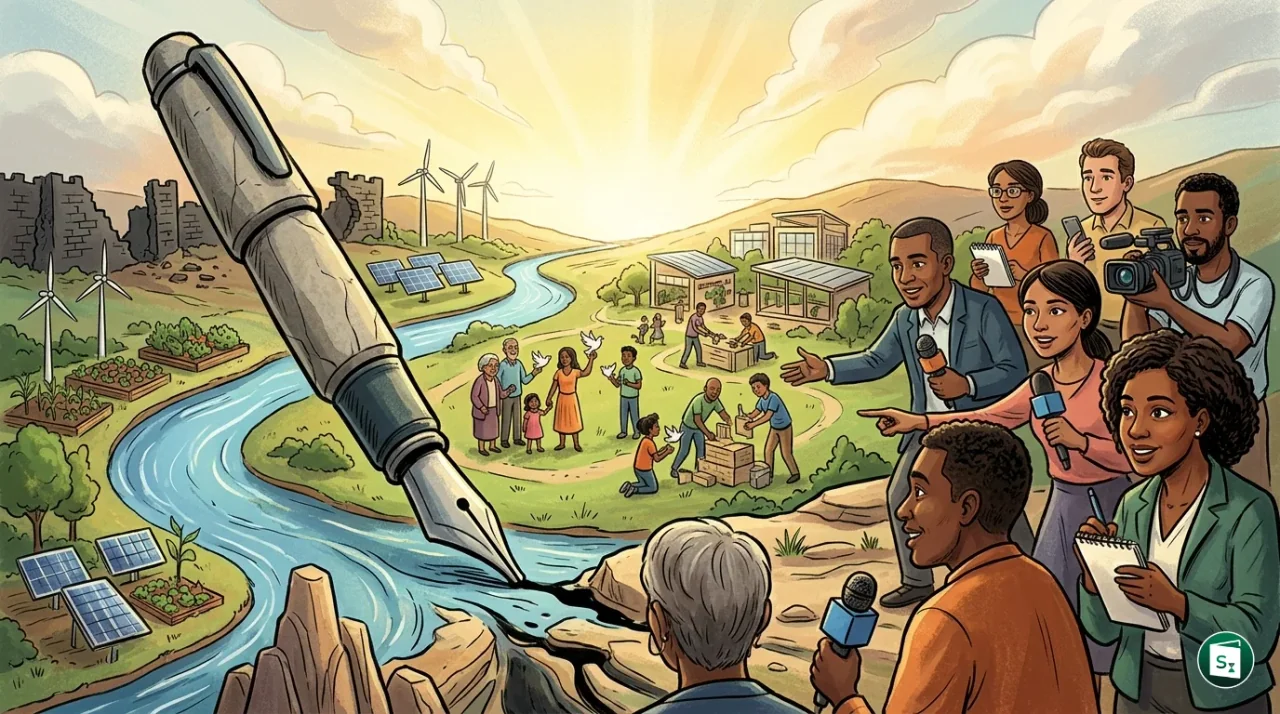
World Press Freedom Day was globally observed on May 3, 2026, under the theme “Shaping a Future at Peace: Promoting Press Freedom for Human Rights, Development, and Security” to champion the core principles of an independent media. Co-hosted by UNESCO and the government of Zambia, the international community convened in Lusaka, Zambia, to address growing threats to journalism. The annual event highlighted the crucial link between media independence, national development, and the preservation of democratic institutions worldwide.
History and the Windhoek Declaration
The origin of World Press Freedom Day is deeply rooted in the Windhoek Declaration, which is recognized as a landmark document in the history of media independence. In 1991, African journalists gathered in Windhoek, Namibia, for a UNESCO seminar titled “Promoting an Independent and Pluralistic African Press.” This gathering culminated in the adoption of the declaration on May 3, 1991, which laid down the fundamental principles of a free and pluralistic press.
The declaration defined a free press as one independent of governmental, political, or economic control. It also emphasized that a pluralistic press is essential for democracy. Following a recommendation from the UNESCO General Conference in 1991, the United Nations General Assembly officially proclaimed May 3 as World Press Freedom Day in December 1993. The day was first observed globally in 1994 and has since served as an annual occasion to evaluate the state of press freedom, protect journalists, and pay tribute to those who lost their lives in the line of duty. To mark its enduring significance, the Windhoek Declaration was inscribed in the Memory of the World International Register of UNESCO.
The 2026 Theme and Lusaka Global Conference
The theme for the year 2026 is “Shaping a Future at Peace: Promoting Press Freedom for Human Rights, Development, and Security.” This theme draws attention to how a free, pluralistic, and independent press serves as the foundation for peace, security, and the protection of human rights. It also highlights how journalists enable transparent governance and sustainable development by exposing corruption and amplifying public voices.
The primary global event marking the day in 2026 was co-hosted by UNESCO and the Government of Zambia. Held on May 4 and May 5, 2026, at the Mulungushi International Conference Centre in Lusaka, Zambia, the conference brought together policymakers, legal experts, media houses, and civil society representatives. The sessions focused on pressing issues such as the safety of media professionals, legal protection against arbitrary censorship, and the challenges posed by artificial intelligence in spreading misinformation. The delegates also discussed the critical role of media literacy in assisting citizens to navigate digital landscapes safely and resist online propaganda.
Global Press Freedom Trends and India’s Position
The state of global journalism is assessed annually through the World Press Freedom Index, compiled and published by Reporters Without Borders (also known as Reporters Sans Frontières or RSF). Established in 1985 and headquartered in Paris, France, RSF first introduced the annual index in 2002 to evaluate media independence, legal frameworks, and the safety of journalists across 180 countries and territories.
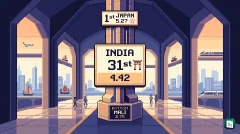
In the 2026 edition of the index, Norway secured the top position, continuing its long-standing record of providing a highly supportive environment for independent journalism. In contrast, India faced a notable decline, ranking 157th out of 180 countries in the 2026 report. This represents a drop of six places compared to its rank of 151st in the 2025 evaluation. The assessment pointed to rising structural pressures on Indian media, including the misuse of colonial-era security laws, the consolidation of media ownership, and growing digital harassment directed at journalists.
The table below illustrates the relative positions of key countries in the recent index evaluations:
| Country | 2026 Rank | 2025 Rank | Trend |
|---|---|---|---|
| Norway | 1 | 1 | Stable |
| India | 157 | 151 | Declined by 6 |
Sudanese Journalists Syndicate Wins 2026 Guillermo Cano Prize
A key highlight of the World Press Freedom Day celebrations in 2026 was the presentation of the UNESCO/Guillermo Cano World Press Freedom Prize. The Sudanese Journalists Syndicate was named the winner of the 2026 award. The collective was honored for its exceptional courage and critical role in documenting violations against media workers during the conflict in Sudan, which erupted in 2023. Despite facing severe, life-threatening conditions, the syndicate has actively tracked journalist casualties, arbitrary detentions, and the systematic shutdown of media outlets.
The prestigious prize was established in 1997 by UNESCO in memory of Guillermo Cano Isaza, an investigative Colombian journalist. He was assassinated in 1986 outside the offices of his newspaper, El Espectador, in Bogotá, Colombia, after reporting extensively on the activities of powerful drug cartels. The prize honors individuals, organizations, or institutions that make outstanding contributions to defending or promoting press freedom, particularly in high-risk environments. It is funded by the Cano Foundation, the Helsingin Sanomat Foundation, and the Javier Prada Calle Foundation.
Key Takeaways
- World Press Freedom Day is observed annually on May 3 to champion the fundamental principles of an independent and pluralistic press.
- The theme for the 2026 observance is “Shaping a Future at Peace: Promoting Press Freedom for Human Rights, Development, and Security.”
- The global conference for 2026 was co-hosted by UNESCO and the government of Zambia in Lusaka, Zambia, from May 4 to May 5, 2026.
- The day was officially proclaimed by the United Nations General Assembly in December 1993, based on the landmark Windhoek Declaration adopted on May 3, 1991.
- In the 2026 World Press Freedom Index published by Reporters Without Borders, India ranked 157th out of 180 countries, while Norway secured the top rank.
- The 2026 UNESCO/Guillermo Cano World Press Freedom Prize was awarded to the Sudanese Journalists Syndicate for their bravery in documenting conflict-zone violations.