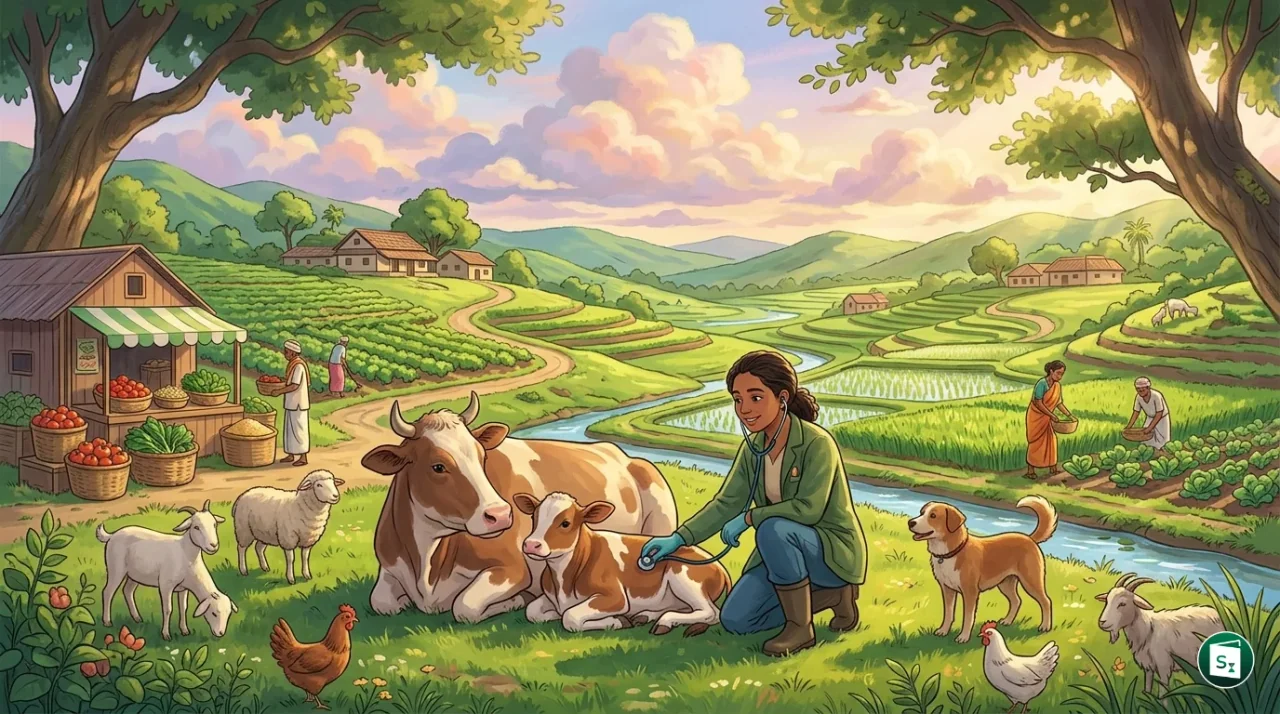
World Veterinary Day 2026 was observed globally on April 25, 2026, under the theme “Veterinarians: Guardians of Food and Health.” This annual event, celebrated on the last Saturday of April, highlights the essential role of veterinary professionals in ensuring food safety and security. By integrating animal health with human and environmental well-being, veterinarians serve as a critical defense against zoonotic diseases and global health threats.
Veterinarians as Guardians of Food and Health
The 2026 theme, “Veterinarians: Guardians of Food and Health,” emphasizes the systemic role veterinarians play in the global food chain. From the farm to the table, veterinary services are responsible for ensuring that animal-derived food products are safe, nutritious, and free from diseases. They conduct rigorous health inspections, monitor livestock for infectious diseases, and ensure that animal welfare standards are met, which directly impacts the quality of milk, meat, and eggs consumed by millions.
Beyond safety, veterinarians contribute significantly to food security by preventing catastrophic outbreaks in livestock populations. Diseases such as Foot and Mouth Disease (FMD) or Peste des Petits Ruminants (PPR) can devastate rural economies and lead to severe food shortages. By managing these risks, veterinarians protect the livelihoods of small-scale farmers and ensure a stable supply of essential protein for the global population.
Evolution of World Veterinary Day and the World Veterinary Association
The origins of the World Veterinary Association (WVA) date back to 1863, when Dr. John Gamgee organized the first International Veterinary Congress in Hamburg, Germany. This landmark event aimed to foster international cooperation in controlling infectious diseases like rinderpest. The association was formally established in 1959 during the 16th World Veterinary Congress in Madrid, Spain, as a unified global voice for the profession.
World Veterinary Day was established by the WVA in 2000 to celebrate the veterinary profession and raise awareness of its diverse contributions. Observed annually on the last Saturday of April, the day provides a platform for veterinarians to showcase their work in animal welfare, environmental protection, and public health. In 2008, the WVA partnered with the World Organisation for Animal Health (WOAH) to launch the World Veterinary Day Award, which recognizes exceptional efforts in promoting the year’s theme.
The One Health Paradigm and Public Health Security
The role of veterinarians is central to the One Health approach, which recognizes that human health, animal health, and the environment are inextricably linked. Statistics show that nearly 75% of emerging infectious diseases in humans are zoonotic, meaning they originate in animals. Veterinarians act as the primary surveillance network for these diseases, identifying pathogens in wildlife and livestock before they can spill over into the human population.
In addition to disease surveillance, veterinarians are critical in the global fight against Antimicrobial Resistance (AMR). By promoting the judicious use of antibiotics in the livestock sector, they help ensure that these life-saving medicines remain effective for both humans and animals. This stewardship is vital for maintaining global health security and preventing the rise of drug-resistant “superbugs” that could threaten modern medicine.
Strengthening India’s Veterinary Services and Livestock Economy
In India, where the livestock sector is a cornerstone of the rural economy, the role of veterinarians is particularly strategic. Approximately 70% of rural households in India depend on animals for their livelihoods. To support this sector, the government has launched the National Animal Disease Control Programme (NADCP), which aims to eradicate diseases like Foot and Mouth Disease and Brucellosis through large-scale vaccination campaigns led by veterinary professionals.
The Veterinary Council of India (VCI), a statutory body established under the Indian Veterinary Council Act, 1984, regulates veterinary practice and education in the country. Operating under the Ministry of Fisheries, Animal Husbandry and Dairying, the VCI ensures that veterinary services meet the highest standards. Strengthening these services is essential for achieving the goals of Viksit Bharat 2047, as it ensures agricultural sustainability, economic resilience, and national health security.
Key Takeaways
- World Veterinary Day 2026 was celebrated on April 25, 2026, with the theme “Veterinarians: Guardians of Food and Health.”
- The World Veterinary Association (WVA) established World Veterinary Day in 2000 to recognize the contributions of the veterinary profession.
- The WVA was founded in 1959 and has its origins in the first International Veterinary Congress held in 1863.
- Nearly 75% of emerging infectious diseases in humans originate from animals, highlighting the importance of the One Health approach.
- The Veterinary Council of India (VCI) is a statutory body established under the Indian Veterinary Council Act, 1984, to regulate the profession in India.
- The National Animal Disease Control Programme (NADCP) aims to control livestock diseases through large-scale vaccinations led by veterinarians.