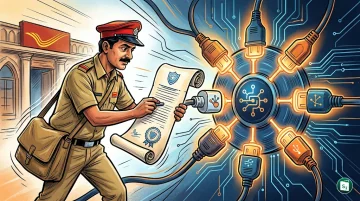
India Post Payments Bank (IPPB) has introduced a specialized Self Help Group (SHG) Savings Account to cater to the unique banking requirements of community-based organizations.
The initiative aims to advance financial inclusion and provide economic empowerment to women-led SHGs in rural India by facilitating access to formal banking channels.

The RBI has withdrawn certain restrictions on foreign exchange dealers regarding positions in the offshore Non-Deliverable Forwards (NDF) market, which were originally implemented to mitigate rupee volatility.
To manage market fluctuations, the RBI has capped the net open positions of banks in the offshore derivatives market at $100 million.
Punjab National Bank (PNB) has partnered with the fintech firm Kiwi to launch a co-branded RuPay credit card named “PNB Kiwi Credit Card” integrated with the UPI. The initiative aims to expand digital credit access and strengthen the digital payments ecosystem in India.
CheQ, a credit management platform, has partnered with AU Small Finance Bank (AU SFB) to launch the “CheQ AU Credit Card”, which is the first co-branded Light-Emitting Diode (LED)-powered credit card in India.
The card is designed to simplify payments and maximize rewards through a unified rewards ecosystem and advanced tap-to-pay features.
NPCI Bharat Bill Pay Ltd (NBBL), a wholly-owned subsidiary of the National Payments Corporation of India (NPCI), has onboarded Postal Life Insurance (PLI) as a biller under the insurance category on the Bharat Connect platform.
PLI is managed by India Post, and SBI served as the Biller Operating Unit (BOU) to facilitate the onboarding. With the addition of PLI, the total number of insurance billers on the Bharat Connect platform has reached 65.
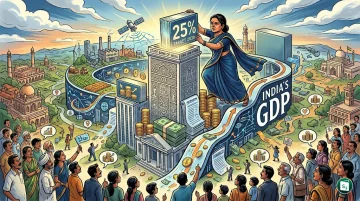
State Bank of India (SBI) has set a target to expand its balance sheet to 25% of the Gross Domestic Product (GDP) of India by 2030, up from the current 20%. As of December 2025, the total balance-sheet of SBI was recorded at ₹71.62 lakh crore.
The bank also aims to increase its market share by 1% across each of the 800 districts in the country during the FY27.
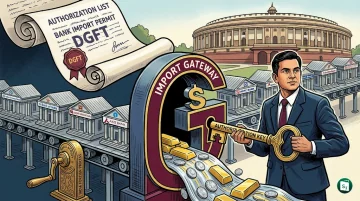
The Directorate General of Foreign Trade (DGFT), under the Department of Commerce (DoC) of the Ministry of Commerce & Industry (MoC&I), has updated the list of banks authorized to import precious metals. The new authorization is effective from April 2026, to March 2029.
A total of 15 banks are permitted to import both gold and silver, including Indian Overseas Bank, Bank of India, Punjab National Bank, RBL Bank, SBI, Axis Bank, Federal Bank, HDFC Bank, ICICI Bank, IndusInd Bank, Kotak Mahindra Bank Ltd, Karur Vysya Bank Ltd, Yes Bank, Deutsche Bank, and the Industrial and Commercial Bank of China Ltd. Futhermore, Union Bank of India and SBER Bank (a Russian state-publicly listed company) are authorized to import gold only.
Life Insurance Corporation of India (LIC) has launched two digital initiatives named ‘LIC’s Customer Application (MyLIC)’ for policyholders and ‘Super Sales Saathi’ for sales intermediaries. The platforms were introduced at an event in Mumbai to enhance the digital experience for customers and streamline operations for sales personnel.
Razorpay has integrated with Google Pay to facilitate international payments for Indian businesses. It is the first domestic Payment Aggregator (PA) to offer a card-based wallet experience for cross-border transactions through the platform.
The RBI has unveiled its medium-term strategy framework named “Utkarsh 2029”, which will be implemented from April 2026 to March 2029. The strategy aims to consolidate the position of the RBI as a world-class, full-service central bank by outlining 49 deliverables across six strategic pillars.
The six pillars of the framework include robust regulations, customer centricity and inclusive finance, competitive markets, effective technology, a future-ready organisation, and global integration. The framework introduces “Project Sa-Mudra” to modernise currency management and envisions the expansion of Central Bank Digital Currency (CBDC) for efficient cross-border payments.
The RBI also intends to scale up the Unified Lending Interface (ULI) to enhance credit access for underserved segments of the economy. Additionally, the strategy includes the development of an indigenous AI tool based on a purpose-built Large Language Model (LLM) for internal operations.
Shriram Overseas Investments Ltd, a wholly owned subsidiary of Shriram Finance Ltd, has received in-principle approval from the Reserve Bank of India (RBI) to start Primary Dealer (PD) business. The authorization is subject to the fulfillment of specific conditions set by the RBI.
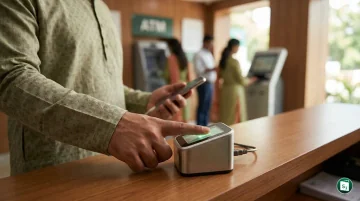
Paytm has introduced biometric authentication for UPI and cardless Automated Teller Machine (ATM) withdrawals to enhance security. These features align with the RBI guidelines for two factor authentication (2FA).
Biometric payments are capped at ₹5,000 per transaction as per the National Payments Corporation of India (NPCI) guidelines. The cardless withdrawal feature allows users to withdraw cash from ATMs without a physical card, with a maximum limit of ₹10,000 per transaction.
The RBI has issued the “RBI (Non-Banking Financial Companies (NBFC) - Branch Authorisation) Amendment Directions, 2026” to enhance operational flexibility for NBFCs while ensuring regulatory oversight. The rules have come into force with immediate effect.
All applications must be submitted through the Platform for Regulatory Application, Validation And AutHorisation (PRAVAAH) portal. Under the revised norms, deposit-taking NBFCs with Net Owned Funds (NOF) up to ₹50 crore or lower credit ratings are permitted to open branches only within the state of their registered office.