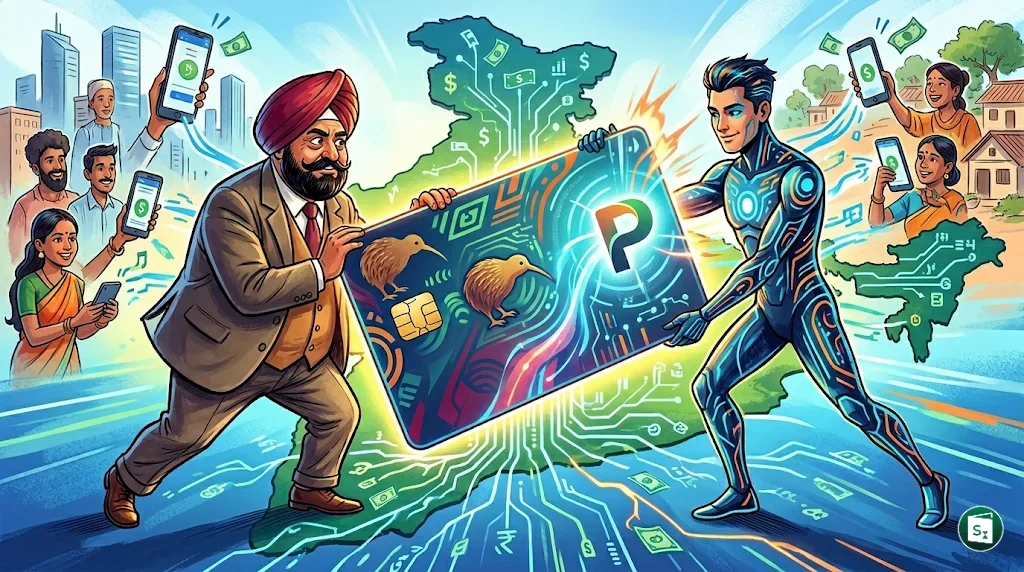
Punjab National Bank has partnered with the fintech platform Kiwi to launch the PNB Kiwi Credit Card, a co-branded digital-first solution on the RuPay network. This collaboration enables customers to link their credit card directly to the Unified Payments Interface (UPI) for effortless scan-and-pay transactions at merchant outlets. The initiative aims to deepen digital credit access and modernize the payment experience for millions of Indian consumers.
Features of the PNB Kiwi Credit Card
The PNB Kiwi Credit Card is designed as a virtual-first instrument, living primarily within the Kiwi mobile application. Unlike traditional credit cards that rely on physical plastic, this card focuses on immediate digital issuance, allowing users to start transacting shortly after approval. It operates on the RuPay network, which is currently the only credit card network in India that supports native integration with the UPI rails.
Key features and benefits of the card include:
- UPI Integration: Users can link the card to their UPI ID on the Kiwi app and perform Person-to-Merchant (P2M) transactions by simply scanning any Bharat QR code.
- Zero Fees: The card is launched as a Lifetime Free (LTF) offering, meaning it carries no joining or annual maintenance charges.
- Security: The card adheres to the latest security standards, requiring two-factor authentication for all digital transactions as per updated regulatory mandates.
| Feature | Description |
|---|---|
| Network | RuPay (Platinum/Select) |
| Card Type | Co-branded Credit Card |
| Issuance | 100% Digital via Kiwi App |
| Base Rewards | 0.5% to 1.5% cashback on UPI and online spends |
| Fees | Lifetime Free (Zero joining and annual fees) |
Strategic Importance of Credit-on-UPI
The integration of credit cards with UPI represents a major shift in India’s digital payment landscape. Traditionally, UPI was restricted to savings accounts and overdraft facilities. By allowing RuPay credit cards to be linked with UPI, the National Payments Corporation of India (NPCI) has unlocked a massive opportunity for credit-led consumption.
This model offers several strategic advantages:
- Merchant Acceptance: Millions of small merchants who already use UPI QR codes can now accept credit card payments without investing in expensive Point of Sale (POS) machines.
- Financial Inclusion: By leveraging the reach of public sector banks like PNB, digital credit can be extended to semi-urban and rural areas where traditional credit card penetration remains low.
- Convenience: Consumers no longer need to carry physical cards or manually enter card details for online purchases, making the transaction process faster and more secure.
The NPCI, which was established in 2008 by the RBI and the Indian Banks’ Association (IBA), has been at the forefront of this innovation. The growth of RuPay, India’s indigenous card network, is central to achieving the vision of a less-cash economy.
About Punjab National Bank (PNB)
Punjab National Bank (PNB) is one of India’s oldest and largest public sector banks. Established in 1894 and commencing operations in April 1895, the bank was founded by nationalist leaders including Lala Lajpat Rai. It was the first swadeshi bank to be started solely with Indian capital and managed by Indians.
Today, PNB is headquartered in New Delhi (specifically Dwarka) and operates a vast network of thousands of branches across India. The bank has been at the forefront of digital transformation in the banking sector, implementing advanced technological solutions to serve its diverse customer base. As of April 2026, the bank’s leadership is headed by Ashok Chandra, who serves as the Managing Director (MD) and CEO. PNB’s participation in this co-branded initiative underscores its commitment to the Digital India mission and its desire to capture a larger share of the fintech-driven credit market.
About Kiwi and the Fintech-Bank Synergy
Kiwi is an Indian fintech startup founded in 2022 with a specific focus on the “Credit-on-UPI” segment. The company was founded by banking and fintech veterans Anup Agrawal, Siddharth Mehta, and Mohit Bedi. Kiwi’s business model revolves around providing a seamless digital experience for credit card users by integrating credit lines with the ubiquitous UPI interface.
The partnership between a legacy institution like PNB and an agile fintech like Kiwi represents a growing trend of synergy in the Indian financial sector. While banks provide the regulatory framework, capital, and trust, fintechs bring user-centric design, rapid technological deployment, and data-driven customer acquisition strategies. This synergy is crucial for scaling innovative financial products like the PNB Kiwi Credit Card to a diverse and geographically spread population.
| Entity | Role in Partnership |
|---|---|
| PNB | Card Issuance, Regulatory Compliance, Capital |
| Kiwi | Digital Onboarding, App Interface, Customer Rewards |
| RuPay | Payment Network and UPI Integration Rail |
| NPCI | Settlement Infrastructure and Network Governance |
The Evolving Landscape of Digital Payments in India
India’s digital payment ecosystem has undergone a transformation, driven by proactive regulations from the Reserve Bank of India (RBI). In April 2026, the RBI updated the Digital Payments – E-mandate Framework, which has streamlined recurring payments and enhanced transaction security. For instance, the limit for Additional Factor Authentication (AFA)-free recurring transactions for credit card bills and insurance premiums was raised to ₹1 lakh, facilitating smoother automated payments.
Furthermore, the introduction of a more robust two-factor authentication framework ensures that every digital transaction is verified through dynamic factors such as biometrics or app-level PINs. This regulatory environment has made it safer for consumers to adopt “Credit-on-UPI” products. As the RuPay network gains further market share, it is expected to challenge the dominance of global players by offering products that are tailor-made for the unique requirements of the Indian market.
Analogy · Credit-on-UPI Explained Expand analogy
Think of your traditional credit card as a high-end luxury car that requires a specific highway (POS machines) to travel. Credit-on-UPI is like giving that same car the ability to fly and land on any small road (QR codes), making it accessible even in the narrowest lanes of commerce where only local transport used to go.
Key Takeaways
- Punjab National Bank (PNB) partnered with the fintech firm Kiwi to launch the PNB Kiwi Credit Card on April 29, 2026.
- The card is a digital-first product on the RuPay network, allowing users to perform Credit-on-UPI transactions at any merchant QR code.
- PNB was established in 1894 and is headquartered in New Delhi, with Ashok Chandra currently serving as its MD and CEO.
- Kiwi, founded in 2022, is an Indian fintech company led by Anup Agrawal, Siddharth Mehta, and Mohit Bedi.
- The National Payments Corporation of India (NPCI), established in 2008, manages the RuPay and UPI infrastructure that enables this integration.
- The Reserve Bank of India (RBI) has raised the limit for AFA-free recurring transactions for credit card bills to ₹1 lakh as of April 2026.