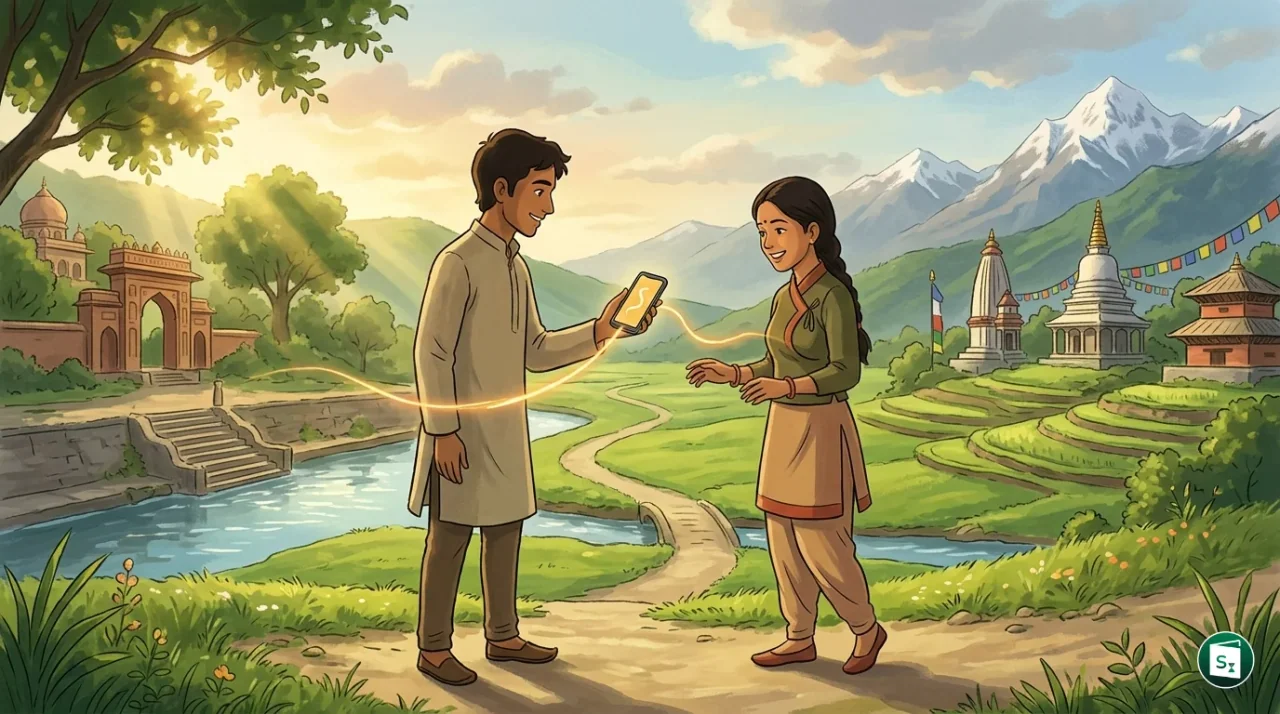
India and Nepal reached a new milestone in bilateral cooperation on June 6, 2026, with the operationalization of a real-time digital payment linkage and the handover of key infrastructure projects. During a three-day official visit to New Delhi, Nepal Foreign Minister Shisir Khanal joined External Affairs Minister S. Jaishankar to launch the UPI-NPI Person-to-Person (P2P) remittance facility. This diplomatic engagement also saw the formal transfer of 84 reconstruction projects completed with Indian assistance following the 2015 earthquake.
Advancing Digital Integration: The India-Nepal UPI-NPI Linkage
A central highlight of the bilateral visit was the operationalization of the Person-to-Person (P2P) linkage between India’s Unified Payments Interface (UPI) and Nepal’s National Payments Interface (NPI). This integration allows citizens of both countries to perform real-time, low-cost cross-border remittances. The technical execution was led by NPCI International Payments Limited (NIPL) and Nepal Clearing House Limited (NCHL).
The linkage simplifies financial transactions by allowing users to transfer funds using Mobile Numbers, Virtual Payment Addresses (VPAs), or UPI IDs, eliminating the need for complex bank account details. In the initial phase, major financial institutions like Nepal SBI Bank, Global IME Bank, and Everest Bank have been integrated into the system, while Indian users can utilize popular apps like PhonePe, Google Pay, and Paytm.
Bridging the Financial Gap: Features and Limits
To ensure secure and regulated financial flows, the two governments have established specific transaction caps and service fees. These limits are designed to facilitate ease of use for migrant workers and students while maintaining financial oversight.
| Transaction Type | Maximum Limit per Transaction | Monthly Limit |
|---|---|---|
| India to Nepal | INR 200,000 | Not specified |
| Nepal to India | INR 15,000 | INR 100,000 |
A flat service charge of approximately INR 150 per transaction has been introduced, making it significantly more affordable than traditional banking channels. This move aligns with the G20 objective of reducing the cost of cross-border remittances.
India’s Post-Earthquake Reconstruction Assistance in Nepal
The formal handover of 84 completed development projects marked another significant milestone during the visit. These projects were built under India’s post-2015 earthquake reconstruction assistance program, which has seen India commit substantial resources across four critical sectors: housing, education, health, and cultural heritage.
Following the devastating earthquake in April 2015, India pledged USD 1 billion for reconstruction efforts. The projects handed over by External Affairs Minister S. Jaishankar symbolize the fruition of this commitment, focusing on community-level infrastructure that directly impacts the lives of Nepali citizens.
Sectors of Support: Healthcare and Cultural Heritage
The 84 projects handed over in June 2026 are distributed across two primary sectors, ensuring that both essential public services and the rich cultural identity of Nepal are preserved and strengthened.
- Healthcare Infrastructure: A total of 72 health facilities were reconstructed across multiple districts. These facilities include primary health centers and local clinics that were destroyed or damaged, now restored with modern construction standards to ensure resilience against future disasters.
- Cultural Heritage Conservation: India assisted in the restoration of 12 cultural heritage projects. These include the conservation of ancient temples and historical sites that hold deep religious and social significance for the local communities.
This handover follows India’s previous success in supporting the reconstruction of 50,000 houses in the Gorkha and Nuwakot districts, which were the epicenters of the 2015 disaster.
Strategic Significance of Foreign Minister Shisir Khanal’s Visit
The visit of Foreign Minister Shisir Khanal is the first high-level ministerial engagement between India and the new Nepalese government led by Prime Minister Balendra Shah, who assumed office in March 2026. The discussions signaled a pragmatic “reset” in bilateral ties, with both nations focusing on measurable outcomes and connectivity rather than long-standing political baggage.
A key theme of the visit was the expansion of India’s Neighbourhood First policy, with External Affairs Minister Jaishankar emphasizing that the two neighbors have an opportunity to decisively shift their engagement to realize its full potential. The meetings also involved National Security Advisor Ajit Doval, highlighting that security cooperation and border management remain core pillars of the strategic partnership.
Broader Dimensions of India-Nepal Cooperation
Beyond digital payments and physical infrastructure, the visit resulted in several other forward-looking agreements that deepen the societal and legal bonds between the two countries.
AI-Powered Language Translation and Legal Frameworks
An innovative Memorandum of Understanding (MoU) was signed between Digital India Bhashini and Kathmandu University. This partnership aims to co-create a “Voice First” language translation platform. By utilizing artificial intelligence, the platform will help bridge the linguistic gap, making government services and information more accessible to citizens in their native languages.
Furthermore, both sides welcomed the completion of internal procedures for the Mutual Legal Assistance Agreement (MLAA) in criminal matters. This agreement provides a formal legal framework for both nations to cooperate in investigations and combat trans-border crimes, strengthening regional security.
The discussions also touched upon energy security, with both sides reviewing progress on the Pancheshwar Multipurpose Project and discussing a comprehensive framework for hydropower exports from Nepal to India.
Key Takeaways
- India and Nepal launched a Person-to-Person (P2P) digital payment linkage between UPI and National Payments Interface (NPI) on June 6, 2026.
- The technical integration for the payment linkage was executed by NPCI International Payments Limited (NIPL) and Nepal Clearing House Limited (NCHL).
- India formally handed over 84 reconstruction projects to Nepal, including 72 health facilities and 12 cultural heritage sites damaged in the 2015 earthquake.
- The government of India had pledged USD 1 billion for Nepal’s post-disaster recovery following the April 2015 earthquake.
- An MoU was signed between Digital India Bhashini and Kathmandu University to develop an AI-powered Voice First language translation platform.
- Both nations finalized the internal procedures for the Mutual Legal Assistance Agreement (MLAA) to strengthen cooperation against cross-border crimes.
- The visit of Foreign Minister Shisir Khanal was the first high-level engagement with the new government led by Prime Minister Balendra Shah.