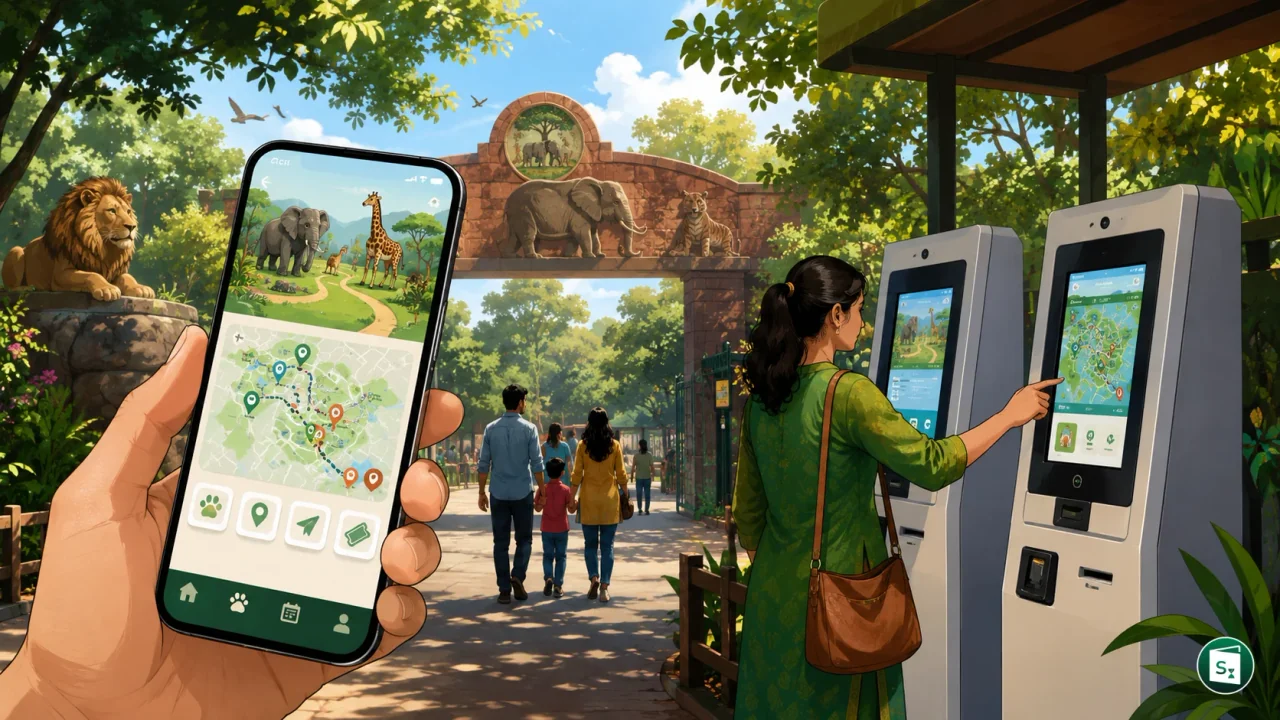
Union Minister of State for Environment, Forest and Climate Change, Kirti Vardhan Singh, launched the NZP Saathi App and inaugurated self-ticketing kiosks at the National Zoological Park (NZP) in New Delhi on June 13, 2026. This digital initiative aims to modernize the visitor experience at the Delhi Zoo by providing smart navigation and seamless online ticketing facilities. The launch marks a significant step towards integrating technology with wildlife education and conservation awareness in the national capital.
Digital Transformation at the National Zoological Park
The introduction of the NZP Saathi App and self-ticketing kiosks represents a major push toward digital governance within the Ministry of Environment, Forest and Climate Change (MoEFCC). During the launch, Minister Kirti Vardhan Singh emphasized that these tools are designed to bridge the gap between visitors and the natural world by leveraging modern technology. The initiative aligns with the Digital India mission, focusing on making public facilities more accessible and user-friendly through automated systems.
The National Zoological Park, established in 1959, has long been a key center for wildlife conservation in India. By adopting digital solutions, the zoo aims to manage its high footfall more efficiently while providing educational content in a more engaging format. These upgrades are part of a broader vision to transform the NZP into a world-class model zoo that prioritizes both animal welfare and visitor enlightenment.
Key Features of the NZP Saathi App
The NZP Saathi App is designed to function as a comprehensive digital companion for anyone visiting the zoo. One of its primary objectives is to reduce the reliance on physical maps and traditional signage, which can often be difficult to navigate in the sprawling 188-acre facility. The app offers a multi-functional interface that caters to both logistics and education.
Smart Navigation and Interactive Experience
The app features a GPS-enabled smart navigation system that provides real-time directions to various animal enclosures, amenities, and historical monuments within the park. Visitors can use the interactive map to plan their route, ensuring they do not miss key attractions like the White Tiger or the Sangai deer.
Beyond navigation, the app provides detailed biological information and conservation status for each species. By scanning QR codes placed near enclosures, visitors can access interactive content, including audio guides and high-quality images. This digital storytelling approach helps in fostering a deeper connection between the public and wildlife conservation efforts.
Self-Ticketing Kiosks: Enhancing Visitor Convenience
In addition to the mobile application, the inauguration of self-ticketing kiosks marks a significant upgrade in the zoo’s infrastructure. These kiosks are strategically placed at the entry points to reduce congestion and waiting times at the manual ticket counters. The kiosks support various digital payment methods, including UPI, credit cards, and debit cards, facilitating a paperless and hassle-free entry process.
This move toward automated ticketing is expected to streamline visitor management, especially during weekends and public holidays when the zoo sees a surge in footfall. By integrating the kiosks with the NZP Saathi App, the administration ensures a unified digital ecosystem where visitors can book tickets online or on-site with equal ease.
About the National Zoological Park (NZP)
The National Zoological Park, popularly known as the Delhi Zoo, was inaugurated on November 1, 1959, by the then Union Minister for Agriculture, Punjab Rao Deshmukh. In 1982, it was granted the status of a ‘National’ zoo with the intent of making it a model for other zoological parks in the country. Spanning approximately 188 acres near the historic Purana Qila (Old Fort), the zoo is situated on a portion of the Delhi Ridge, the northernmost extension of the Aravalli Range.
The administrative control of the NZP lies with the Central Zoo Authority (CZA), a statutory body established in 1992 under the Wildlife (Protection) Act, 1972. The CZA functions under the MoEFCC and is responsible for overseeing the functioning of all zoos in India, ensuring they maintain high standards of animal upkeep and veterinary care.
Conservation and Breeding Successes
The NZP plays a crucial role in ex-situ conservation, which involves the protection of endangered species outside their natural habitats. It is particularly renowned for its successful conservation breeding programs. Key species bred and maintained here include:
- Sangai (Brow-antlered deer): The zoo has been a pioneer in breeding this rare and endangered species from Manipur.
- White Tiger and Royal Bengal Tiger: The NZP has a long history of successful tiger breeding and management.
- Asiatic Lion and Indian Rhinoceros: These are among the prominent species that attract thousands of visitors annually.
The zoo is also known for its open-moat enclosures, a design feature that allows animals to live in a near-natural environment without the use of traditional iron bars, enhancing both animal welfare and the visitor’s viewing experience.
Key Takeaways
- The NZP Saathi App and self-ticketing kiosks were launched at the National Zoological Park in New Delhi on June 13, 2026.
- The digital initiatives were inaugurated by the Union Minister of State for Environment, Forest and Climate Change, Kirti Vardhan Singh.
- The app provides GPS-based smart navigation, online ticketing, and educational content through QR codes for zoo visitors.
- The National Zoological Park, established in 1959, is managed by the Central Zoo Authority (CZA) under the Wildlife (Protection) Act, 1972.
- The NZP is renowned for its ex-situ conservation efforts and successful breeding of endangered species like the Sangai and White Tiger.
- The zoo is located on the Delhi Ridge, which is the northernmost extension of the Aravalli Range.