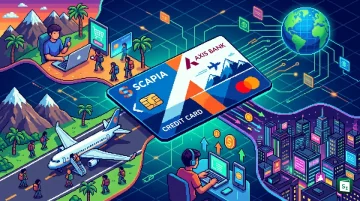
Axis Bank has partnered with travel fintech Scapia to launch a co-branded credit card named “Scapia Axis Bank Credit Card”. The card is designed to cater to the requirements of digitally native and travel-focused consumers.
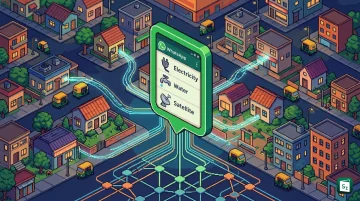
WhatsApp has integrated a native bill payments feature in India to enable users to discover, manage, and pay household and utility bills directly within the application.
The service is powered by the Bharat Connect network, formerly known as the Bharat Bill Payment System (BBPS), which is operated by NPCI Bharat BillPay Ltd (NBBL).
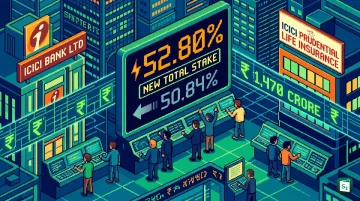
ICICI Bank Ltd has acquired an additional 2% stake in its life insurance subsidiary, ICICI Prudential Life Insurance, for ₹1,470 crore through the stock exchange. With this, the total shareholding of the bank in the insurance venture has increased from 50.84% to 52.8%.
The RBI has appointed Suman Ray as the Executive Director (ED). In his role as the ED, he will oversee the operations of the Deposit Insurance and Credit Guarantee Corporation (DICGC) and the Premises Department.
PhonePe has launched ‘UPI 123Pay’, a service enabling feature phone users to conduct UPI transactions without internet connectivity. The service uses a Short Message Service (SMS)-based system to ensure secure transactions even in low network coverage areas.
This initiative aims to promote financial inclusion by providing digital payment capabilities to the non-smartphone user demographic in India.
Kissht, a RBI registered Non-Banking Financial Company (NBFC), has launched a brand campaign titled “Loans Without Any Hiccups” featuring former cricketer Sachin Tendulkar.
LIC (Life Insurance Corporation of India) has launched two new non-linked, non-participating insurance plans named ‘LIC Bima Platinum’ (Plan 770) and ‘LIC Jeevan Raksha’ (Plan 894) on the occasion of the 70th anniversary of LIC in Mumbai.
It is to be noted that the ‘LIC Bima Platinum’ requires a minimum Basic Sum Assured (BSA) of ₹3 lakh with no upper limit. The ‘LIC Jeevan Raksha’ provides a BSA ranging from ₹5 lakh to ₹24 lakh.
The SEBI has granted a Category-I merchant banking licence to Zerodha Corporate Advisors, a subsidiary of Zerodha, to enter the investment banking sector focusing on capital market services.
As per the new regulations by SEBI, Category-I merchant bankers are authorised to manage main-board public issues and perform underwriting activities. It is to be noted that the minimum net worth requirement for Category-I is increased to ₹50 crore from ₹5 crore, and the underwriting capacity for these entities is capped at 20 times their liquid net worth.
Bajaj General Insurance Ltd has launched “My Family Complete”, which is the first health insurance policy in India to include pet dogs and cats as insured family members under a single integrated plan.
The policy provides comprehensive protection for adults (18 years and above), children (3 months to 30 years), and pets (from 3 months of age with no upper age limit).
IDFC First Bank has partnered with the Indian Institute of Management Calcutta Innovation Park (IIMCIP) to launch ‘IGNITE’, an incubation programme with a total outlay of ₹2 crore.
It will provide financial and operational support, including a direct startup grant corpus of ₹1.36 crore to 16 selected startups.
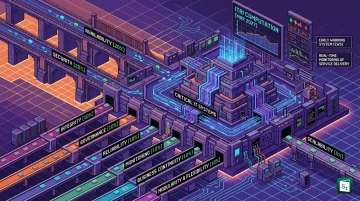
The Securities and Exchange Board of India (SEBI) has introduced the ‘IT Resilience Index’ (ITRI) Framework for Market Infrastructure Institutions (MIIs) to evaluate the robustness and operational resilience of their critical Information Technology (IT) systems.
The ITRI will assess the technology systems of MIIs using nine parameters.
Within the framework, availability and security are assigned the highest weightage of 20% each.
Integrity, governance, reliability and monitoring, business continuity, and modularity and flexibility each carry a 10% weightage, while scalability is allocated 5%.
The Early Warning System (EWS) and Real Time Monitoring of Service Delivery must be operationalised by February 2027, with the inaugural ITRI computation covering the half-year ending March 2027.
The Unified Payments Interface (UPI), launched by the National Payments Corporation of India (NPCI), has completed 10 years of operations.
In FY26, the share of UPI in the digital payments of India is recorded at 84%, the annual transaction volume of UPI reached 24,162 crore transactions, with the total transaction value estimated at ₹314 lakh crore.
VinFast India has signed an MoU with Federal Bank to provide customized inventory financing solutions for the Authorised Dealer (AD) network of the company.
Citigroup Inc. has partnered with Axis Bank to provide financing support to Non-Resident Indians (NRIs) investing in Foreign Currency Non-Resident (FCNR) deposits.
Axis Bank offers FCNR deposit interest rates of up to 6.40%.
Paul Merchants Finance Pvt Ltd (PMFPL), a diversified Non-Banking Financial Company (NBFC) and a part of the Paul Merchants Group, has launched a “Loan Against Silver” product, becoming the first NBFC in India to establish exclusive branches dedicated to silver loans.
The NBFC has initiated its silver loan operations from the Union Territory of Chandigarh.
Under this credit facility, eligible customers can secure loans ranging from ₹2,000 to ₹15 lakh.
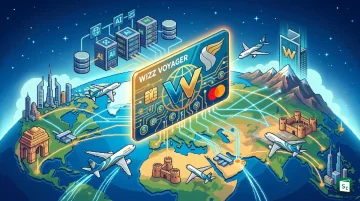
Wizzmoni Financial Services Limited (formerly Unimoni), an Indian Non-Banking Financial Company (NBFC), has partnered with Oman Air to launch a co-branded, AI-powered travel card named “Wizz Voyager Multi-Currency Card” that supports multiple global currencies.
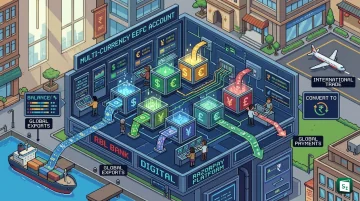
Razorpay, an omnichannel payments platform, has partnered with RBL Bank to launch a Multi-Currency Exchange Earners’ Foreign Currency (EEFC) account.
The account enables exporters and international businesses to retain their earnings in foreign currencies and manage global payments efficiently without immediate conversion into Indian Rupees (INR).
Punjab National Bank has signed an MoU with the Indian Army to offer two credit cards, namely the “PNB LUXURA Metal Credit Card” and the “PNB Parakram Credit Card”.
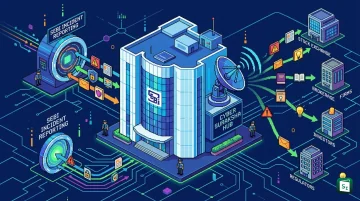
The SEBI has launched two new web portals, “SEBI Incident Reporting” and “Cyber Suraksha”, to strengthen cybersecurity and information sharing in the securities market ecosystem.
The “SEBI Incident Reporting” portal is an updated version of the existing system designed for structured, timely, and actionable reporting of cyber-incidents.
The “Cyber Suraksha” portal will serve as a centralized hub for sharing cybersecurity information, including vulnerability warnings, policy measures, and incident insights.