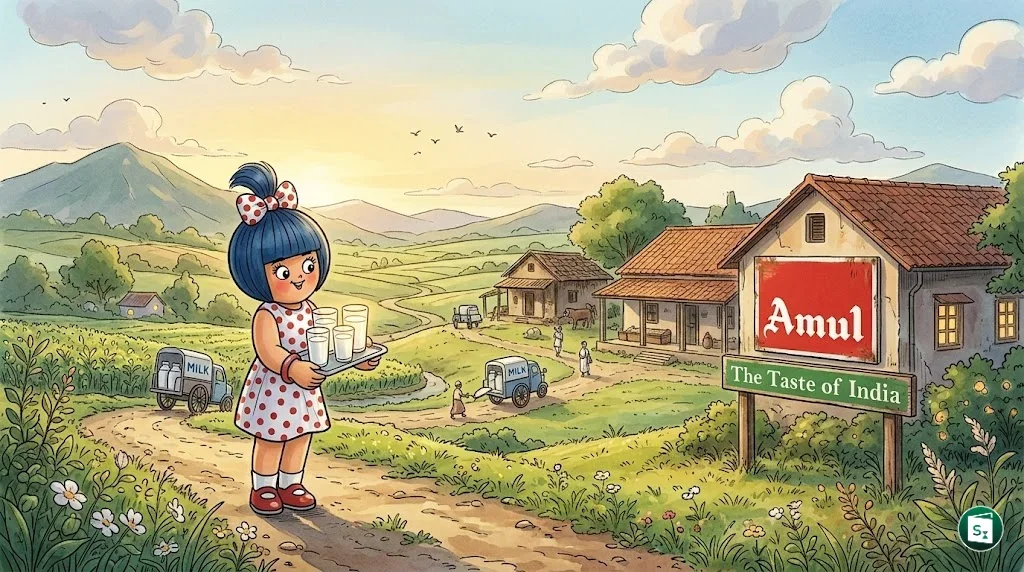
The Amul brand has made history by becoming the first Indian Fast-moving consumer goods (FMCG) player to cross the ₹1 lakh crore turnover milestone in the 2025-26 fiscal year. This 11% growth from the previous year’s ₹90,000 crore reflects the cooperative’s successful transition into a full-spectrum food company with an active presence in more than 50 countries. The milestone marks a new chapter for India’s dairy sector as it targets global leadership under the White Revolution 2.0 initiative.
Amul Becomes First Indian FMCG Brand to Hit ₹1 Lakh Crore
In the 2025-26 financial year, the Amul brand achieved a total unduplicated turnover of more than ₹1 lakh crore, a historic first for any Indian FMCG brand. While the brand as a whole crossed this landmark, the Gujarat Cooperative Milk Marketing Federation (GCMMF), the marketing arm of the cooperative, recorded its own sales turnover of ₹73,450 crore. This represented an 11.4% increase from ₹65,911 crore in the previous fiscal year.
The difference between the brand turnover and the federation’s turnover accounts for direct sales by the 18 member district cooperative milk unions in their local markets, which also operate under the Amul brand name. This multi-tier structure ensures that the economic benefits reach the grass-roots level, supporting over 36 lakh dairy farmers across India. The achievement cements Amul’s position as India’s largest consumer goods organization by revenue.
Diversification and the Strategic Shift to Organic Staples
A major driver of this record growth was Amul’s entry into new food categories far beyond its dairy core. The brand’s portfolio now consists of over 1,200 product packs, including milk, ghee, ice cream, and cheese. A significant strategic shift in the 2025-26 period saw Amul intensifying its focus on high-value categories like organic staples, protein-based snacks, and probiotic dairy offerings.
The cooperative has expanded its presence in the organic market, launching staples such as organic atta, rice, and pulses. By utilizing its well-established distribution network, which penetrates towns with a population as low as 5,000, Amul has made organic products accessible to a larger consumer base. This diversification enables the cooperative to function as a full-spectrum FMCG organization rather than a pure dairy player.
Global Expansion: From Gujarat to the United States
Amul’s international footprint has grown significantly, with the brand now visible on shelves in more than 50 countries. A key milestone in this global expansion was the launch of fresh milk in the United States through a strategic partnership with the Michigan Milk Producers Association (MMPA). Under this agreement, milk is sourced and processed in the US while being marketed and distributed under the Amul brand.
By April 2026, the brand’s premium offering, Amul Gold, had successfully expanded from niche stores to mainstream retail giants like Costco Wholesale. The initial rollout on the US East Coast has set the stage for a nationwide presence across more than 750 outlets. This move represents the first time an Indian dairy cooperative has launched fresh milk in a major Western market, leveraging the strong brand recognition it enjoys among the Indian diaspora and beyond.
The Cooperative Model and White Revolution 2.0
The bedrock of Amul’s success remains its three-tier cooperative model, which consists of village-level societies, district-level unions, and the state-level federation. This model was pioneered by Dr. Verghese Kurien, known as the Father of the White Revolution, and Tribhuvandas Patel, who founded the Kaira District Co-operative Milk Producers’ Union in 1946. The legacy of Operation Flood, launched in 1970, continues as the cooperative now procures approximately 31 million litres of milk daily.
In recognition of its socioeconomic impact, the International Cooperative Alliance (ICA) ranked Amul as the No. 1 cooperative in the world in terms of GDP per capita performance in late 2025. The current growth aligns with the national goal of White Revolution 2.0, which aims to strengthen dairy cooperatives and establish 2 lakh new village-level dairy societies across India. By empowering local farmers and ensuring fair returns, Amul has transformed India into the world’s largest milk producer.
Infrastructure Push: New Processing Facilities and Investments
To support its rising turnover, Amul has announced a major investment plan involving ₹10,000 crore over the next two to three years. This capital is being deployed to set up approximately 12 new manufacturing units across India, enhancing capacity in the dairy, ice cream, and organic food segments.
Among the key projects announced by April 2026 is the establishment of a state-of-the-art facility in Telangana, involving a ₹500 crore investment. This site will be the largest plant in South India, with a capacity to process 10 lakh litres of milk per day. Additionally, the cooperative is building an integrated dairy plant in Sankrail, Kolkata, which features one of the world’s largest curd manufacturing facilities. Expanding into the northeast, Amul is also setting up a processing unit in Assam to meet the growing regional demand.
| Project Location | Estimated Investment | Key Feature/Capacity |
|---|---|---|
| Telangana | ₹500 crore | Largest plant in South India (10 lakh LPD) |
| Kolkata | ₹600 crore | Integrated plant with world’s largest curd unit |
| Assam | ₹100 crore | Boost to dairy processing in the Northeast |
| National Total | ₹10,000 crore | 12 new units planned over three years |
These investments ensure that the brand remains ahead of its competitors while maintaining the high quality and affordability that are its trademarks.
Key Takeaways
- Amul has become the first Indian FMCG brand to cross the ₹1 lakh crore turnover milestone in the 2025-26 financial year.
- The Gujarat Cooperative Milk Marketing Federation (GCMMF) reported a growth of 11.4%, recording a sales turnover of ₹73,450 crore for FY26.
- The brand launched its premium Amul Gold fresh milk in the United States market in partnership with the Michigan Milk Producers Association.
- The International Cooperative Alliance (ICA) ranked Amul as the world’s No. 1 cooperative based on its GDP per capita performance in late 2025.
- The Gujarat-based cooperative plans to invest ₹10,000 crore to build 12 new manufacturing units for dairy and organic staples over the next three years.
- Amul follows a three-tier cooperative model, which was pioneered by Dr. Verghese Kurien, the Father of the White Revolution in India.