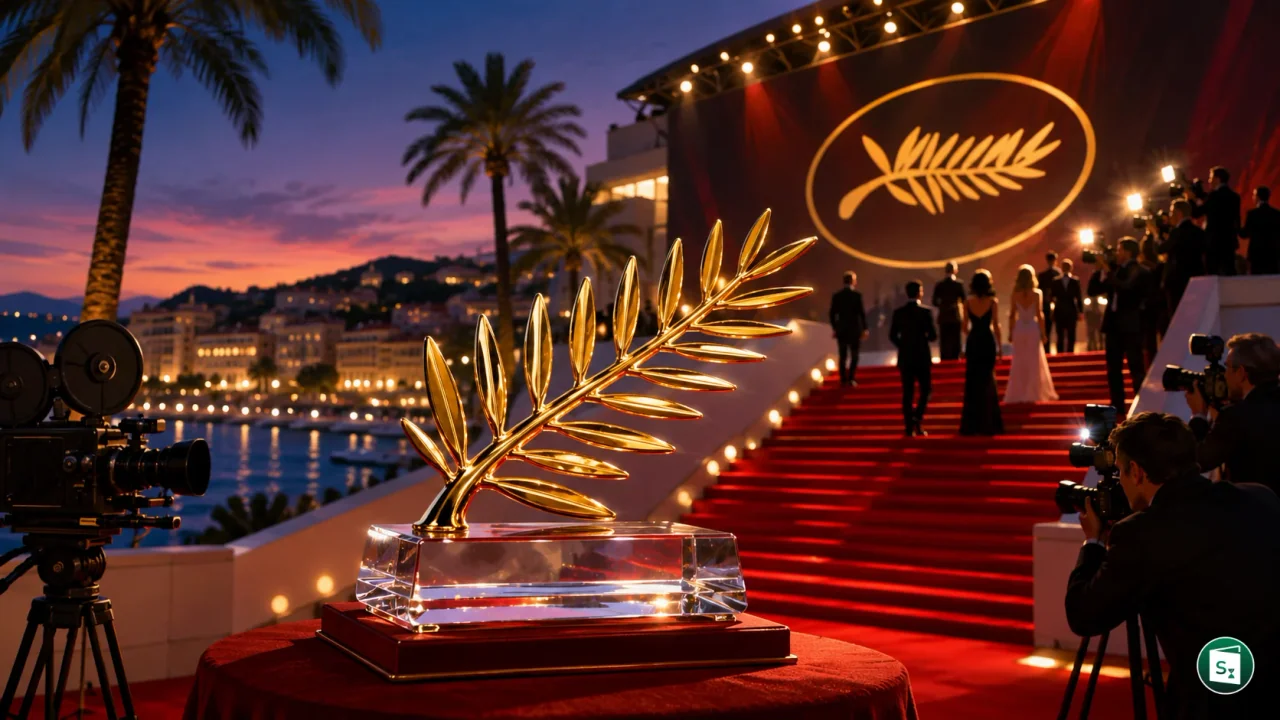
The 79th Cannes International Film Festival concluded in France on May 30, 2026, with Romanian filmmaker Cristian Mungiu securing the prestigious Palme d’Or for his drama ‘Fjord’. This historic achievement marks Mungiu’s second win of the festival’s highest honor, following his 2007 success with 4 Months, 3 Weeks and 2 Days. The event celebrated a diverse range of global cinematic voices, featuring major awards for directors from Russia, Poland, and Spain.
Overview of the 79th Cannes Film Festival
The Cannes Film Festival, officially known as the Festival de Cannes, remains one of the most influential cultural gatherings in the world. Established in 1946 to promote the development of cinematic art, the festival is held annually at the Palais des Festivals et des Congrès in Cannes. It is recognized as one of the “Big Three” European film festivals, alongside the Venice Film Festival in Italy and the Berlin International Film Festival in Germany.
The 79th edition of the festival was presided over by South Korean director Park Chan-wook, who led the international jury in evaluating films for the main competition. This year’s lineup showcased a significant emphasis on geopolitical narratives and intimate societal dramas. The festival also serves as a critical platform for the Marché du Film, which is the largest film market in the world, facilitating global distribution and production deals.
Major Winners: Palme d’Or and Grand Prix
The highest accolade of the festival, the Palme d’Or, was awarded to Cristian Mungiu for his film ‘Fjord’. This win places Mungiu in an elite group of only eleven directors who have won the top prize twice in the festival’s history. His film, a nuanced drama, explores complex societal and cultural tensions. The Palme d’Or was introduced in 1955, replacing the earlier Grand Prix du Festival as the highest honor.
The Grand Prix, which is the second-most prestigious award at Cannes, was presented to Russian filmmaker Andrey Zvyagintsev for the political thriller ‘Minotaur’. Zvyagintsev is well-known for his previous acclaimed works such as Leviathan and Loveless. Additionally, the Jury Prize, often considered the third highest award, was conferred upon ‘The Dreamed Adventure’ directed by Valeska Grisebach of Germany. These awards reflect the festival’s commitment to recognizing both narrative innovation and socio-political commentary.
Highlights of Individual Performance and Screenplay Awards
The 79th Cannes Film Festival was notable for several shared honors in the individual performance categories. The Best Actress award was jointly presented to Virginie Efira and Tao Okamoto for their roles in ‘All Of A Sudden’. Similarly, the Best Actor prize was shared by Emmanuel Macchia and Valentin Campagne for the film ‘Coward’. These ties underscore the high caliber of performances witnessed during the competition.
In the directorial categories, the Best Director award was also a joint win. It was presented to the Spanish duo Javier Calvo and Javier Ambrossi for ‘La Bola Negra’, and to Polish filmmaker Paweł Pawlikowski for ‘Fatherland’. The award for Best Screenplay went to Emmanuel Marre for ‘A Man of His Time’. Furthermore, the Caméra d’Or, which recognizes the best first feature film across all sections, was awarded to Marie-Clementine Dusabejambo for her debut work ‘Ben’Imana’.
| Award Category | Winner(s) | Film |
|---|---|---|
| Best Director | Javier Calvo, Javier Ambrossi and Paweł Pawlikowski | La Bola Negra and Fatherland |
| Best Actor | Emmanuel Macchia and Valentin Campagne | Coward |
| Best Actress | Virginie Efira and Tao Okamoto | All Of A Sudden |
| Best Screenplay | Emmanuel Marre | A Man of His Time |
| Caméra d’Or | Marie-Clementine Dusabejambo | Ben’Imana |
Historical Significance: India’s Legacy at Cannes
India has shared a long and prestigious relationship with the Cannes Film Festival, dating back to its inaugural year in 1946. During that first edition, Chetan Anand’s film ‘Neecha Nagar’ made history by winning the Grand Prix, which was the festival’s highest honor at the time. This remains the only instance of an Indian film receiving the top prize in the main competition. Over the decades, legendary Indian filmmakers like Satyajit Ray, Mrinal Sen, and Bimal Roy have received accolades for their contributions to cinema.
More recently, India has witnessed a resurgence of critical success at the festival. In 2024, Payal Kapadia won the Grand Prix for her film ‘All We Imagine as Light’, marking the first time in over thirty years that an Indian film competed in the main section. That same year, Anasuya Sengupta became the first Indian to win the Best Actress award in the Un Certain Regard category. These milestones highlight India’s growing influence and the increasing global recognition of its diverse storytelling traditions.
Key Takeaways
- The 79th Cannes International Film Festival concluded on May 30, 2026, in Cannes, France.
- Romanian director Cristian Mungiu won the Palme d’Or for his drama ‘Fjord’, making him the eleventh filmmaker to win the award twice.
- The Grand Prix, the festival’s second highest honor, was awarded to Andrey Zvyagintsev for the thriller ‘Minotaur’.
- Marie-Clementine Dusabejambo of Rwanda received the Caméra d’Or for her first feature film ‘Ben’Imana’.
- The Cannes Film Festival was established in 1946 and is held at the Palais des Festivals et des Congrès.
- The Palme d’Or was introduced in 1955 as a replacement for the Grand Prix du Festival.