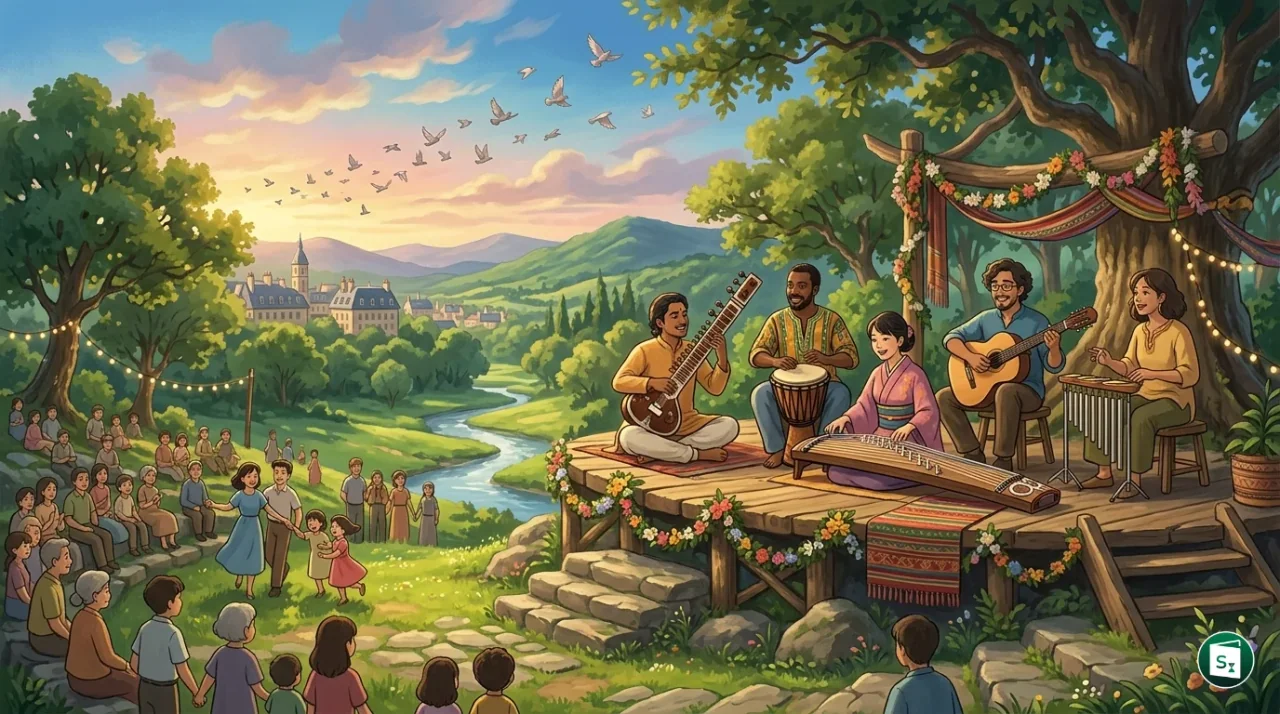
World Music Day, also known as Fete de la Musique, was celebrated globally on June 21, 2026, with the theme “Music for Peace”. First observed in France in 1982, the day has grown into one of the world’s largest annual musical celebrations, spanning more than 120 countries and 700 cities. The 2026 edition carried a special message of unity and harmony at a time when cultural dialogue across borders remains more relevant than ever.
The Origins: How a French Idea Went Global
The story of World Music Day begins in October 1981, when Jack Lang, the newly appointed French Minister of Culture, appointed Maurice Fleuret as Director of Music and Dance at the Ministry of Culture. Fleuret brought with him a radical observation after studying the musical habits of the French people. A nationwide survey had revealed that 5 million people, including one in two young people, played a musical instrument, yet almost none performed in public. This led Fleuret to his guiding insight: “music everywhere and the concert nowhere.”
The first Fete de la Musique was held on June 21, 1982, intentionally chosen to coincide with the summer solstice, the longest day of the year in the Northern Hemisphere. The idea was simple but powerful: amateur and professional musicians would take to the streets, parks, and public squares to perform for free, with no entry fees, no stage hierarchies, and no genre restrictions. The slogan “Faites de la musique” (Make music) became the rallying cry, a clever homophone of “Fete de la musique.”
From France, the movement spread rapidly across Europe and beyond. Italy adopted the festival in 1985, and within two decades, the celebration had reached every inhabited continent. The day is now recognised and promoted by UNESCO as a global celebration of cultural diversity and musical heritage.
The 2026 Theme: “Music for Peace”
The theme for World Music Day 2026 was “Music for Peace”, reflecting the growing recognition of music as a tool for diplomacy, conflict resolution, and social cohesion. This theme resonated across continents, with concerts and events explicitly designed to bridge divided communities and promote cross-cultural understanding.
The choice of theme was particularly significant given the global context in 2026. Music has long been recognised by international organisations as a medium for peacebuilding. The United Nations has its own UN Chamber Music Society initiative titled “Music for Peace,” which uses musical performance to promote reflection, healing, and a commitment to the ideals of the UN Charter. In India, the Sur Jahan (World of Music) festival, an annual World Peace Music Festival held since 2011 under the motto “Music for Peace, Music for All,” aligns closely with this vision, bringing global music traditions to Indian audiences.
Celebrations Around the World
World Music Day is built on a set of shared traditions that give the event its unique character regardless of location.
| Tradition | Description |
|---|---|
| Free performances | All concerts are free. Musicians perform without fees and audiences attend without tickets |
| Public spaces as stages | Streets, parks, train stations, and balconies become impromptu venues |
| All genres welcome | Classical, folk, pop, jazz, electronic, and traditional music coexist equally |
| Amateur participation | Anyone who plays an instrument or sings is encouraged to perform, regardless of skill level |
| Late-night sessions | Because it falls on the summer solstice, performances often continue late into the evening |
In France, the day remains the largest cultural event of the year, with over 18,000 concerts drawing an estimated 10 million attendees. Italy hosts more than 25,000 performing groups. In China, around 15,000 free events take place across 200 cities. The American version, Make Music Day, launched in New York in 2007, now reaches more than 100 US cities and hosted over 4,700 free concerts in 2023 alone.
In India, World Music Day has gained considerable momentum in recent years. Major cities such as Mumbai, New Delhi, Kolkata, Bengaluru, and Chennai host a wide range of events, from classical music festivals and fusion concerts to open mic sessions and street performances. Music schools, cultural academies, and independent artist collectives organise concerts, workshops, and community jam sessions. The Indian Culture Portal and state tourism departments have also begun actively promoting the day as part of India’s soft power and cultural outreach.
UNESCO recognises the Fete de la Musique as a key initiative supporting cultural diversity and the 2005 Convention on the Protection and Promotion of the Diversity of Cultural Expressions, to which India is a signatory.
Key Takeaways
- World Music Day (Fete de la Musique) is celebrated globally on June 21 every year, chosen to coincide with the summer solstice in the Northern Hemisphere.
- The day was initiated in 1982 by Jack Lang, then French Minister of Culture, and Maurice Fleuret, Director of Music and Dance at the French Ministry of Culture.
- The theme for 2026 was “Music for Peace”, emphasising music’s role in diplomacy, cultural dialogue, and social cohesion.
- The event is now observed in more than 120 countries and 700 cities worldwide, with free concerts and public performances as its hallmark.
- France alone hosts over 18,000 concerts on this day, drawing an estimated 10 million people.
- UNESCO promotes the day as part of its efforts under the 2005 Convention on the Protection and Promotion of the Diversity of Cultural Expressions.