India observes National Doctor’s Day every year on July 1 to recognise the invaluable contributions of doctors to society. The day marks the birth and death anniversary of Dr Bidhan Chandra Roy, one of India’s most respected physicians, a former Chief Minister of West Bengal, and a recipient of the Bharat Ratna. The 2026 theme, “Behind the Mask: Who Heals the Healers?”, shifts the spotlight to the mental and emotional well-being of doctors themselves.
Dr Bidhan Chandra Roy: The Physician Statesman
Dr Bidhan Chandra Roy was born on July 1, 1882 in Bankipore, Patna (present-day Bihar) and died on the same date in 1962 at the age of 80. A brilliant student, he graduated in Mathematics from Patna College before choosing medicine over engineering. He studied at Calcutta Medical College and later travelled to England in 1909 to pursue higher studies at St Bartholomew’s Hospital in London. He achieved both the MRCP and FRCS degrees in just two years and three months, a rare feat.
Upon returning to India, Roy taught at Calcutta Medical College and several other institutions. He established key medical institutions including Jadavpur TB Hospital, Chittaranjan Cancer Hospital (now Chittaranjan National Cancer Institute), RG Kar Medical College, and Kamala Nehru Memorial Hospital. He also served as the personal physician to Mahatma Gandhi.
Roy entered politics in 1925 by defeating Surendranath Banerjee in the Bengal Legislative Council elections. He served as the Mayor of Calcutta from 1931 to 1933 and was elected to the All India Congress Committee in 1928. He led the Civil Disobedience Movement in Bengal in 1929 and was arrested alongside other Congress Working Committee members in 1930.
At Gandhi’s insistence, Roy became the Premier of West Bengal on January 23, 1948, and later the state’s first Chief Minister after India became a republic on January 26, 1950. He served until his death in 1962. During his tenure, he spearheaded the rehabilitation of Partition refugees, founded cities like Kalyani, Bidhannagar (Salt Lake), and Durgapur, and played a key role in establishing IIT Kharagpur. For his extraordinary service, he was awarded the Bharat Ratna in 1961, India’s highest civilian honour.
National Doctor’s Day: History and Observance
The Indian Medical Association (IMA) first observed National Doctor’s Day on July 1, 1991 to honour Dr Roy’s legacy and recognise the role of medical professionals in society. The IMA is the largest voluntary organisation of doctors in India, founded in 1928 with headquarters in New Delhi. It has over 3.5 lakh members across 1,700 local branches in all states and union territories.
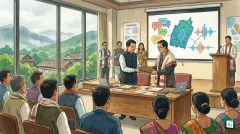
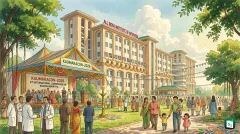
The day is marked by health camps, seminars, award ceremonies, and public awareness programmes organised by government hospitals, medical colleges, and IMA branches nationwide. The President of India also presents the Dr BC Roy National Awards to outstanding medical professionals on this day.
2026 Theme: Behind the Mask: Who Heals the Healers?
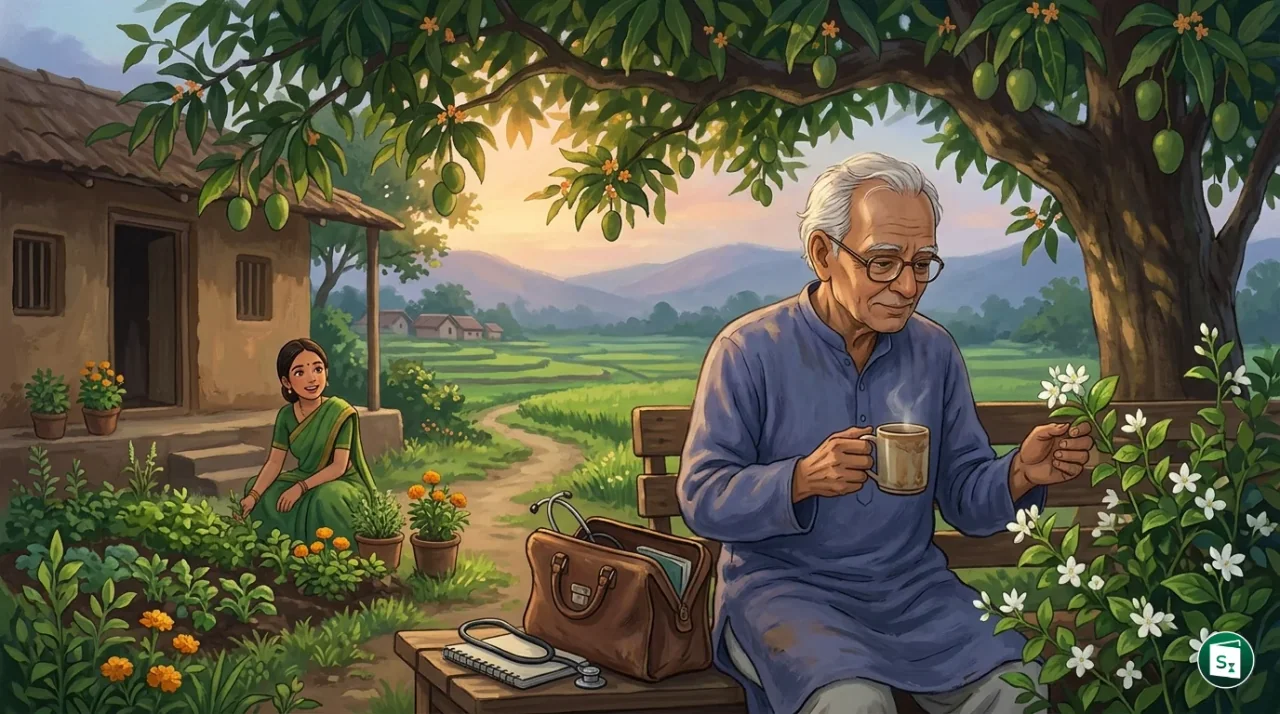
The theme for National Doctor’s Day 2026 is “Behind the Mask: Who Heals the Healers?”. It draws urgent attention to the mental and emotional well-being of doctors, a subject that has long remained in the shadows of the medical profession.
Studies have shown alarming levels of burnout among Indian doctors. A nationwide survey found that 45% of registered medical practitioners experienced high emotional exhaustion, 66% reported high depersonalisation, and 87% had a low sense of personal accomplishment. The COVID-19 pandemic further intensified these pressures, with doctors working extended hours under extreme stress while facing the risk of infection, violence, and stigma.
The theme calls for systemic change: better working conditions, reasonable duty hours, accessible mental health support, and an end to the stigma that prevents doctors from seeking help. The Federation of All India Medical Association (FAIMA) launched a Mental Health Redressal Helpline in August 2025 as one step toward addressing this crisis.
The BC Roy National Award
The Dr BC Roy National Award was instituted in 1962 by the Medical Council of India (now the National Medical Commission) to perpetuate Dr Roy’s memory. It has been awarded annually since 1976 and is presented by the President of India on July 1 each year.
The award carries a cash prize of ₹1 lakh and a silver salver. It is given in several categories:
| Category | Description |
|---|---|
| Statesmanship of the Highest Order | For exceptional national service |
| Medical Man-cum-Statesman | For combining medicine with public service |
| Eminent Medical Person | For outstanding contributions to medicine |
| Eminent Person in Philosophy | For contributions to philosophical thought |
| Eminent Person in Arts | For achievements in the arts |
This is the highest honour a medical professional can receive in India. The award is open to Indian nationals only, and nominations are invited from chief ministers, university vice-chancellors, and heads of research institutions.
Doctors’ Day Around the World
Different countries observe Doctors’ Day on different dates, often tied to a national medical figure or milestone:
| Country | Date | Occasion |
|---|---|---|
| India | July 1 | Birth and death anniversary of Dr BC Roy |
| United States | March 30 | First use of ether anaesthesia by Dr Crawford Long in 1842 |
| Cuba | December 3 | Birthday of Dr Carlos Juan Finlay, pioneer of yellow fever research |
| Brazil | October 18 | Feast day of Saint Luke, patron saint of physicians |
| China | August 19 | Established by State Council in 2017 |
| Canada | May 1 | Honours Dr Emily Stowe, Canada’s first female physician |
Unlike many of these countries where the day has a single historical origin, India’s observance uniquely commemorates a figure who was both a physician and a statesman, reflecting Dr Roy’s dual contribution to medicine and nation-building.
Key Takeaways
- National Doctor’s Day is observed in India on July 1 every year to commemorate the birth and death anniversary of Dr Bidhan Chandra Roy.
- The day was first observed in 1991 by the Indian Medical Association (IMA), which was founded in 1928 and is headquartered in New Delhi.
- Dr BC Roy was a physician, freedom fighter, the second Chief Minister of West Bengal, and a Bharat Ratna recipient (1961).
- The 2026 theme is “Behind the Mask: Who Heals the Healers?”, highlighting the mental health challenges faced by doctors.
- The Dr BC Roy National Award, instituted in 1962 and awarded since 1976, is the highest honour for medical professionals in India, presented by the President of India.
- Dr Roy founded several medical institutions including Jadavpur TB Hospital, Chittaranjan Cancer Hospital, and played a key role in establishing IIT Kharagpur.