The National Education Society for Tribal Students (NESTS) signed three separate Memorandums of Understanding on June 5, 2026, to modernise the academic and administrative infrastructure of Eklavya Model Residential Schools (EMRSs) across India. These agreements introduce artificial intelligence tools, expand coding education, and standardise state-level funding models. The initiatives aim to bridge the digital divide for tribal students while promoting administrative efficiency across the residential school ecosystem.
Integrating Artificial Intelligence with CoGrad
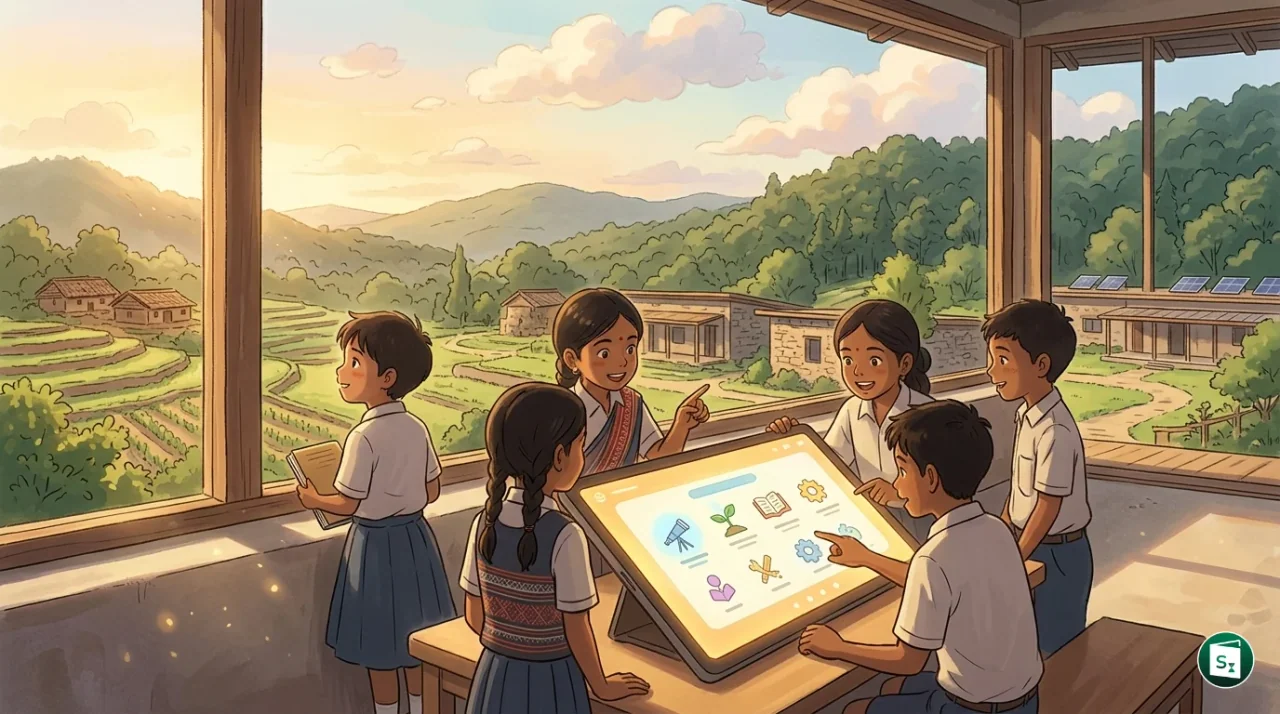
Under the first agreement, the educational technology firm CoGrad, operated by Supervision Educare Private Limited, will provide free access to its proprietary Medha AI platform for two years. This digital tool is tailored specifically to assist educators in planning lessons, generating automated quizzes, and creating interactive three-dimensional models for classrooms. The partnership aims to cover 499 functional EMRSs, equipping over 9,000 teachers and directly benefiting more than 1.5 lakh tribal students across the country.
The primary goal of integrating this artificial intelligence software is to reduce the routine administrative and planning workload of teachers. By streamlining tasks like assessment creation and material design, the platform allows teachers to devote more time to direct classroom teaching and student mentorship. Additionally, CoGrad will run structured orientation programs and training sessions for school principals, teachers, and administrative staff to ensure the platform is utilized effectively.
Strengthening Digital Literacy: The Amazon Future Engineer Programme
For the second agreement, NESTS has renewed its corporate philanthropy partnership with the Learning Links Foundation to run the Amazon Future Engineer (AFE) programme. This two-year extension runs from April 1, 2026, to March 31, 2028. The collaboration, which began in 2022 and has already reached about 80,000 students in classes six to nine, is expanding significantly in its new phase. The program will now cover 443 EMRSs and is expected to benefit over 2 lakh tribal students across the nation.
The initiative aims to address the digital divide by training students in coding, computer science fundamentals, and artificial intelligence literacy. Through project-based learning and hands-on activities, students will build critical problem-solving skills. Additionally, the programme offers career exposure via virtual industry interactions, allowing students to explore various careers in technology. To support this learning, the initiative includes capacity-building workshops for teachers and the distribution of digital hardware, including more than 900 devices planned for the 2026-27 academic year across 238 schools.
Governance Reforms: Standardising Funding with Bihar Mahadalit Vikas Mission
The third MoU is a governance-focused pact signed between NESTS and the Bihar Mahadalit Vikas Mission, which operates under the state’s Scheduled Castes and Scheduled Tribes Welfare Department. This agreement standardises the recurring funding for EMRSs in Bihar at ₹1.47 lakh per student per annum. The primary aim is to establish a robust governance framework to coordinate the planning, establishment, and monitoring of these schools across Bihar.
By standardising the financial model, Bihar aligns its residential school infrastructure with other Indian states that have adopted the uniform funding pattern. This recurring grant ensures that each school has adequate financial resources to provide high-quality education, accommodation, food, and administrative services to its students. The standardized funding framework helps resolve local budgetary constraints, ensuring tribal students in Bihar receive resources and opportunities on par with students in other regions.
The Eklavya Model Residential Schools Scheme: An Overview
The Eklavya Model Residential Schools (EMRS) scheme was introduced in 1997-98 under the Ministry of Tribal Affairs to ensure high-quality education for Scheduled Tribe students in remote tribal areas. EMRS institutions are entirely residential and offer free schooling from class six to twelve, with a curriculum aligned with the Central Board of Secondary Education (CBSE) and the National Council of Educational Research and Training (NCERT). The government restructured the scheme in the 2018-19 fiscal year, setting a target to establish an EMRS in every block where tribal communities make up at least half of the local population and number at least 20,000 residents.
To streamline the administration and deployment of resources, the central government established the National Education Society for Tribal Students (NESTS) in 2019. Registered under the Societies Registration Act, 1860, NESTS acts as an autonomous society that regulates, establishes, and manages EMRS campuses nationwide. By collaborating with public institutions and private entities, NESTS aims to ensure that tribal students receive academic resources, digital infrastructure, and vocational preparation on par with non-tribal students across urban centers.
Key Takeaways
- The Eklavya Model Residential Schools scheme was launched in 1997-98 under the Union Ministry of Tribal Affairs to provide free quality residential education to tribal students.
- The National Education Society for Tribal Students (NESTS) was established in 2019 as an autonomous society under the Societies Registration Act, 1860, to manage these residential schools.
- Under the first MoU, the edtech firm CoGrad will provide 499 EMRSs with two years of free access to its AI-powered Medha AI platform.
- The renewed partnership with Learning Links Foundation extends the Amazon Future Engineer program from April 1, 2026, to March 31, 2028, across 443 schools.
- The governance MoU with the Bihar Mahadalit Vikas Mission standardises the recurring EMRS funding in Bihar at ₹1.47 lakh per student per annum.