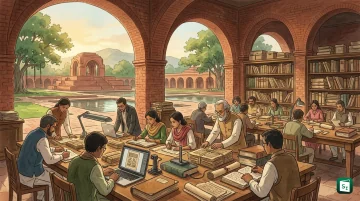
Nalanda University in Bihar has signed an MoU with the Council of Scientific and Industrial Research-Traditional Knowledge Digital Library (CSIR-TKDL) Unit to collaborate on Traditional Knowledge (TK), Intellectual Property Rights (IPR), People’s Rights, and Cultural Heritage, including Traditional Cultural Expressions (TCEs).
Justice Surya Kant, the Chief Justice of India, has inaugurated the first Victim Rights Centre (VRC) of India at the Bihar State Legal Services Authority (BSLSA) premises in Patna, Bihar. He also released a formal publication providing information about the newly established facility.
During the event, he flagged off 9 Multi-Utility Vehicles (MUVs) and launched a Transgender Helpline under the Support for Marginalised Individuals for Livelihood and Access to Resources (SITARA) Scheme.
The state governments of Bihar and Jharkhand have signed an MoU for sharing the water of Sone River. The agreement was finalized in the presence of Union Minister Amit Shah.
This settlement resolves a long-standing water dispute in eastern India. It is expected to facilitate the provision of irrigation water to millions of farmers across rural regions of Bihar and Jharkhand.
The Council of Scientific and Industrial Research (CSIR) has signed an MoU with Nalanda University (NU) to foster institutional collaboration.
The partnership aims to promote initiatives in technology deployment, sustainability, rural development, skill enhancement, and scientific outreach. It seeks to integrate the indigenous technological capabilities of CSIR with the international academic ecosystem of NU.
Harsh Vardhan, the President of the Bihar Cricket Association (BCA), has been honoured with the Global Prestige Award at the House of Lords in UK.
The award was presented under the theme 'Visionaries of Change: Charting the Course to Viksit Bharat 2047'. It is to be noted that he was elected as the youngest President in the history of the BCA in 2025.
Union Minister Rajiv Ranjan Singh and Bihar CM Samrat Choudhary have launched an Integrated Aqua Park at the Vanasaur Fish Seed Farm in Bhojpur, developed with an investment of ₹31.21 crore under the PM Matsya Sampada Yojana (PMMSY).
They also inaugurated the Regional Centre of the National Fisheries Development Board (NFDB) in Patna, which will serve as a knowledge and institutional hub for Bihar and the Eastern India region.
Union Minister Jitan Ram Manjhi and CM Samrat Choudhary laid the foundation stone for a Technology Centre in Khizarsarai, Gaya. The facility is being developed with a budget of ₹170 crore.
The Ministry of Jal Shakti has signed reform-linked MoUs with Manipur and Bihar under the Jal Jeevan Mission (JJM) 2.0.
The agreements aim to shift the focus from infrastructure creation to long-term sustainability by establishing a Gram Panchayat-led, service-based, and community-centered governance framework. With this, 33 out of 34 eligible States and Union Territories have signed the agreement with the Department of Drinking Water and Sanitation (DDWS) under JJM 2.0.
The National Education Society for Tribal Students (NESTS) has signed three MoUs to modernise Eklavya Model Residential Schools (EMRSs) through digital innovation and structural enhancements.
Under the first agreement, the EdTech firm CoGrad will provide 499 EMRSs with two years of free access to its “Medha AI” platform. NESTS has also renewed its corporate philanthropy partnership with the Learning Links Foundation (Amazon) for another two years. Additionally, a governance MoU signed with the Bihar Mahadalit Vikas Mission has standardised EMRS funding at ₹1.47 lakh per student.
The Cabinet Committee on Economic Affairs (CCEA) has approved highway infrastructure projects in Madhya Pradesh and Bihar.
In Madhya Pradesh, the CCEA approved the upgradation of the Hiwarkhedi-Roshni-Ashapur-Rudhy section of NH-347B (125.01 km) to a 2-lane standard with paved shoulders, and the widening of the Deshgaon-Julwaniya section of NH-347B (108.643 km) to a 4-lane standard. These projects will be implemented under the Hybrid Annuity Mode (HAM) at a cost of ₹4,415.60 crore.
In Bihar, the CCEA approved the upgradation of the Khagaria-Purnea section of NH-31 and NH-231 to a 4-lane standard, covering a length of 143.529 km. This project will be executed under the Build-Operate-Transfer (BOT) (Toll) mode at a cost of ₹3,936.05 crore.
Indian Railways has approved infrastructure works, including slope stabilisation, tunnel rehabilitation, and bridge protection, on the Jammu-Shri Mata Vaishno Devi Katra section with an investment of ₹238 crore.
The 54 km Kiul-Jhajha 3rd line project has been approved at a cost of ₹962 crore to enhance capacity on the high-density Howrah-Delhi route. Further, the Arakkonam-Chengalpattu doubling project has been sanctioned at a cost of ₹993 crore to strengthen the Chennai suburban rail network.
The Bihar government has approved a $500 million (around ₹4,750 crore) loan from the World Bank (WB) for the ‘Bihar Urban Transformation Programme’. The state cabinet has also sanctioned the transfer of 1.85 acres of land and authorized enhanced subsidy support under the PM Electric (e)-Bus Sewa for the operation of 400 electric AC buses.
Furthermore, ₹15,967.03 crore was sanctioned for the monitoring and maintenance of roads using AI based technologies.
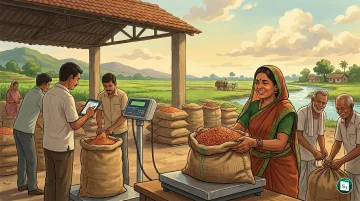
The Ministry of Consumer Affairs, Food and Public Distribution (MoCAF&PD) has expanded procurement operations under the PM Annadata Aay Sanrakshan Abhiyan (PM-AASHA) in Chhattisgarh and launched the first structured pulse procurement under the Atmanirbhar Pulses Mission (APM) in Bihar.
The procurement drive is led by the National Cooperative Consumers’ Federation of India Ltd (NCCF) and the National Agricultural Cooperative Marketing Federation of India Ltd (NAFED). In Bihar, the NCCF has started the first organized procurement of masoor (lentil) under the APM. In Chhattisgarh, the process includes digitized farmer registration through the Electronic-Samyukti (E-Samyukti) portal and awareness campaigns.
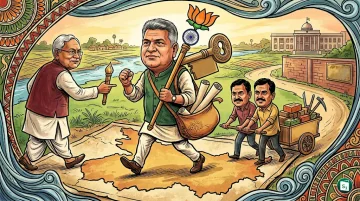
Samrat Choudhary, belonging to the Bharatiya Janata Party (BJP) party, has sworn in as the 24th Chief Minister (CM) of Bihar. He is the first leader from the BJP to hold the post. He succeeds Nitish Kumar as the CM. Vijay Kumar Choudhary and Bijendra Prasad Yadav sworn in as Deputy Chief Ministers (Dy CMs).
The Ministry of Minority Affairs has signed an MoU with the IIT Patna under the PM Virasat Ka Samvardhan (PM VIKAS) scheme. The initiative aims to enhance the employability and placement opportunities of minority youth through modern, technology-driven skilling interventions.
Nitish Kumar has resigned as the Chief Minister of Bihar, concluding a tenure of two decades in the politics of the state.
He is set to move to a national role in the Rajya Sabha. Samrat Choudhary, the leader of the BJP legislature party, is designated to serve as the next CM of Bihar.