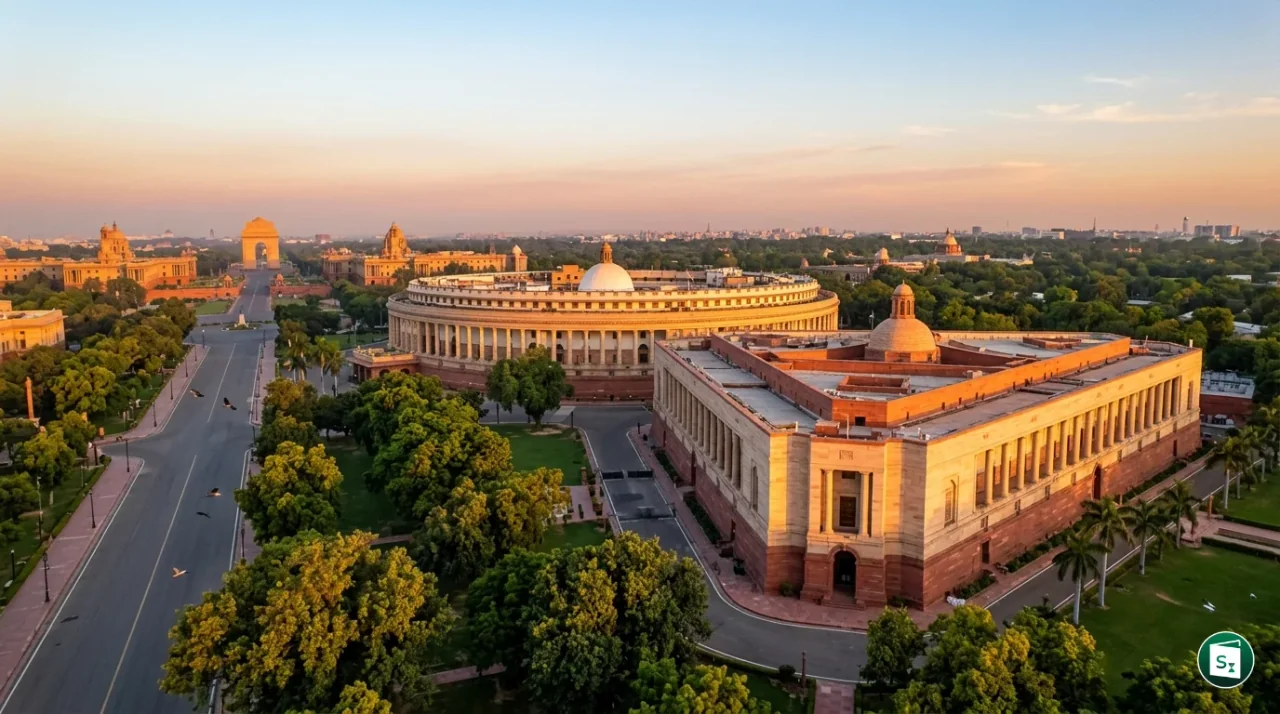
PM Narendra Modi made history on June 10, 2026, by becoming the longest-serving elected Prime Minister of India. With 4,399 days of continuous service, he surpassed the previous record held by Jawaharlal Nehru, who served for 4,398 continuous days after the first general elections. This milestone reflects a period of significant political stability and continuity in the country’s governance.
The Milestone: Surpassing a 62-Year-Old Record
The Union Cabinet passed a formal resolution to mark this historic occasion, recognizing the Prime Minister’s unwavering commitment to the nation. The record of 4,399 days reflects his continuous tenure since first taking the oath of office on May 26, 2014. This achievement is particularly significant as it surpasses the long-standing record of Jawaharlal Nehru, which had remained unbroken since 1964.
While Nehru’s total tenure as Prime Minister spanned nearly 17 years, the portion of his service that followed the first general elections of 1951-52 is what constitutes his record of elected service. This distinction is crucial for constitutional and electoral records, as it counts the days a Prime Minister has served with a direct mandate from a democratically elected Parliament. PM Modi’s tenure, spanning three consecutive terms, now stands as the new benchmark for elected leadership in India.
Continuous Elected Service: Modi vs Nehru
The record specifically accounts for continuous service following a democratic election. Jawaharlal Nehru served as the Prime Minister from India’s independence on August 15, 1947, but his term as an elected Prime Minister under the new Constitution began on May 13, 1952. His continuous service ended with his passing on May 27, 1964.
In contrast, PM Narendra Modi has maintained a continuous tenure since 2014, winning three consecutive mandates in the 16th, 17th, and 18th Lok Sabha elections. The following table illustrates the comparison of their tenures:
| Feature | Jawaharlal Nehru (Elected) | Narendra Modi |
|---|---|---|
| Start Date | May 13, 1952 | May 26, 2014 |
| End Date / Record Date | May 27, 1964 | June 10, 2026 |
| Total Continuous Days | 4,398 Days | 4,399 Days |
| Consecutive Terms | 3 Terms | 3 Terms |
| Mandate Context | Nation Building Phase | Transformative Growth Phase |
This continuity is a rarity in parliamentary democracies and highlights the voters’ sustained trust. While Nehru focused on building the foundational institutions of the Republic, PM Modi’s tenure has been characterized by large-scale digital transformation and infrastructure development.
Constitutional Framework of the Prime Minister’s Office
The Prime Minister of India holds a pivotal position in the country’s parliamentary system, often described as the primus inter pares or first among equals. The Constitution provides the legal framework for the appointment and duties of the Prime Minister through several key articles.
Appointment and Responsibility
Under Article 75, the Prime Minister is appointed by the President of India. While the President makes the appointment, by convention, the leader of the party or coalition that commands a majority in the Lok Sabha is invited to form the government. The Council of Ministers is collectively responsible to the House of the People, ensuring that the Prime Minister retains the confidence of Parliament to remain in office.
The Head of the Council of Ministers
Article 74 mandates that there shall be a Council of Ministers with the Prime Minister at the head to aid and advise the President. Although the President is the formal head of state, the actual executive power resides with the Prime Minister and the Cabinet. This structure ensures that the government remains accountable to the elected representatives of the people.
Communication with the President
The Prime Minister serves as the primary link between the Cabinet and the President. Under Article 78, it is the duty of the Prime Minister to communicate all decisions of the Council of Ministers relating to the administration and legislation to the President. This ensures a smooth coordination between the various branches of the government.
Historical Context: Long-Serving Prime Ministers of India
Beyond Nehru and Modi, several other leaders have left a significant mark on the nation through their long tenures. Understanding their terms provides a clearer picture of the evolution of Indian politics.
- Indira Gandhi: She served as Prime Minister for a total of nearly 16 years across two non-continuous stints. Her first term lasted from 1966 to 1977, and her second term from 1980 until her assassination in 1984. She remains the only female Prime Minister of India.
- Manmohan Singh: He served as the Prime Minister for two full consecutive terms from 2004 to 2014, totaling 10 years and 4 days. His tenure is noted for significant economic growth and the implementation of social welfare schemes like the Mahatma Gandhi National Rural Employment Guarantee Act (MGNREGA).
- Atal Bihari Vajpayee: He was the first non-Congress Prime Minister to complete a full five-year term. His total service spanned over 6 years across three different terms in 1996, 1998, and 1999-2004.
The ability of a Prime Minister to secure repeated mandates is often seen as a sign of institutional and policy stability. PM Modi’s achievement of 4,399 continuous days of elected service places him at the pinnacle of this historical list, reflecting a new era of political consolidation in the 21st century.
Impact of Political Stability on Governance
Political stability is widely regarded as a cornerstone for sustainable economic development and effective governance. The record achieved by PM Modi underscores the advantages of continuity in leadership, particularly in a diverse and complex democracy like India.
Long-Term Planning and Execution
Continuous leadership allows for the formulation and execution of long-term policies that transcend the usual five-year electoral cycle. Initiatives like the National Infrastructure Pipeline, Digital India, and the Atmanirbhar Bharat mission have benefited from consistent political backing and policy stability. This has enabled the government to take bold decisions, such as the implementation of the Goods and Services Tax (GST) and the abrogation of Article 370, which required sustained effort and clear political will.
India’s Rising Global Standing
On the international stage, a stable government enhances a nation’s credibility and influence. Under PM Modi’s tenure, India has emerged as a key voice in global forums like the G20, BRICS, and the Quad. The continuity in foreign policy has allowed India to build deeper strategic partnerships and position itself as a “Vishwa Mitra” (friend to the world), contributing to global peace and stability.
This milestone is not merely a numerical record but a testament to the evolving nature of Indian democracy. It signifies a shift toward a more stable and goal-oriented political environment, where leadership continuity plays a central role in driving national progress.
Key Takeaways
- PM Narendra Modi became the longest-serving elected Prime Minister of India on June 10, 2026.
- He surpassed the record of Jawaharlal Nehru, who served for 4,398 days of continuous elected service between 1952 and 1964.
- The record for “elected service” counts the continuous tenure of a Prime Minister following a direct mandate from a General Election.
- Article 75 of the Constitution states that the Prime Minister shall be appointed by the President of India.
- Article 74 establishes the Council of Ministers, with the Prime Minister at the head, to aid and advise the President.
- Article 78 defines the duty of the Prime Minister to communicate Cabinet decisions and administrative affairs to the President.
- PM Modi’s continuous service began on May 26, 2014, and includes mandates from the 16th, 17th, and 18th Lok Sabha.