Former Australian opener Usman Khawaja released his autobiography Sabr: Finding My Way in Cricket and Life on 10 November 2026 through Penguin Books Australia. The 448-page memoir traces his journey from a Pakistan-born migrant child to Australia’s first Muslim Test cricketer and his retirement after 88 Tests in January 2026. It has drawn wide attention for its account of identity, hidden illness and the 2018 ball tampering scandal.
What Is Sabr and When Was the Book Released?
Sabr is an Arabic and Urdu word that means patience, endurance and steady faith during hardship. In Islam it refers to calm perseverance in difficulty with trust in God. Usman Khawaja chose it as the title because patience shaped his long cricket career.
Penguin Books Australia published Sabr: Finding My Way in Cricket and Life on 10 November 2026. The hardback runs to 448 pages and carries ISBN 9781761344268. An audiobook of about 15 hours and 40 minutes, read by Khawaja himself, was released on the same day. Khawaja wrote the book in his own words, without a ghostwriter.
The memoir covers his childhood in Pakistan, Saudi Arabia and Australia, his rise through domestic cricket, his years in the Australian team, and life outside the game. It links cricket memories with lessons on faith, family and identity.
Who Is Usman Khawaja?
Usman Tariq Khawaja is a former Australian international cricketer. He was born on 18 December 1986 in Islamabad, Pakistan. His family moved to New South Wales in Australia when he was four. He holds both Australian and Pakistani citizenship.
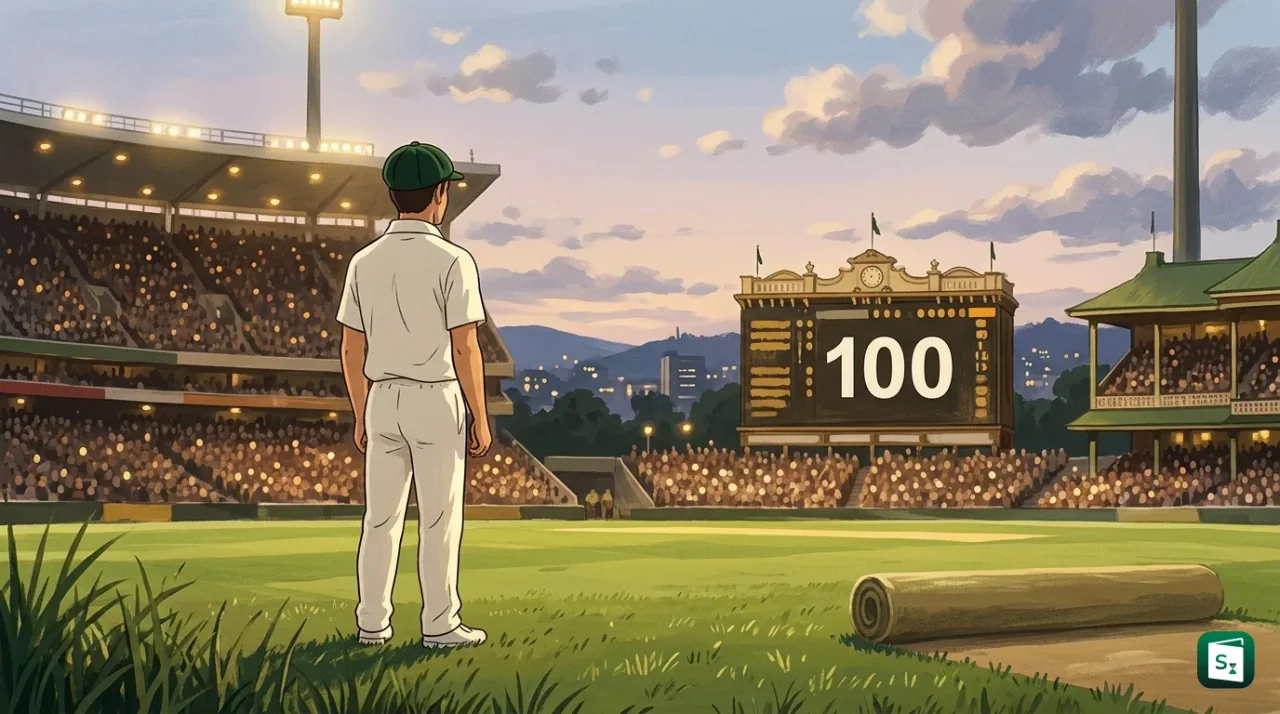
Khawaja became the first Muslim and the first Pakistan-born player to represent Australia in Test cricket. He received his baggy green cap as Australia’s 419th Test player on 3 January 2011 against England at the Sydney Cricket Ground. He replaced the injured Ricky Ponting in that match.
Outside cricket, Khawaja trained as a pilot. He completed a Bachelor of Aviation at the University of New South Wales and earned a commercial pilot licence before his Test debut. He first played domestic cricket for New South Wales and later moved to Queensland, which he also captained. He leads the Brisbane Heat in the Big Bash League and continues to play domestic cricket after retiring from internationals.
His wife is Rachel Khawaja, whom he met at university and married in 2018. The couple live in Brisbane with their two daughters.
| Detail | Fact |
|---|---|
| Full name | Usman Tariq Khawaja |
| Born | 18 December 1986, Islamabad, Pakistan |
| Age in 2026 | 39 years |
| Test debut | 3 January 2011, Sydney, against England |
| Batting style | Left handed opening batter |
| Domestic teams | New South Wales, Queensland, Brisbane Heat |
| Education | Bachelor of Aviation, University of New South Wales |
How Did Khawaja Build His Test Career?
Khawaja played international cricket for Australia from 2011 to 2026. He retired after the fifth Ashes Test against England at Sydney in January 2026. He announced the decision on 1 January 2026 and finished with 88 Tests, more than 6,200 runs and 16 centuries.
His career was uneven. Selectors dropped him seven times. His first century came only in 2015, against New Zealand in Brisbane, after more than two years out of the side. A match saving 141 against Pakistan in Dubai in 2018 showed his skill in Asia. Yet he lost his place again during the 2019 Ashes and thought his Test career might be over at 44 matches.
The turning point came at Sydney in January 2022. Recalled when Travis Head missed the Test, the 35 year old scored a century in each innings. That twin hundred made him undroppable. Australia moved him to opener alongside David Warner. For the next 18 months he was among the best Test batters in the world.
In 2023 he scored 1,210 runs in 13 Tests, the only batter to cross 1,000 runs that year. He was Australia’s top scorer in India with 333 runs and top scorer in the Ashes in England with 496 runs. Australia won the World Test Championship in June 2023. The International Cricket Council named him the Men’s Test Cricketer of the Year for 2023. His highest Test score is 232, made against Sri Lanka in Galle.
| Format | Matches | Runs | Hundreds | Best |
|---|---|---|---|---|
| Tests | 88 | More than 6,200 | 16 | 232 |
| One Day Internationals | 40 | 1,554 | 2 | 104 |
| Twenty20 Internationals | 9 | 241 | 0 | One fifty |
What Does Sabr Reveal About Sandpaper and Hidden Struggles?
The most discussed part of Sabr is Chapter 17, titled Sandpaper. It revisits Australia’s 2018 tour of South Africa. In the third Test at Cape Town, television cameras showed Cameron Bancroft using sandpaper to alter the ball. Cricket Australia banned captain Steve Smith for one year, vice captain David Warner for one year and Bancroft for nine months.
Khawaja writes that knowledge of the plan went wider. He says open talk about getting the ball to reverse swing began before the first Test in Durban. He describes an experiment with sandpaper during the second Test at Port Elizabeth, now called Gqeberha, after which South Africa lost four wickets for 28 runs. He says Smith left the room saying he did not want to know details. Khawaja also writes that he urged the squad to accept responsibility as a team after Cape Town, but the idea did not find support.
These claims differ from the official findings, which held that only Smith, Warner and Bancroft had prior knowledge. Bowlers Pat Cummins, Mitchell Starc, Josh Hazlewood and Nathan Lyon have said they did not know a foreign object was taken onto the field. Cricket Australia has said it remains comfortable with its integrity process and that anyone with fresh information can share it. Khawaja says he was never interviewed in the original inquiry.
The book also reveals a private health battle. Doctors diagnosed Khawaja with rheumatoid arthritis at age 22 after severe pain and swelling in his left knee left him unable to walk short distances. Rheumatoid arthritis is a long term condition in which the body’s defence system attacks its own joints. He kept the diagnosis secret from teammates for most of his career because he feared it would be used against him or seen as an excuse. Regular injections helped him continue playing. Only medical staff and administrators knew.
Sabr also describes cultural isolation. Khawaja writes about growing up supporting Pakistan until age 13, struggling to fit into local cricket culture, and facing stereotypes as a Muslim player with a beard. At his retirement press conference he spoke about racial stereotyping during his career.
Why Sabr Matters Beyond Cricket
Sabr is more than a cricket memoir. Khawaja was Australia’s first Muslim Test cricketer and the first player of Pakistani origin to wear the baggy green. His story shows how migration, faith and sport meet in modern Australia. He moved from Islamabad to Sydney at age four, supported Pakistan as a boy, and later chose Australia. His wife Rachel converted from Catholicism to Islam before their marriage.
The book also adds to a wider debate on accountability in team sport. By dedicating the sandpaper chapter to Smith, Warner and Bancroft, Khawaja argues that blame should not rest on three players alone. Former coach Darren Lehmann and senior bowlers have rejected that version. Cameron Bancroft later issued his own statement. The dispute keeps questions about leadership, dressing room culture and honest inquiries alive eight years after Cape Town.
For readers, the lasting theme is patience under pressure. Khawaja was dropped repeatedly, managed a painful lifelong illness in private, and still rebuilt his game after age 35 to win a world title and an ICC award. That arc explains why the title resonates both as a cricket story and as a lesson in endurance.
Key Takeaways
- The autobiography Sabr: Finding My Way in Cricket and Life was published by Penguin Books Australia on 10 November 2026 with 448 pages.
- Sabr is an Arabic and Urdu word for patience and steady endurance during hardship.
- Usman Khawaja, born on 18 December 1986 in Islamabad, became the first Muslim and first Pakistan-born player to play Test cricket for Australia in 2011.
- Khawaja retired in January 2026 after 88 Tests with more than 6,200 runs and 16 centuries, and was named ICC Men’s Test Cricketer of the Year for 2023.
- Sabr reveals his secret battle with rheumatoid arthritis diagnosed at age 22 and claims wider team knowledge of the 2018 Cape Town ball tampering case.