
BANKING
24 October 2026 BANKING
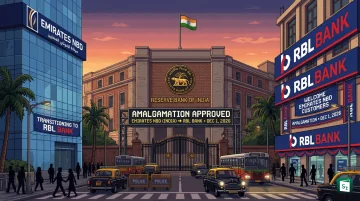
RBI has approved the scheme of amalgamation to merge the Indian branches of Dubai-based Emirates NBD Bank (National Bank of Dubai) with RBL Bank Ltd, effective December 1, 2026.
Welcome to Scoreclever ⏳ Current Affairs 🌏
RBI has approved the scheme of amalgamation to merge the Indian branches of Dubai-based Emirates NBD Bank (National Bank of Dubai) with RBL Bank Ltd, effective December 1, 2026.

The Cabinet Committee on Economic Affairs (CCEA) has approved the sale of a 60.72% stake in IDBI Bank Ltd to 10955230 Canada Inc, a subsidiary of Fairfax Financial Holding. Valued at ₹52,878 crore, this proposed transaction marks the largest Foreign Direct Investment (FDI) in the financial sector of India.

The RBI has revised the leverage ratio framework for banks, modifying requirements for calculating exposure measures and disclosures. The amended directions will come into effect from April 1, 2027.
Under the revised norms, the minimum leverage ratio is set at 4% for domestic systemically important banks (D-SIBs) and 3.5% for other banks. Indian branches of global systemically important banks (G-SIBs) must maintain a leverage ratio of 3.5% plus the applicable leverage ratio buffer, including any additional buffer prescribed by their home regulator.
These amendments aim to align the framework with the leverage ratio standard issued by the Basel Committee on Banking Supervision in 2017. It is to be noted that a 100% credit conversion factor will apply to certain specified items under the revised framework.

The Centre for Development of Advanced Computing (C-DAC) has signed an MoU with the Bank of India (BOI) to collaborate on quantum financial innovation and drive the adoption of emerging technologies in the banking sector.
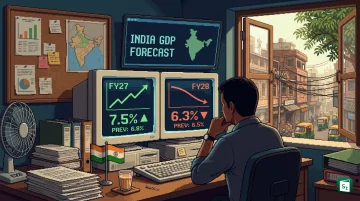
According to a report by Business Monitor International (BMI), a unit of Fitch Solutions Company, the GDP growth forecast of India for FY27 has been raised to 7.5% from 6.8%.
However, the forecast for FY28 is lowered to 6.3% from 6.5% due to concerns over household consumption and external economic risks.

The RBI has opened a designated foreign exchange window to fulfill the complete daily dollar requirements of three public sector oil marketing companies: Indian Oil Corporation Ltd, Hindustan Petroleum Corporation Ltd, and Bharat Petroleum Corporation Ltd. The facility is scheduled to begin operations on October 12, 2026.
Additionally, the RBI has tightened regulations governing foreign exchange derivatives involving the Indian rupee (INR) and reduced the threshold from $100 million to $5 million across all Authorized Dealers (ADs).
In another update, the RBI has increased the minimum daily maintenance requirement of the Cash Reserve Ratio (CRR) for scheduled banks from 90% to 99% of the prescribed requirement, effective from the reporting fortnight beginning October 16, 2026.
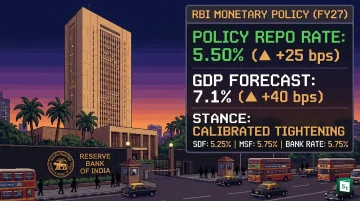
The RBI conducted the 4th Bi-monthly Monetary Policy Committee (MPC) meeting of FY27 under the chairmanship of Governor Sanjay Malhotra.
The MPC voted unanimously to increase the policy repo rate under the liquidity adjustment facility (LAF) by 25 basis points (bps) to 5.50%, marking the first rate hike since February 2023.
Consequently, the standing deposit facility (SDF) rate was adjusted to 5.25%, while the marginal standing facility (MSF) rate and the Bank Rate stand at 5.75%. The panel shifted its policy stance from neutral to “calibrated tightening.” The RBI raised the GDP growth forecast of India for FY27 by 40 bps to 7.1%.
Additionally, the central bank set a threshold of ₹25,000 crore under the Standardised Approach for Counterparty Credit Risk (SA-CCR), effective from April 1, 2027, and announced the creation of a Technical Consultative Committee for Financial Markets.
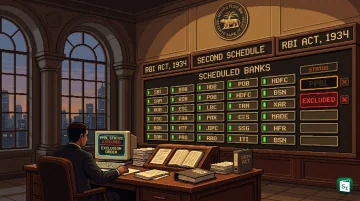
The RBI has excluded Paytm Payments Bank Ltd (PPBL), an associate firm of Paytm, from the list of recognized Scheduled Banks (SBs).
It is to be noted that under the RBI Act, 1934, a scheduled bank must maintain paid-up capital and reserves of at least ₹5 lakh, along with satisfying other statutory conditions.
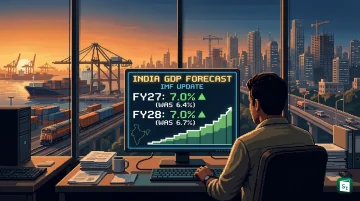
According to the International Monetary Fund (IMF), India’s growth forecast for FY27 has been raised to 7% from the earlier 6.4%. The IMF also revised its growth forecast for FY28 upward to 7% from 6.7%.
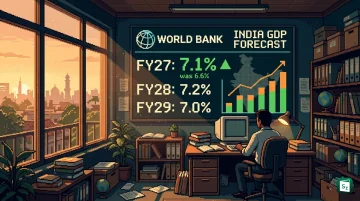
According to a report by the World Bank (WB), the GDP growth of India for FY27 is revised upwards to 7.1% from the earlier projection of 6.6%.
Additionally, the WB projects the GDP growth of India at 7.2% for FY28 and 7% for FY29.

The RBI has granted a Certificate of Registration (CoR) to Indiabulls Ltd to operate as a Core Investment Company (CIC), bringing the entity under the regulatory framework of the RBI. It is to be noted that a CIC is a Non-Banking Financial Company (NBFC) with an asset size of ₹100 crore or more.
To qualify as a CIC, an entity must hold at least 90% of its net assets in investments or loans of group companies, including equity shares, preference shares, bonds, or debentures. Furthermore, at least 60% of the net assets must be specifically maintained in the equity investments of group companies.
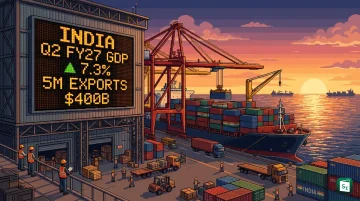
According to a report by the Ministry of Finance (MoF), the real Gross Domestic Product (GDP) of India for Q2 FY27 is projected to grow by 7.3%.
The MoF also highlighted a positive export outlook, with total exports reaching $400 billion during the first five months of FY27.

Bank of India (BOI), a Public Sector Bank (PSB), has launched a User-Level Programmable Central Bank Digital Currency (CBDC) with auto-issuance capability.
The system allows users to automate recurring Digital Rupee (e₹) payments and specify the purpose for which the funds can be used. It is to be noted that the technical functionality for this programmable CBDC solution was developed by Montran India.
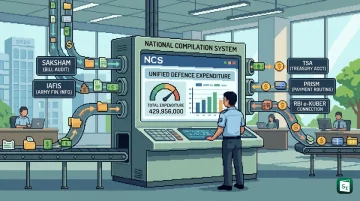
Union Minister Rajnath Singh has launched several digital and financial management initiatives during the 279th Annual Day of the Defence Accounts Department (DAD) held at DRDO Bhawan in New Delhi.
As part of the event, the System for Accounting and Knowledge Sharing Management (SAKSHAM), which serves as the bill audit and payment system of the DAD, was integrated with the Indian Army Financial Information System (IAFIS).
The Treasury Single Account (TSA) system was operationalised through the Payment Routing and Integrated System Management (PRISM) platform and integrated with the Reserve Bank of India (RBI) e-KUBER system. A revamped National Compilation System (NCS) was also introduced to function as a unified platform for the accounting and compilation of overall defence expenditure.
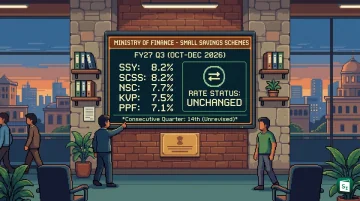
The Department of Economic Affairs under the Ministry of Finance (MoF) has maintained the interest rates for all Small Savings Schemes (SSS) for the third quarter (Q2) of the FY27. This marks the 14th consecutive quarter without a revision since the last adjustment in December 2024.
The interest rates for Sukanya Samriddhi Yojana (SSY) and Senior Citizen Savings Scheme (SCSS) are fixed at 8.2%. The rates for National Savings Certificate (NSC), Kisan Vikas Patra (KVP), and Public Provident Fund (PPF) are 7.7%, 7.5%, and 7.1% respectively.
It is to be noted that the MoF has performed quarterly reviews of SSS interest rates since 2016 based on the methodology of the Shyamala Gopinath Committee (2023). Under this framework, SSS rates are kept 25 to 100 basis points (bps) higher than the government bond yields.

Anup Bagchi has been appointed as the MD and CEO of HDFC Bank for a 3-year term starting October 27, 2026. He succeeds Sashidhar Jagdishan.
Anup Kumar Saha is appointed as the MD & CEO of Kotak Mahindra Bank Ltd for 3 years, starting January 2027. He succeeds Ashok Vaswani. Mahesh Muralidhar Pai has been appointed as the MD & CEO of the South Indian Bank for a 3-year term starting October 2026. He succeeds PR Seshadri.

According to the monthly bulletin of the RBI, the net Foreign Direct Investment (FDI) into India reached a five-year high of $7.35 billion in July 2026. This is the highest recorded inflow since May 2021 when it stood at $8.80 billion.
The net FDI in July 2026 represents a 64% increase compared to the same period in the previous year. The cumulative net FDI for the period from April to July 2026 reached $13.4 billion.

Samvriddhi Inclusive Growth Network Pvt Ltd (SIGN), a subsidiary of MOS Utility Ltd, has received in-principle authorisation from the RBI to operate as an Online Payment Aggregator (PA-Online).

According to the “Asian Development Outlook (ADO) September 2026: Navigating Prolonged Energy Shocks and El Nino” report released by the Asian Development Bank (ADB), the Gross Domestic Product (GDP) growth of India for FY27 is raised to 7% (an increase of 40 basis points from the earlier estimate of 6.6%).
The report also projected the inflation rate of India for FY27 at 5%.

Sagarmala Finance Corporation Ltd has launched the inaugural blue bond in India. The bond aims to raise ₹600 crore, with a ₹500 crore green shoe option, and has a tenor of 10 years.
The debt offering received an AA+ rating, signifying its status in the upper tier of domestic debt instruments, and SBI Capital Markets served as the arranger for the issuance. It is to be noted that SMFCL is the first NBFC in India dedicated to the maritime sector.
Maha
154.3 P
P Pradeepa
188.8 V
V Vijay
152.3


Reviews collected across various platforms
"The memorising technique in the Scoreclever automatically stores the news in my mind and it saves time."
"It is very helpful platform to study current affairs. It has memory technique which saves lots of time during preparartion."
"Came across Editorial Vocabulary podcast video accidentally and really loved the idea. Its really useful for my preparation."
"Wonderful session. Thank you so much and really hats off to you for making current affairs and editorial an easy one."
"This is one the best app for Current Affairs. The content is cut and short whichever is required and is easy to remember with flashcards."
"Thx to daily quizzes. It played a big role in revisions. April 2024 - April 2025 I missed quizzes 3 or 4 days only. It's that interesting."
"Best app to learn current affairs in an effective way. I usually forgot current affairs easily and now I can easily remember everything."
"I studied current affairs only in Scoreclever and its really a time saver. Thanks Scoreclever team for all your efforts."
"Just wow. Haven't seen anyone explaining editorials like this. Crystal clear explanations with word by word. Thanks so much."
"This app is very useful to the persons who find difficult to go through the bunch of PDFs, and spending lots of time for revision."
"The memorising technique in the Scoreclever automatically stores the news in my mind and it saves time."
"It is very helpful platform to study current affairs. It has memory technique which saves lots of time during preparartion."
"Came across Editorial Vocabulary podcast video accidentally and really loved the idea. Its really useful for my preparation."
"Wonderful session. Thank you so much and really hats off to you for making current affairs and editorial an easy one."
"This is one the best app for Current Affairs. The content is cut and short whichever is required and is easy to remember with flashcards."
"Thx to daily quizzes. It played a big role in revisions. April 2024 - April 2025 I missed quizzes 3 or 4 days only. It's that interesting."
"Best app to learn current affairs in an effective way. I usually forgot current affairs easily and now I can easily remember everything."
"I studied current affairs only in Scoreclever and its really a time saver. Thanks Scoreclever team for all your efforts."
"Just wow. Haven't seen anyone explaining editorials like this. Crystal clear explanations with word by word. Thanks so much."
"This app is very useful to the persons who find difficult to go through the bunch of PDFs, and spending lots of time for revision."
"The memorising technique in the Scoreclever automatically stores the news in my mind and it saves time."
"It is very helpful platform to study current affairs. It has memory technique which saves lots of time during preparartion."
"Came across Editorial Vocabulary podcast video accidentally and really loved the idea. Its really useful for my preparation."
"Wonderful session. Thank you so much and really hats off to you for making current affairs and editorial an easy one."
"This is one the best app for Current Affairs. The content is cut and short whichever is required and is easy to remember with flashcards."
"Thx to daily quizzes. It played a big role in revisions. April 2024 - April 2025 I missed quizzes 3 or 4 days only. It's that interesting."
"Best app to learn current affairs in an effective way. I usually forgot current affairs easily and now I can easily remember everything."
"I studied current affairs only in Scoreclever and its really a time saver. Thanks Scoreclever team for all your efforts."
"Just wow. Haven't seen anyone explaining editorials like this. Crystal clear explanations with word by word. Thanks so much."
"This app is very useful to the persons who find difficult to go through the bunch of PDFs, and spending lots of time for revision."
Complete learning ecosystem to ace CA, English & GA
Revolutionary study technique for Current Affairs, English Vocabulary, and General Awareness. Learn once, remember forever.
Download on Play Store5x smaller, yet better than top sources. Daily Current Affairs and Editorial Vocabulary PDFs on Telegram.
Join on TelegramComprehensive, structured books with clean UI for long-term reading. Regularly updated with current events.
View DetailsIn-depth analysis of daily newspaper editorials with vocabulary breakdown, grammar insights, and key takeaways.
View DetailsCompete daily at 7 PM (Vocab) and 8 PM (Current Affairs). Win exciting rewards based on league rankings.
A dedicated website for Current Affairs preparation, featuring daily updates, and comprehensive resources.
Visit Home


