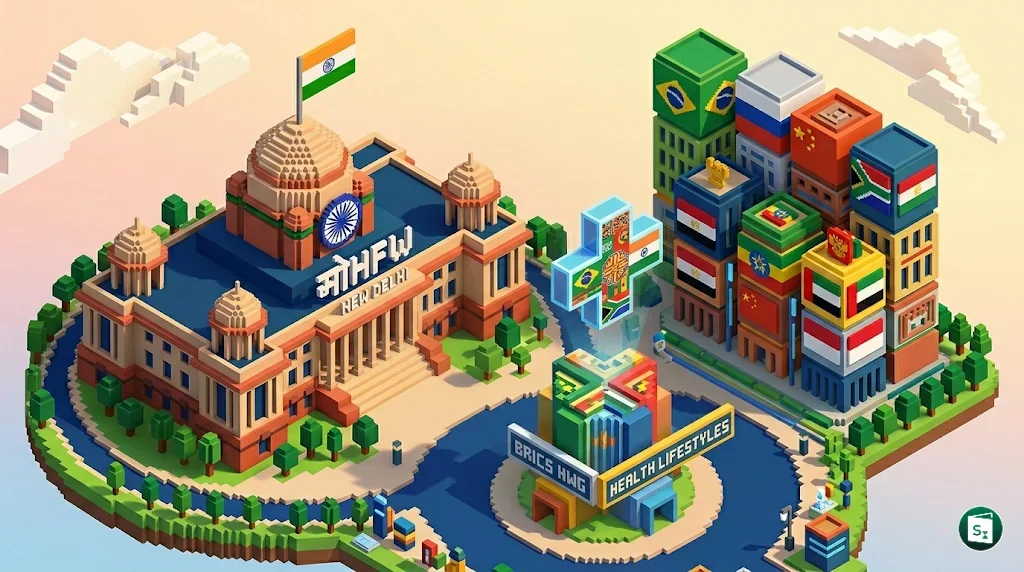
India hosted the inaugural meeting of the BRICS Health Working Group (HWG) virtually from New Delhi on April 22, 2026, marking a significant step in cooperative public health under its 2026 chairship. Chaired by Union Health Secretary Punya Salila Srivastava, the session focused on creating resilient and sustainable health systems across the nine participating member nations. During the discussions, India introduced the BRICS Mission for Healthy Lifestyles as a primary strategy to improve long-term health outcomes through proactive lifestyle interventions.
India Hosts the Inaugural BRICS HWG Meeting 2026
As the current chair of the BRICS (Brazil, Russia, India, China, South Africa, and expanded members) bloc for 2026, India is hosting a series of ministerial and working group meetings to drive collective action on global priorities. The Ministry of Health and Family Welfare (MoHFW), the nodal agency for health initiatives in India, coordinated this first session of the health track. The meeting saw participation from high-level delegates and health experts from nine countries: Brazil, Russia, India, China, South Africa, Egypt, Ethiopia, the United Arab Emirates (UAE), and Indonesia.
The session underscores India’s commitment to fostering a “humanity-first” approach to global health challenges. By leveraging the collective strengths of member nations, the working group aims to develop collaborative frameworks that can address both emerging infectious diseases and the growing burden of non-communicable diseases.
Theme and Core Vision: Building for Resilience
The meeting was held under the thematic umbrella of “Building for Resilience, Innovation, Cooperation and Sustainability.” This theme reflects India’s broader vision of creating health systems that are not only capable of responding to immediate crises but are also equitable and sustainable in the long run.
The discussions emphasized the need for Innovation in digital health and medical technology to bridge the gap in healthcare access. Cooperation among BRICS nations is seen as a vital tool for sharing knowledge, resources, and best practices, particularly in the fields of traditional medicine and research. The goal of Sustainability ensures that health initiatives are integrated into national public health frameworks to provide a consistent continuum of care for all citizens.
New Pillars of Health Cooperation: India’s Proposals
India introduced two new priority areas to the BRICS health agenda to address evolving global health needs and ensure a more comprehensive approach to public wellness.
BRICS Mission for Healthy Lifestyles
The BRICS Mission for Healthy Lifestyles is a multifaceted initiative designed to tackle the risk factors associated with non-communicable diseases (NCDs). These include poor dietary habits, physical inactivity, tobacco use, and harmful alcohol consumption. By promoting healthy behaviors and preventive care, the mission aims to reduce the long-term healthcare burden on BRICS nations. This initiative aligns with the principles of the LiFE (Lifestyle for Environment) movement, focusing on sustainable and health-conscious living at the community level.
Mental Health and Wellness Initiatives
Recognizing the growing global impact of mental health challenges, India also proposed the Promotion of Mental Health and Wellness as a core priority. This initiative focuses on strengthening mental health services, reducing the social stigma associated with seeking care, and integrating mental health support into the mainstream pharmaceutical and public health architecture of member states.
Strengthening Existing Health Networks
The working group reaffirmed its commitment to several long-standing pillars of BRICS health cooperation. These established networks provide the foundation for the group’s collective response to both chronic and acute health threats.
- TB Research Network: Member nations continued their joint efforts to eliminate tuberculosis through the BRICS TB Research Network. This platform facilitates shared clinical trials and research into new treatments and vaccines designed specifically for the unique demographic needs of the bloc.
- Integrated Early Warning System: Significant focus was placed on developing a collaborative early warning system for mass infectious diseases. This initiative aims to improve pandemic preparedness by enabling real-time data sharing and rapid response coordination.
- Traditional Medicine: The group emphasized the importance of Traditional, Complementary, and Integrative Medicine (TCIM). India has been a vocal advocate for integrating evidence-based traditional systems, such as Ayurveda, into modern healthcare models.
- Medical Product Regulation: Cooperation among national medical regulatory authorities remains a priority. This ensures that medicines and medical devices are safe, effective, and affordable across all member countries.
The Expanding Horizon of BRICS Health Cooperation
The BRICS group, which began in 2009 as a four-nation bloc (joining South Africa in 2010), has evolved into a powerful platform for the Global South. The recent expansion into BRICS+ has brought in nations with diverse geographical and economic backgrounds, including Egypt, Ethiopia, the United Arab Emirates, and Indonesia. This diversity allows for a richer exchange of healthcare strategies tailored to varied developmental contexts.
With the 11 member nations now representing more than 40 percent of the world’s population, their collective health decisions have a profound impact globally. The 2026 Health Working Group meetings serve as a technical foundation for the upcoming BRICS Health Ministers’ Meeting. These discussions will eventually culminate in health-focused declarations during the 18th BRICS Summit, which India is slated to host as the chair for the year.
Key Takeaways
- India hosted the inaugural BRICS Health Working Group (HWG) meeting for 2026 virtually in New Delhi on April 22, 2026.
- The meeting was chaired by the Union Health Secretary, Punya Salila Srivastava, and involved delegates from nine nations.
- The theme for the 2026 health track is “Building for Resilience, Innovation, Cooperation and Sustainability.”
- India proposed the BRICS Mission for Healthy Lifestyles to collectively reduce risk factors for non-communicable diseases such as poor diet and tobacco use.
- The BRICS TB Research Network remains a primary platform for technical collaboration aimed at eliminating tuberculosis across member states.
- The Promotion of Mental Health and Wellness was introduced as a new priority to integrate mental health into mainstream public health architecture.