India hosted two key BRICS engagements in August 2026 under its BRICS Presidency, the 8th Working Group on Ocean and Polar Science and Technology (OPST) in Goa from 12 to 14 August and the 13th Education Ministers Meeting in Bhubaneswar on 7 August. The Goa meeting was organised by the Ministry of Earth Sciences (MoES) and hosted by the National Centre for Polar and Ocean Research (NCPOR), while the Bhubaneswar meeting was chaired by Union Education Minister Pralhad Joshi and adopted the 13th BRICS Education Ministers Declaration. Together, the meetings advanced cooperation on ocean and polar research and outlined five priority areas for education across BRICS nations.
India’s BRICS Presidency in 2026
India assumed the BRICS Presidency on 1 January 2026 for the fourth time, after earlier chairing the grouping in 2012, 2016 and 2021. The Presidency will culminate in the 18th BRICS Summit scheduled in New Delhi on 12 and 13 September 2026. India unveiled the Presidency theme as “Building for Resilience, Innovation, Cooperation and Sustainability”, drawing on Prime Minister Narendra Modi’s “Humanity First” and people-centric vision articulated at the 17th BRICS Summit in Rio de Janeiro in July 2025.
BRICS, originally coined by economist Jim O’Neill in 2001 as BRIC, held its first summit in Yekaterinburg, Russia in 2009. South Africa joined in 2010, making it BRICS. The grouping expanded further on 1 January 2024 when Egypt, Ethiopia, Iran and the United Arab Emirates joined as full members, and Indonesia joined on 6 January 2025. In 2026, BRICS comprises 11 full members: Brazil, Russia, India, China, South Africa, Egypt, Ethiopia, Iran, United Arab Emirates, Saudi Arabia and Indonesia, representing about 45 percent of the world population and a major share of global GDP in purchasing power terms. The expanded grouping also includes 10 partner countries.
India’s 2026 agenda is built around four pillars, Resilience, Innovation, Cooperation and Sustainability, and covers more than 100 ministerial and working group meetings across sectors including health, agriculture, education, energy, disaster resilience and science and technology. The two meetings in Goa and Bhubaneswar are part of this wider calendar hosted under the Department of Science and Technology (DST) framework for science cooperation and the Ministry of Education (MoE) for the education track.
8th BRICS Working Group on Ocean and Polar Science and Technology in Goa
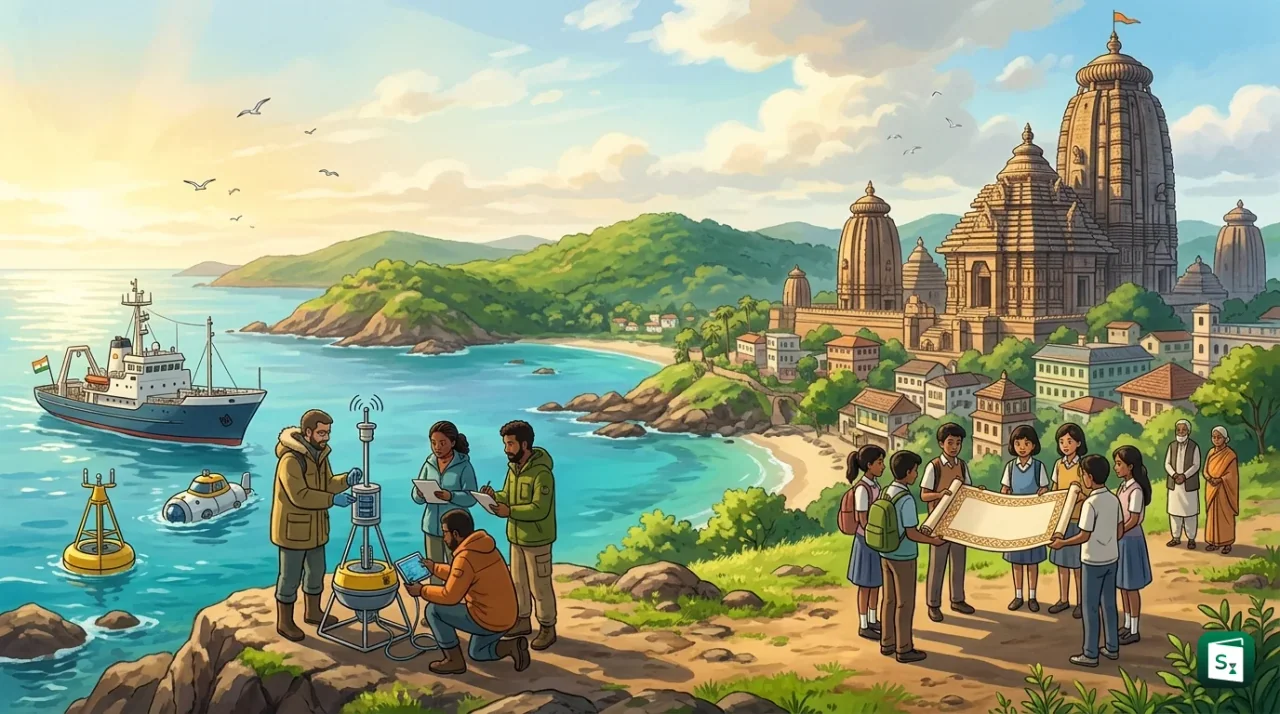
The 8th Meeting of the BRICS Working Group on Ocean and Polar Science and Technology (OPST) was held at Goa from 12 to 14 August 2026. It was organised by the Ministry of Earth Sciences (MoES) and hosted by the National Centre for Polar and Ocean Research (NCPOR) at its campus in Vasco da Gama. The meeting was chaired by Dr. Thamban Meloth, Director of NCPOR, and inaugurated with a keynote address on “India’s Blue Economy Initiatives” by Dr. Madhavan Nair Rajeevan, Vice Chancellor of Atria University and former Secretary of MoES.
Delegations from eight BRICS members participated: Brazil, China, Egypt, India, Indonesia, Russia, South Africa and the United Arab Emirates. The Indian delegation included officials and scientists from MoES and the Department of Science and Technology (DST), headed by Dr. Sandip Kumar Mukhopadhyay, Scientist G and Advisor, MoES. The concluding session was addressed virtually by Dr. T. Srinivasa Kumar Tummala, Secretary, MoES, who urged members to translate consensus into joint research, exchanges of scientists and students, shared use of research infrastructure and stronger institutional linkages.
What Is the OPST Working Group?
The BRICS Working Group on Ocean and Polar Science and Technology was established in 2018 to promote scientific cooperation, knowledge exchange, capacity building and collaborative research in ocean and polar domains. It functions under the BRICS Science, Technology and Innovation (STI) Framework, with activities in India coordinated by MoES in coordination with DST.
The Working Group covers areas such as oceanography, marine biodiversity, climate dynamics, sea level and coastal processes, polar ecosystems and polar technology. Seven meetings had been held before Goa, with India having earlier hosted the 3rd meeting in 2020 during its previous Presidency. The Goa meeting was therefore the eighth in the series and the first OPST meeting under India’s 2026 Presidency.
National Centre for Polar and Ocean Research and the Ministry of Earth Sciences
The National Centre for Polar and Ocean Research (NCPOR), established on 25 May 1998 as the National Centre for Antarctic and Ocean Research (NCAOR), is India’s premier polar research institution. It is an autonomous institute fully funded by MoES and headquartered in Vasco da Gama, Goa. Its mandate is to plan, promote, coordinate and execute India’s entire polar and Southern Ocean research programme, including logistics.
NCPOR is the nodal agency for the Indian Antarctic Programme and maintains India’s two year-round research stations in Antarctica: Maitri, established in 1989 on the Schirmacher Oasis, and Bharati, established in 2011 on the Larsemann Hills. It also manages India’s Arctic research station Himadri at Ny-Alesund, Svalbard, and the Indian Arctic observatory IndARC in the Arctic Ocean. The Universities of Goa and Mangalore recognise NCPOR as a research centre for doctoral studies. The Secretary, MoES, serves as ex-officio Chairman of NCPOR’s Governing Council.
The Ministry of Earth Sciences, formed on 29 January 2006 by reorganising the erstwhile Department of Ocean Development (1981), is the nodal ministry for weather, climate, ocean, coastal, seismology and polar science. It functions through schemes such as O-SMART, PACER and Deep Ocean Mission and oversees institutes including the India Meteorological Department (IMD) in New Delhi, the Indian Institute of Tropical Meteorology (IITM) in Pune, the National Centre for Medium Range Weather Forecasting (NCMRWF) in Noida, the Indian National Centre for Ocean Information Services (INCOIS) in Hyderabad, the National Institute of Ocean Technology (NIOT) in Chennai and NCPOR.
Key Deliberations and Outcomes in Goa
The Goa deliberations focused on practical and shared challenges for BRICS coastal and polar nations. Four priority themes emerged:
| Priority Theme | What Was Discussed |
|---|---|
| Coastal resilience | Challenges of coastal zones with special emphasis on protection of coastal cities, sea level rise and sustainable management of coastal resources |
| Ocean observation | Strengthening the Global Ocean Observing System (GOOS) through collaborative contributions for robust and resilient ocean information services |
| Joint polar research | Development of joint polar research, inclusive participation in Antarctic expeditions and joint study of polar ocean biodiversity |
| Capacity building | Enhanced opportunities for young researchers, including exchanges, training and shared use of polar research infrastructure |
Delegates agreed to pursue collaborative initiatives on coastal resilience, a joint polar ocean biodiversity study, and to set milestones for the 5th International Polar Year (IPY-5). IPY-5 is a proposed large-scale international polar research campaign expected around 2032 to 2033, and BRICS members discussed aligning contributions to it. They also agreed to promote capacity building for young researchers through fellowships and joint cruises.
A concrete next step identified in Goa is that India, as Chair, will coordinate finalisation of a roadmap for the Working Group, including a short term action plan for implementation. Members will consider bilateral, trilateral and multilateral cooperation proposals, share national programme updates and identify joint projects where research infrastructure, such as research vessels and polar stations, can be shared.
13th BRICS Education Ministers Meeting and 3rd Senior Officials Meeting in Bhubaneswar
The 13th BRICS Education Ministers Meeting was held on 7 August 2026 in Bhubaneswar, Odisha, preceded by the 3rd BRICS Senior Officials Meeting (SOM) on 5 August 2026. Both were hosted by the Ministry of Education (MoE) under India’s BRICS Chairship and chaired by Union Minister Pralhad Joshi. Ministers, senior officials and delegates from all BRICS members, including Brazil, Russia, China, South Africa, Egypt, Ethiopia, Indonesia, Iran and the United Arab Emirates, attended alongside India.
The meetings were held under the education track theme aligned with the Presidency motto “Building for Resilience, Innovation, Cooperation and Sustainability”. Joshi framed the discussions around a people-centric and Humanity First approach, stating that learners, teachers, researchers and youth must remain at the centre of policy and cooperation.
The 3rd Senior Officials Meeting as Groundwork
The SOM on 5 August served as the preparatory platform. Senior officials reviewed the draft text of the BRICS Education Ministers Declaration, exchanged views and worked towards consensus on its key elements. Discussions covered Early Childhood Care and Education (ECCE), Technical and Vocational Education and Training (TVET), collaborative research and innovation, mutual recognition of qualifications, academic leadership, and guiding principles on traditional and indigenous knowledge systems.
Officials also stressed strengthening institutional mechanisms, promoting academic and research partnerships and improving exchange of best practices. Delegates from Brazil, Russia, China, South Africa, Indonesia, Iran, Ethiopia and the United Arab Emirates participated, alongside Indian officials.
Bilateral Engagements on the Sidelines
Alongside the plenary, Joshi held bilateral meetings that gave the Bhubaneswar gathering added substance. With Indonesia, he witnessed the signing of a Memorandum of Understanding between the IIT Madras Global Research Foundation and Indonesia’s Ministry of Higher Education, Science and Technology to enhance cooperation in research, innovation and talent development. With South Africa, represented by Minister Siviwe Gwarube and Deputy Minister Buti Manamela, discussions focused on basic and higher education, skilling, research, innovation and digital learning, including expansion of academic exchanges and leveraging technology for inclusive access. With Iran, represented by Acting Minister Masood Shams-Bakhsh, talks highlighted civilisational links and opportunities for cooperation in higher education and research.
The Indian side also shared flagship initiatives such as NIPUN Bharat for foundational literacy and numeracy, PARAKH for assessment standards, SWAYAM for online learning and SAMARTH, as examples that could support international collaboration. Odisha ministers Sampad Swain and Suryabanshi Suraj and Governor Hari Babu Kambhampati joined the welcome and cultural programmes for delegates.
About the Chair
Pralhad Joshi, Member of Parliament from Dharwad, Karnataka since 2004, was given additional charge of the Ministry of Education on 26 July 2026 after the resignation of Dharmendra Pradhan. He became the 32nd person to head the Education Ministry since Independence, beginning with Maulana Abul Kalam Azad (1947 to 1958). Joshi continues to hold the portfolios of Consumer Affairs, Food and Public Distribution and New and Renewable Energy. The Ministry of Education, which oversees school and higher education and implementation of the National Education Policy 2020, is headquartered in New Delhi.
Five Priority Areas Under the 13th BRICS Education Ministers Declaration
The 13th BRICS Education Ministers Declaration, adopted unanimously in Bhubaneswar and also referred to as the Bhubaneswar Declaration, reaffirms education as a key pillar of BRICS cooperation. It outlines a shared roadmap across five priority areas identified under India’s Chairship:
| Priority Area | What Member Countries Agreed To Do |
|---|---|
| 1. Early Childhood Care and Education (ECCE) and Foundational Literacy and Numeracy (FLN) | Promote universal and inclusive access to quality early childhood education, strengthen school readiness, and encourage use of age appropriate digital technologies designed around child development needs. |
| 2. Skill Development and Technical and Vocational Education and Training (TVET) | Strengthen cooperation through the BRICS TVET Cooperation Alliance (BRICS-TCA), formalised after being proposed by China in 2022. Support its Biennial Progress Report and Compendium of Sustainable Skill Initiatives, address skill mismatches and support India’s proposal for a voluntary International Skill Gap Study. Policies will also promote equitable participation of women, rural populations and persons with disabilities and stronger links between education, employers and labour markets. |
| 3. Research, Innovation and Start-up Ecosystems | Deepen joint research and collaboration among higher education institutions, researchers and start-up ecosystems, promote innovation-driven entrepreneurship, and encourage safe, ethical and human-centred use of Artificial Intelligence in education with safeguards for students and teachers. |
| 4. Mutual Recognition of Qualifications (MRQ) | Continue work through a dedicated BRICS Working Group on Mutual Recognition to discuss a Memorandum of Understanding that would make qualifications earned in one BRICS country more easily recognised in another, supporting academic mobility and transparency in quality assurance. |
| 5. Academic Leadership and Institutional Development | Continue the BRICS Rectors Forum, expand faculty and academic leadership exchanges, offer scholarship programmes with focus on STEM, and explore a new BRICS University Global Ranking and Evaluation System that moves beyond narrow prestige metrics to value teaching, research and social engagement in diverse contexts. |
Traditional Knowledge and Network University
A distinctive feature of the Bhubaneswar outcome is the welcome for India’s BRICS Guiding Principles on Strengthening Academic Collaboration on Traditional and Indigenous Knowledge Systems. Members suggested that the BRICS Network University (BRICS-NU) consider adding this as a new International Thematic Group. BRICS-NU, which links universities across member countries in 11 knowledge fields, is undergoing a triple expansion of institutions, thematic areas and members, with the membership ceiling recently raised to 22 universities per Member State. On the margins, the Protocol on Accession of Indonesia to the Memorandum of Understanding on Establishment of BRICS-NU was noted.
The Declaration also encouraged wider youth engagement through the Model BRICS initiative, which familiarises young citizens with BRICS processes and diplomacy, and noted participation of BRICS students in events such as the 59th International Mendeleev Chemistry Olympiad hosted by the Federal University of Minas Gerais, Brazil.
Why Both Meetings Matter
The twin meetings show how India is using its BRICS Chairship to link science and human development.
For oceans and polar science, the stakes are direct. India’s Blue Economy strategy, supported by the Deep Ocean Mission, depends on reliable ocean data, resilient coasts and polar knowledge. BRICS members include major coastal states and polar research powers such as Russia and China, and collaboration on the Global Ocean Observing System, joint biodiversity studies and shared research vessels can lower costs and improve forecasts for monsoon, sea level rise and extreme weather. Coastal resilience is urgent for India, which has a 7,500 km coastline and low lying cities vulnerable to cyclones and storm surges.
For education, the Declaration addresses shared BRICS challenges. All members face a youth bulge or a need to re-skill workers for digital and green transitions. Joint work on ECCE and FLN aligns with India’s own focus under NEP 2020 on foundational learning by age eight. The BRICS-TCA approach to TVET can help reduce skill mismatches where qualifications do not match job needs, while MRQ could make student and professional mobility easier in the years ahead. Linking traditional knowledge with modern science also reflects the civilisational diversity within BRICS and offers a way to document and study indigenous practices through rigorous research.
Together, the meetings reinforce India’s positioning as a bridge for the Global South, combining cooperative science on global commons such as oceans and polar regions with people-focused education reforms.
The Way Forward
In the ocean and polar track, India will now coordinate finalisation of the OPST roadmap and short term action plan during its Presidency. The test will be whether consensus on coastal resilience, joint biodiversity research and IPY-5 milestones converts into funded joint cruises, co-authored programmes and sustained exchanges of young researchers. Secretary MoES has specifically called for sharing of research infrastructure and stronger institutional linkages, which will require clear protocols for access to research vessels, polar stations and data.
In the education track, follow up will be driven by the BRICS Working Group on Mutual Recognition for the proposed MoU on qualifications, the BRICS-TCA for its next Biennial Progress Report and Compendium, and the BRICS Network University for expansion to 22 members per country and possible inclusion of traditional knowledge as a new thematic group. Proposals such as the International Skill Gap Study, the BRICS University Global Ranking and Evaluation System, continued Rectors Forum meetings and STEM scholarships will be reviewed in the lead up to the 18th BRICS Summit in New Delhi on 12 and 13 September 2026, where the education and science outcomes are expected to feed into the broader summit declaration.
Key Takeaways
- The 8th BRICS Working Group on Ocean and Polar Science and Technology (OPST) was held in Goa from 12 to 14 August 2026, organised by MoES and hosted by NCPOR, Vasco da Gama.
- The OPST Working Group was established in 2018 and functions under the BRICS Science, Technology and Innovation Framework, coordinated in India by MoES and DST.
- NCPOR was established on 25 May 1998 and is the nodal agency for the Indian Antarctic Programme, maintaining stations Maitri (1989) and Bharati (2011).
- The 13th BRICS Education Ministers Meeting was held on 7 August 2026 in Bhubaneswar, Odisha, chaired by Pralhad Joshi, preceded by the 3rd Senior Officials Meeting on 5 August 2026.
- The meeting adopted the 13th BRICS Education Ministers Declaration (Bhubaneswar Declaration) outlining five priority areas: ECCE and FLN, TVET and skill development, research innovation and AI, mutual recognition of qualifications, and academic leadership.
- India’s 2026 BRICS Presidency theme is “Building for Resilience, Innovation, Cooperation and Sustainability” with a Humanity First approach, culminating in the 18th BRICS Summit in New Delhi on 12 and 13 September 2026.