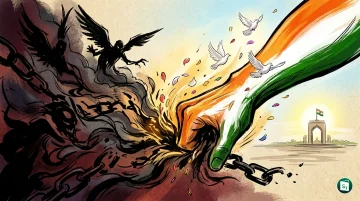
National Anti-Terrorism Day:
Day – May 21
Commemorating – Death anniversary of former PM Rajiv Gandhi who was assassinated in Sriperumbudur, Tamil Nadu in 1991
National Anti-Terrorism Day:
Day – May 21
Commemorating – Death anniversary of former PM Rajiv Gandhi who was assassinated in Sriperumbudur, Tamil Nadu in 1991
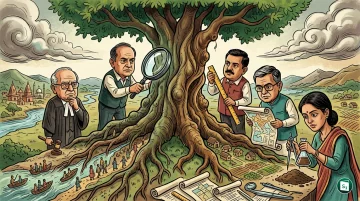
The central government has constituted the High-Level Committee on Demographic Change (HLCDC) to conduct a scientific assessment of ‘unnatural demographic changes’ resulting from illegal immigration and other abnormal factors.
The committee, set up under the Ministry of Home Affairs (MHA), is chaired by Justice Prakash Prabhakar Naolekar (Retired). The other members of the HLCDC include Mritunjay Kumar Narayan (Census Commissioner of India), Durga Shankar Mishra, Balaji Srivastava, and Dr Shamika Ravi.
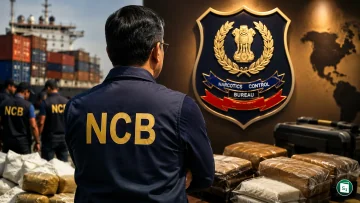
The Appointments Committee of the Cabinet (ACC) has extended the tenure of Anurag Garg as the Director General (DG) of the Narcotics Control Bureau (NCB) until July 2027.
International Firefighters’ Day (St Florian’s Day):
Day – May 04
Observed since – 1999
Commemorating – Death of 5 firefighters who fought a wildfire in
Linton, Australia in 1998
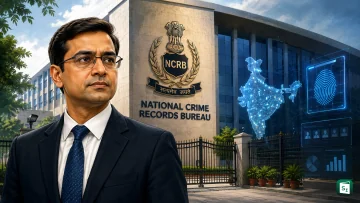
The National Crime Records Bureau (NCRB), operating under the Ministry of Home Affairs (MHA), has released its annual report titled “Crime in India 2024”. India registered 58.86 lakh cognisable crimes in 2024, which is a 6% reduction compared to the 62.41 lakh cases in 2023.
Of the total, 35.44 lakh cases were filed under the Indian Penal Code (IPC) or the Bharatiya Nyaya Sanhita (BNS), while 23.41 lakh cases were under Special and Local Laws (SLL).
The national crime rate (cases per lakh population) decreased to 418.9 in 2024, from 448.3 in 2023. Among 19 metropolitan cities, Delhi reported the highest volume of cognisable offences with 2.75 lakh cases, although the city recorded the lowest charge-sheeting rate.
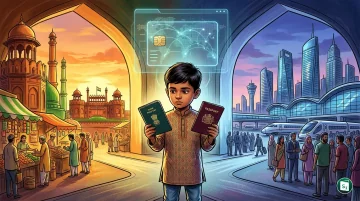
The Ministry of Home Affairs (MHA) has notified the ‘Citizenship (Amendment) Rules, 2026’, which modifies the ‘Citizenship Rules, 2009’. The rules became effective on April 2026. Under the new provisions, minor children are prohibited from holding both Indian and foreign passports at the same time.
The rules introduce the electronic Overseas Citizen of India (e-OCI) system for issuing digital or physical OCI cards through a central digital database. The entire application process for OCI status has been moved to an online format. Additionally, the renunciation of OCI cards must be filed electronically, after which an official acknowledgment is issued and the name of the individual is removed from central records.
Union Minister Jyotiraditya Scindia has launched the nationwide indigenously developed Cell Broadcast System (CBS) in New Delhi. The system was engineered by the Centre for Development of Telematics (C-DOT) in collaboration with the National Disaster Management Authority (NDMA) and the Ministry of Home Affairs (MHA).
The initiative aims to strengthen the disaster management framework of the country through homegrown technology. The CBS features multilingual capabilities to deliver emergency alerts in multiple Indian languages to ensure effective communication across the population.
The Lieutenant Governor of Ladakh has officially notified the creation of 5 new districts in the Union Territory: Nubra, Sham, Changthang, Zanskar, and Drass.
This follows the preliminary approval granted by the Ministry of Home Affairs (MHA) in 2024. With this, the total number of districts in the UT has increased from 2 to 7. It is to be noted that the region previously consisted of only the Leh and Kargil districts.
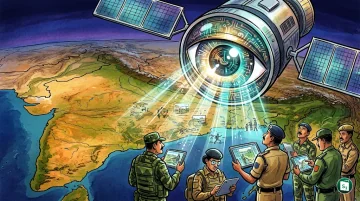
The Ministry of Home Affairs (MHA) has received ‘Prajna’, an indigenously developed satellite imaging system designed to provide real-time decision support for security agencies. The system, an AI-enabled platform, was developed by the Centre for AI and Robotics (CAIR), a laboratory under the Defence Research and Development Organisation (DRDO). It utilizes advanced imaging to enhance the technical and operational capabilities of security forces.