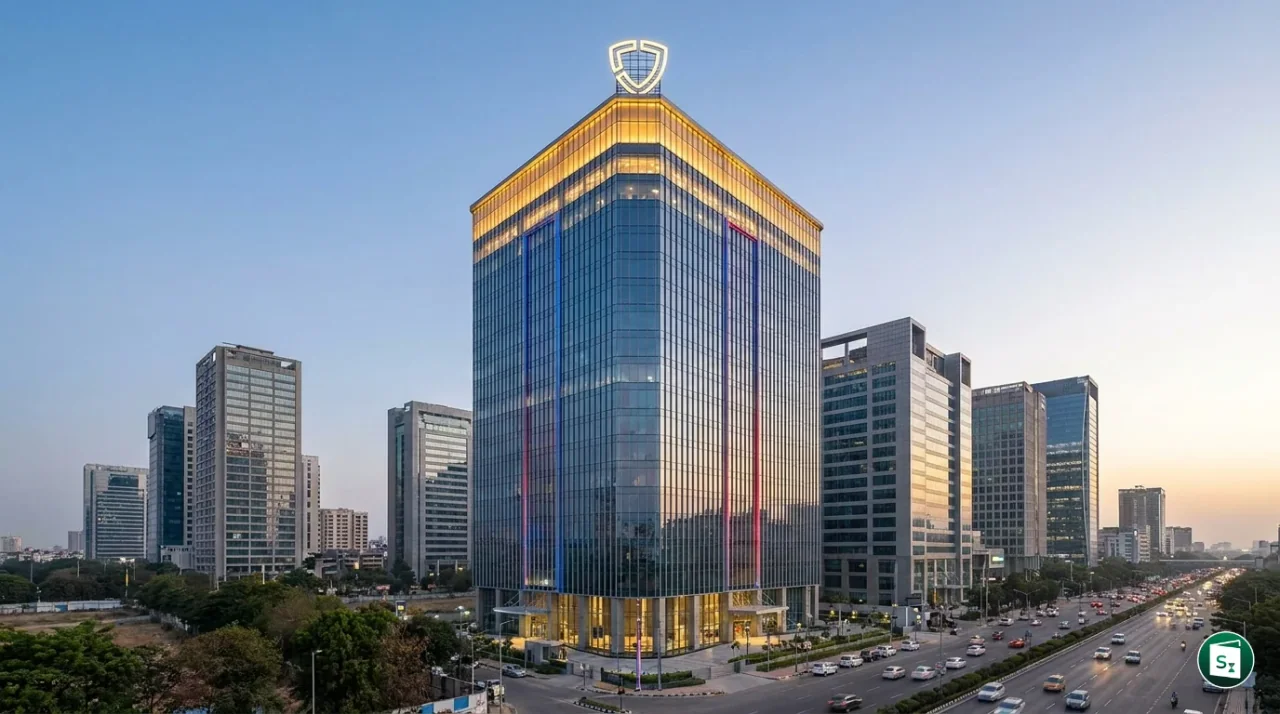
UK-based Aviva Plc has acquired the remaining 26% stake in Aviva Life Insurance Company India Ltd (Aviva India) from its joint venture partner Dabur Invest Corp (DIC), taking its ownership to 100%. With this acquisition, Aviva has become the first foreign insurer to fully own its life insurance business in India. The deal ends a partnership that began in 2001 and comes immediately after the Indian government permitted 100% foreign direct investment in the insurance sector.
Aviva’s Path to Full Ownership
Aviva Plc is one of the world’s oldest insurance companies, with its origins tracing back to the Hand in Hand Fire and Life Insurance Society founded in London in 1696. The company operates across 16 markets worldwide and serves over 34 million customers. Aviva first entered India in 1834, long before independence, and returned to set up a formal joint venture after the sector was opened to private players in 2000.
Aviva Life Insurance Company India Ltd was incorporated on 25 September 2000 and began operations in 2001 as a joint venture between Aviva (then known as CGNU plc, later rebranded in July 2002) and Dabur Invest Corp, the investment arm of the Dabur Group. Initially, Aviva held a 26% stake in the venture, with Dabur controlling the remaining 74%.
Over the years, Aviva increased its stake in line with successive liberalisation of India’s foreign direct investment rules:
| Year | FDI Cap | Aviva’s Stake Increase | Aviva’s New Stake |
|---|---|---|---|
| 2001 | 26% | Initial JV formation | 26% |
| 2016 | 49% | Acquired additional 23% from Dabur | 49% |
| 2022 | 74% | Acquired additional 25% from Dabur | 74% |
| 2026 | 100% | Acquired remaining 26% from Dabur | 100% |
The latest acquisition makes Aviva the first foreign life insurer in India to reach full ownership under the new regime. Aviva has stated that the financial impact of this transaction is not material to the group, and the existing joint venture agreement will be terminated upon completion.
For FY2026, Aviva India reported premium income of ₹1,343 crore (up 2.8% year-on-year) and new business premium of ₹351 crore (up 10%). Its solvency ratio stood at 188%, well above the regulatory minimum of 150%, while profit after tax declined 21.7% to ₹84.15 crore. The company managed assets of about ₹16,316 crore as of March 2026 and operates through 93 branches across the country.
A 25-Year Partnership with Dabur Comes to an End
Dabur Invest Corp is the investment holding company of the Dabur Group, one of India’s oldest and most trusted business houses. The Dabur Group was founded in 1884 by Dr S K Burman and is promoted by the Burman family. Dabur is best known as India’s leading manufacturer of traditional healthcare and ayurvedic products, with a market presence spanning over 120 countries.
Dabur Invest Corp held a 74% stake in the life insurance joint venture when it was formed in 2001, making it the majority partner at a time when foreign ownership in the sector was capped at 26%. Over the years, as the FDI ceiling was progressively raised, Dabur chose to dilute its holding in favour of Aviva at each stage. This latest transaction marks Dabur’s complete exit from the life insurance business after more than two decades.
The decision to sell aligns with Dabur’s strategy to focus on its core fast-moving consumer goods (FMCG) and healthcare businesses. Several Indian promoter groups have similarly opted to exit or reduce their stakes in insurance joint ventures following the liberalisation of FDI norms, as foreign partners seek greater control in a high-growth market.
India’s Evolving Insurance FDI Regime
The Aviva-Dabur transaction is the first deal to close under India’s most ambitious reform of the insurance sector since it was opened to private participation in 2000. The journey of FDI liberalisation in insurance has been gradual but transformative.
India first permitted private participation in the insurance sector in 2000, following the recommendations of the Malhotra Committee (1993). The initial FDI cap was set at 26%. This was raised to 49% in 2015 through the Insurance Laws (Amendment) Act, 2015. The limit was further increased to 74% in 2021.
The most recent and most significant reform came with the passage of the Sabka Bima Sabki Raksha (Amendment of Insurance Laws) Act, 2025, which received the President’s assent on 20 December 2025 and came into effect from 5 February 2026. The Act amended three key legislations: the Insurance Act, 1938, the Life Insurance Corporation Act, 1956, and the Insurance Regulatory and Development Authority Act, 1999.
Key Changes Under the 2025 Amendment
| Reform | Earlier Position | New Position |
|---|---|---|
| FDI Cap | 74% of paid-up equity capital | 100% under automatic route |
| Board Composition | Majority of directors and KMP to be resident Indian citizens | Only one among Chairperson, MD, or CEO needs to be a resident Indian citizen |
| Dividend Retention | 50% of net profit to be retained in general reserve if solvency below 180% | Requirement removed |
| Independent Directors | At least half the board to be independent, or chairperson to be independent | Requirement removed |
| Share Transfer Threshold | Prior IRDAI approval needed for transfer of 1% or more | Threshold raised to 5% |
The Ministry of Finance subsequently notified the Foreign Exchange Management (Non-debt Instruments) (Second Amendment) Rules, 2026 on 2 May 2026, operationalising the 100% FDI provision under the FEMA framework. The reform applies to all insurance companies except Life Insurance Corporation of India (LIC), where foreign investment remains capped at 20%.
Despite these reforms, insurance penetration in India remains low. According to the Swiss Re Institute, India’s insurance penetration stood at 3.8% of GDP in 2024, well below the global average. The government expects that permitting 100% FDI will attract deeper capital inflows, improve distribution networks, bring global best practices, and ultimately increase insurance penetration and financial inclusion. The Insurance Regulatory and Development Authority of India (IRDAI), established in 1999, continues to regulate the sector with the mandate of protecting policyholder interests while promoting an orderly market.
What Full Ownership Means for Aviva India
With complete ownership, Aviva gains full strategic control over its Indian operations without needing approval from a local partner for major decisions. This allows faster decision-making, greater operational flexibility, and the ability to align India operations directly with the global group’s strategy.
Aviva India’s managing director and CEO Asit Rath has publicly outlined an ambitious growth plan. The company aims to triple its annualised new business premium from around ₹350 crore in FY26 to ₹1,000 crore over five years. This growth will be driven by a sharper focus on protection products (as opposed to savings-linked policies) and a significant expansion in customer acquisition, from 25,000 new customers annually to 1,00,000 per year.
The company is also reshaping its distribution model. Traditionally reliant on bancassurance (selling policies through bank partnerships) for savings business, Aviva India plans to expand its proprietary agency channel and forge digital partnerships specifically for protection products. The insurer currently operates 93 branches, which it may look to expand under the new ownership structure.
Full ownership also opens the door for Aviva Plc to directly infuse capital into the Indian subsidiary, strengthening its solvency position and enabling investments in technology, product innovation, and distribution. This is particularly significant given that India’s life insurance market remains underpenetrated and offers substantial long-term growth potential.
The transaction also signals confidence in the Indian market among global insurers. With over 50 private insurance companies operating in India, many with foreign partners holding stakes between 18% and 74%, similar ownership restructuring moves are expected from other global players such as Prudential Plc, Sun Life Financial, and AIG, who are also assessing their options under the new regime.
Key Takeaways
- Aviva Plc has become the first foreign insurer to fully own its life insurance business in India by acquiring the remaining 26% stake from Dabur Invest Corp.
- The Aviva-Dabur joint venture was formed in 2001, and Aviva had previously increased its stake to 49% in 2016 and 74% in 2022 following earlier FDI liberalisation.
- The deal was made possible by the Sabka Bima Sabki Raksha (Amendment of Insurance Laws) Act, 2025, which raised the FDI cap in insurance from 74% to 100%, effective from 5 February 2026.
- The Foreign Exchange Management (Non-debt Instruments) (Second Amendment) Rules, 2026 notified on 2 May 2026 operationalised the 100% FDI provision under FEMA.
- Aviva Plc, one of the world’s oldest insurers, traces its heritage to 1696 and operates across 16 markets with over 34 million customers.
- For FY2026, Aviva India reported premium income of ₹1,343 crore, a solvency ratio of 188%, and a target to triple new business premium to ₹1,000 crore over five years.